Let’s get one thing out of the way: a moody home library is not a bookshelf from a flat-pack store with a reading lamp aimed at it. It is a room that swallows you whole, smells faintly of leather and old paper, and makes guests lower their voices without knowing why. People like us don’t own books for decoration. We own them because we can’t stop buying them, and the room that holds them deserves to look like it has secrets.
The good news: you don’t need a stately home or a trust fund. You need a dark wall, a lot of lamps, a willingness to over-commit, and the conviction that more is a religion. Below are 13 moody home library ideas we’d stake our reputations on, whether you’re working with a whole room, a spare bedroom you’re finally reclaiming, or one stubborn wall in the living room.
Why a Moody Home Library Beats the Bright-and-Airy Version Every Time
White libraries are a contradiction. Books are visually loud: hundreds of spines in hundreds of colors. Put them against stark white and the whole room twitches. Put them against ink, oxblood, or bottle green and the spines suddenly read as a tapestry. Dark walls recede, the books advance, and the effect is less “storage” and more “collection.” That’s the entire argument, and we’ll die on this hill with a first edition in hand.
1. Paint the Shelves the Same Color as the Walls
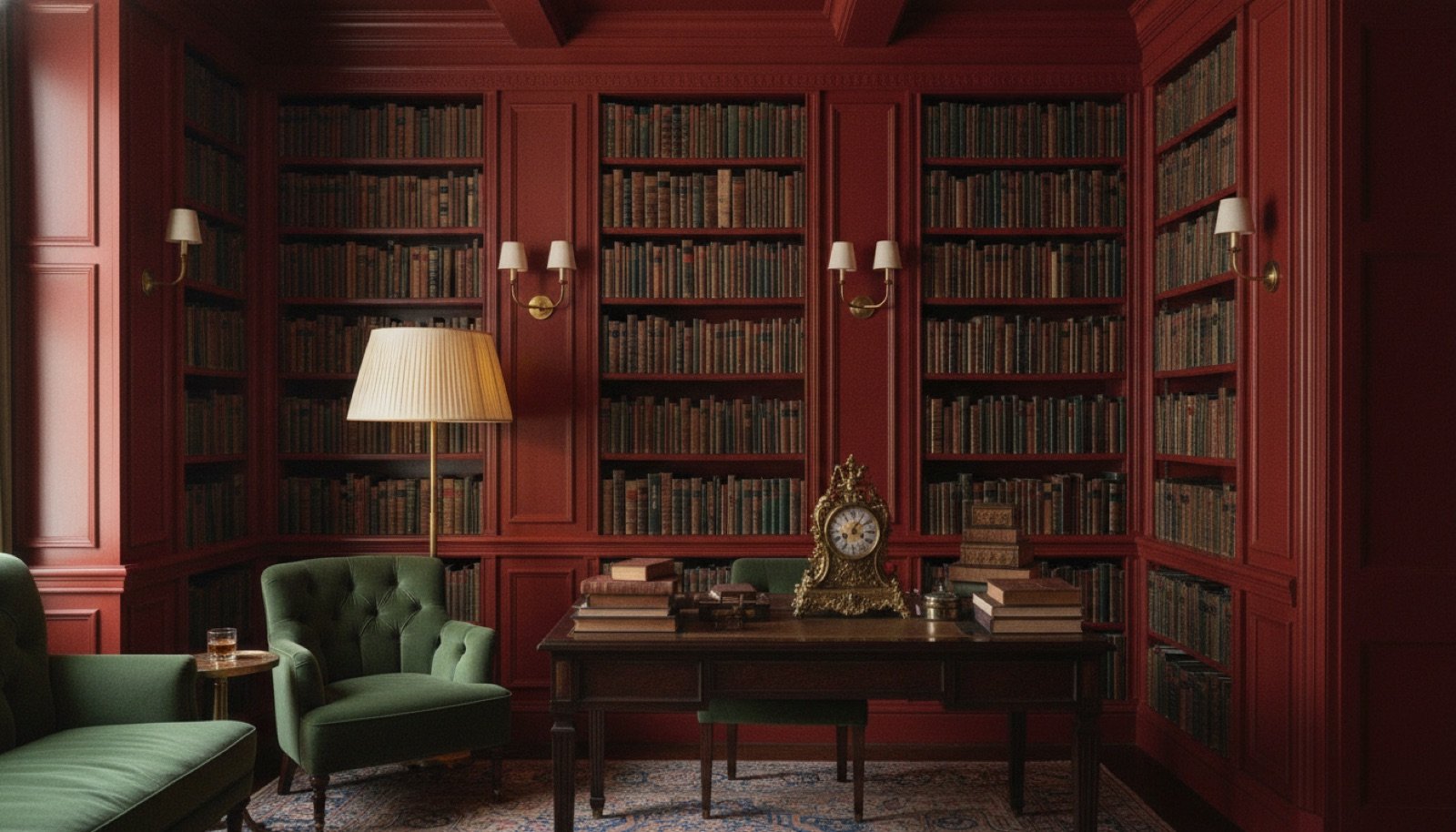
The fastest way to make built-ins look expensive is to stop pretending they’re furniture. Paint the walls, the shelving, the trim, and (if you’re brave, and you are) the ceiling in one deep color. Oxblood, aubergine, or a green so dark it reads as black after sunset. The room becomes one continuous shadow and the books become the only thing with edges.
Go for an eggshell or satin finish on the shelves so they take the abuse of books being shoved in and dragged out. Gloss is gorgeous on trim but shows every ding. And no, you do not need to “test how it feels” with an accent wall first. Your empty wall is a missed opportunity, and so is your timid wall.
2. Install a Brass Rolling Library Ladder (Even If You Don’t Strictly Need One)
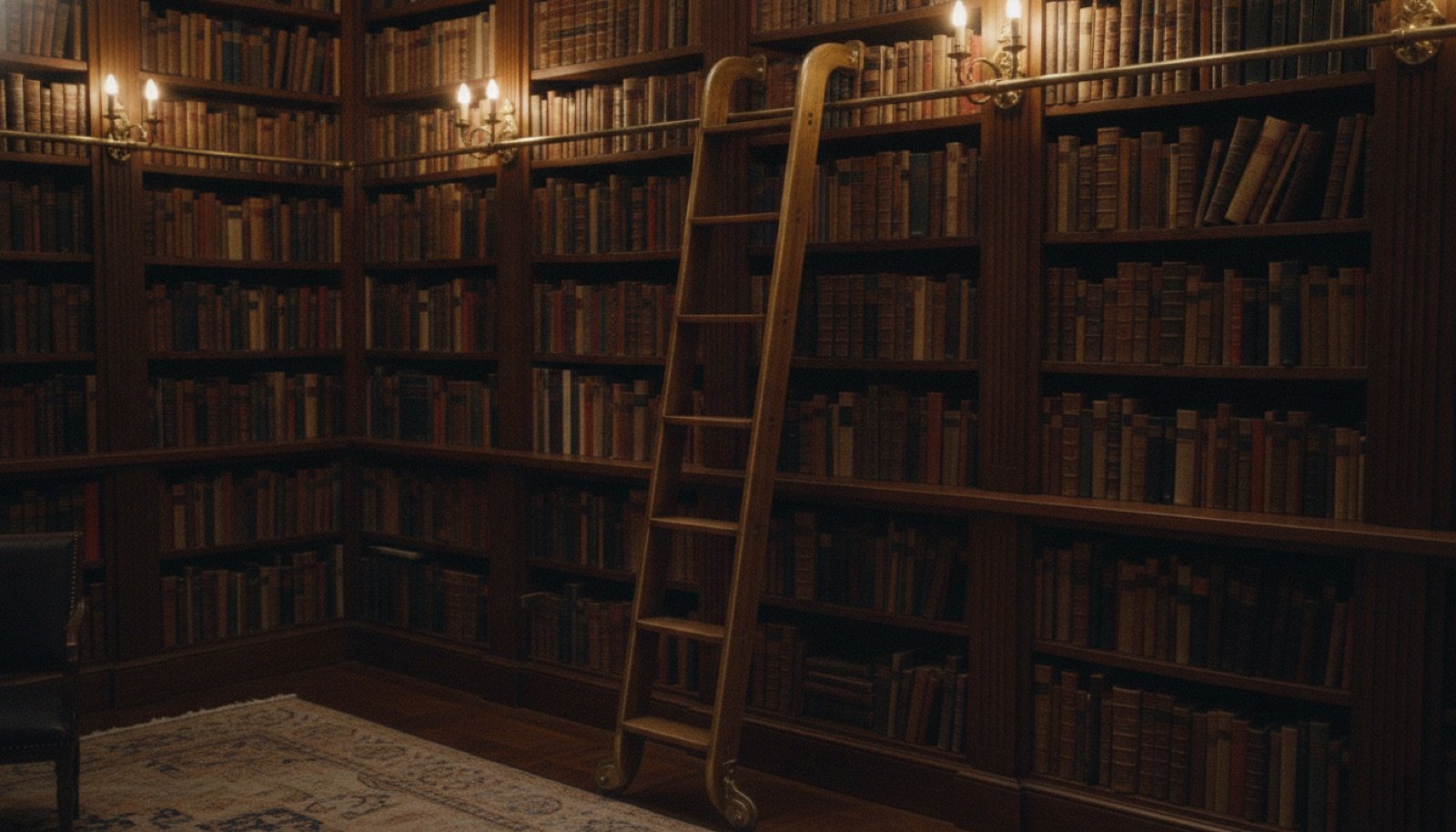
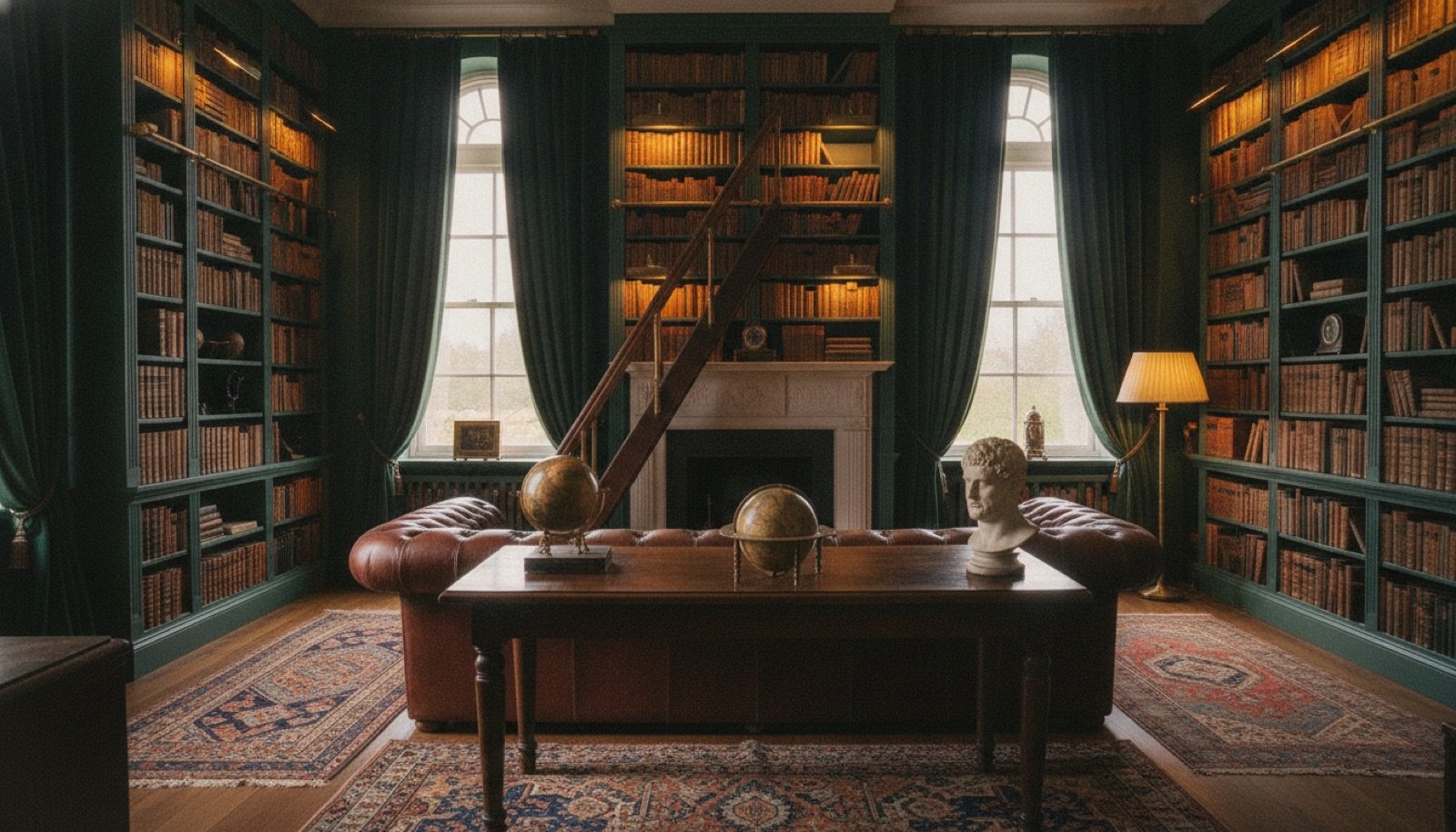
Is a rolling ladder necessary in a room with eight-foot ceilings? Absolutely not. Is it the single most theatrical object you can add to a library? Yes. A brass rail and ladder turn a wall of shelves into a set piece and give you a legitimate reason to store the poetry you never reread up near the crown molding.
Kits exist that bolt onto existing built-ins, and a brass library ladder rail hardware kit is a weekend project, not a renovation. Pick unlacquered brass if you can; it tarnishes into something that looks inherited rather than installed.
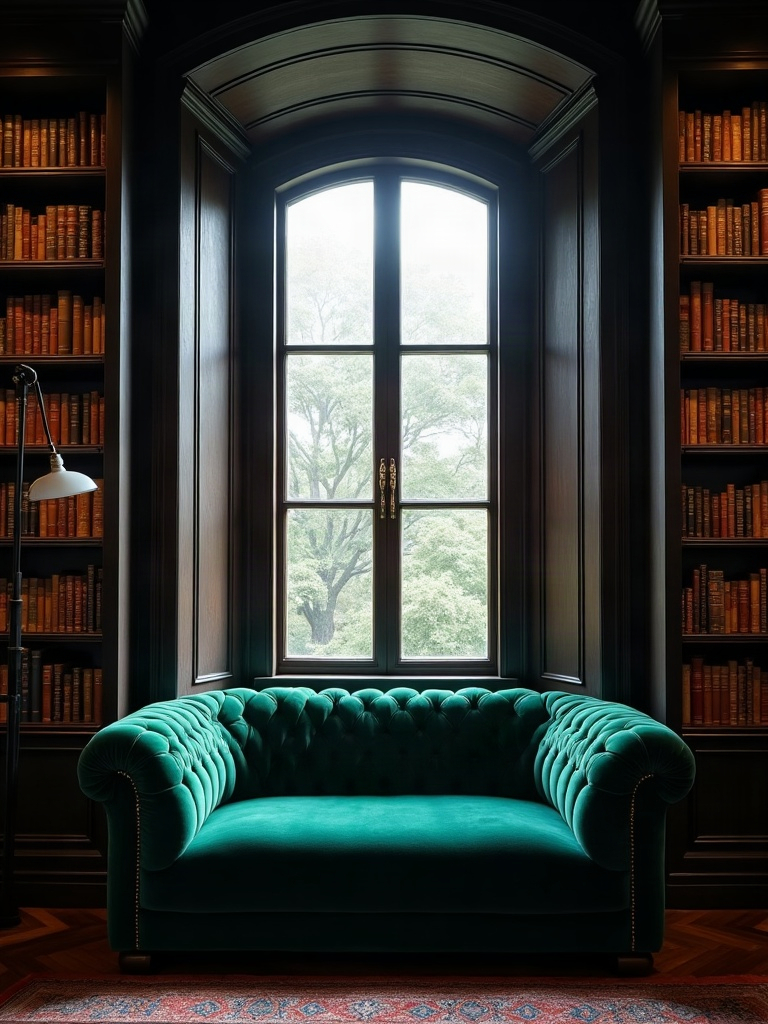
3. Leather Seating With a Past
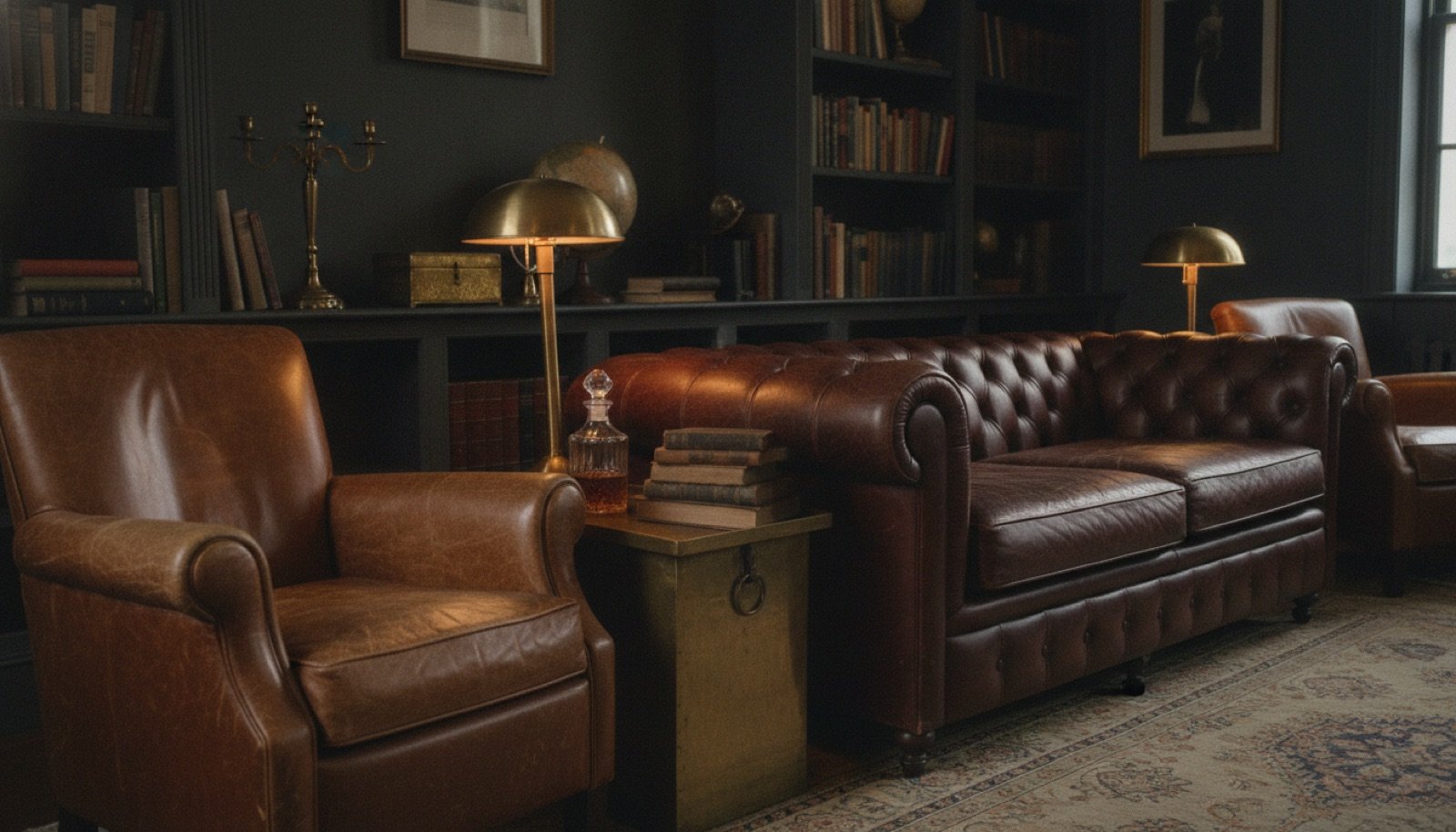
A library chair should look like it has heard confessions. Cracked cognac leather, a tufted oxblood Chesterfield, a pair of club chairs that sag in exactly the right places. Pristine, shiny new leather is the enemy here; it reads like a law firm lobby.
Vintage marketplaces are full of tired leather that just needs conditioning. Mix it with one velvet piece, maybe a tasseled ottoman, so the room doesn’t tip into gentlemen’s club cosplay. Deliberate chaos, not a costume.
4. Picture Lights Over Every Bay of Shelving
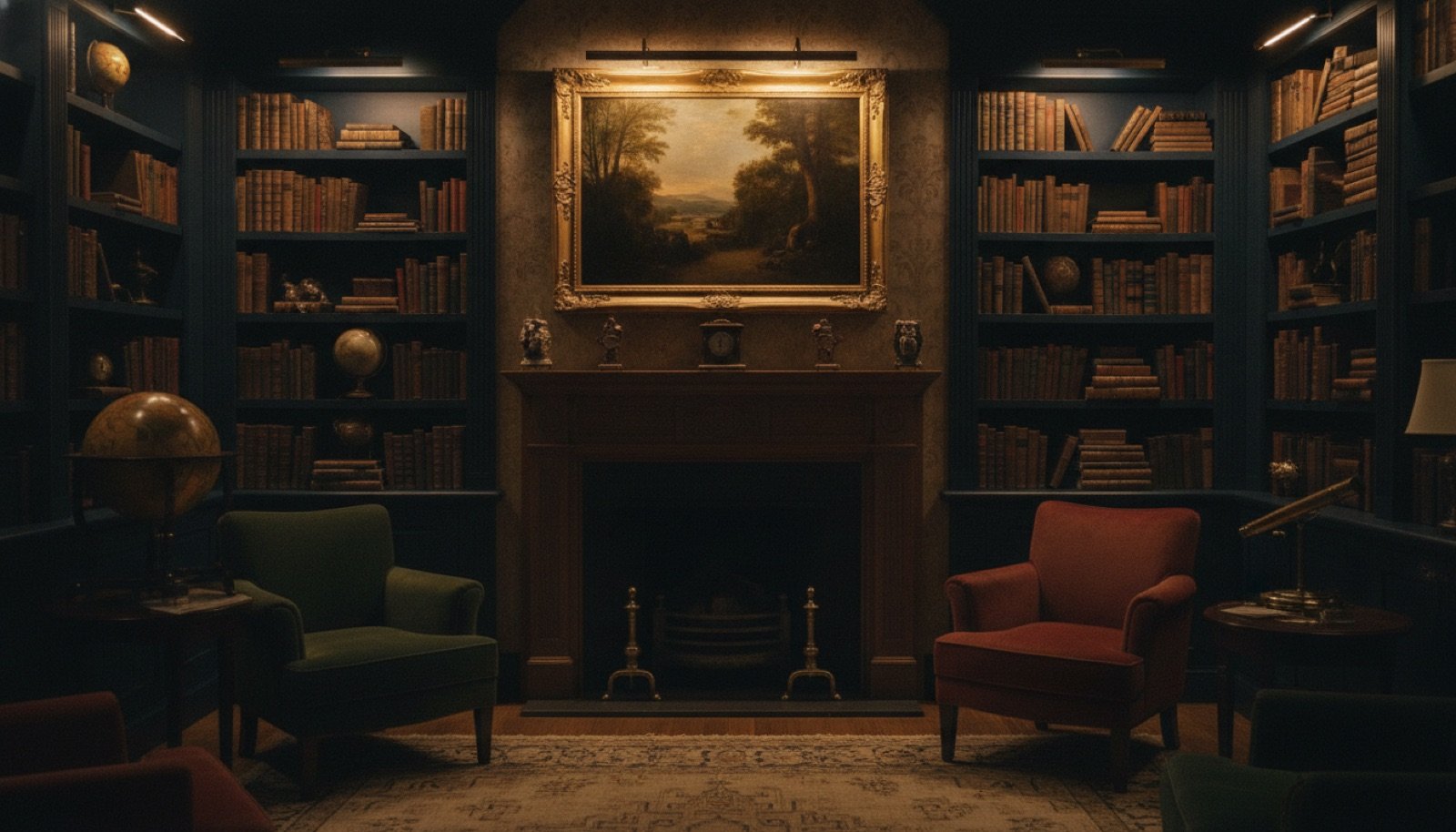
Overhead lighting is where moody rooms go to die. A single ceiling fixture flattens everything and turns your dark paint into a cave. Instead, mount brass picture lights above each section of shelving and above any art. They throw small pools of warm light downward and leave the corners properly dark.
Plug-in and battery versions mean you don’t need an electrician. A rechargeable brass picture light with a warm 2700K bulb will do more for the room than any paint chip. Then add table lamps at three different heights. If you can count your light sources on one hand, you’re not done.
5. Make the Ceiling the Fifth Wall It Was Born to Be
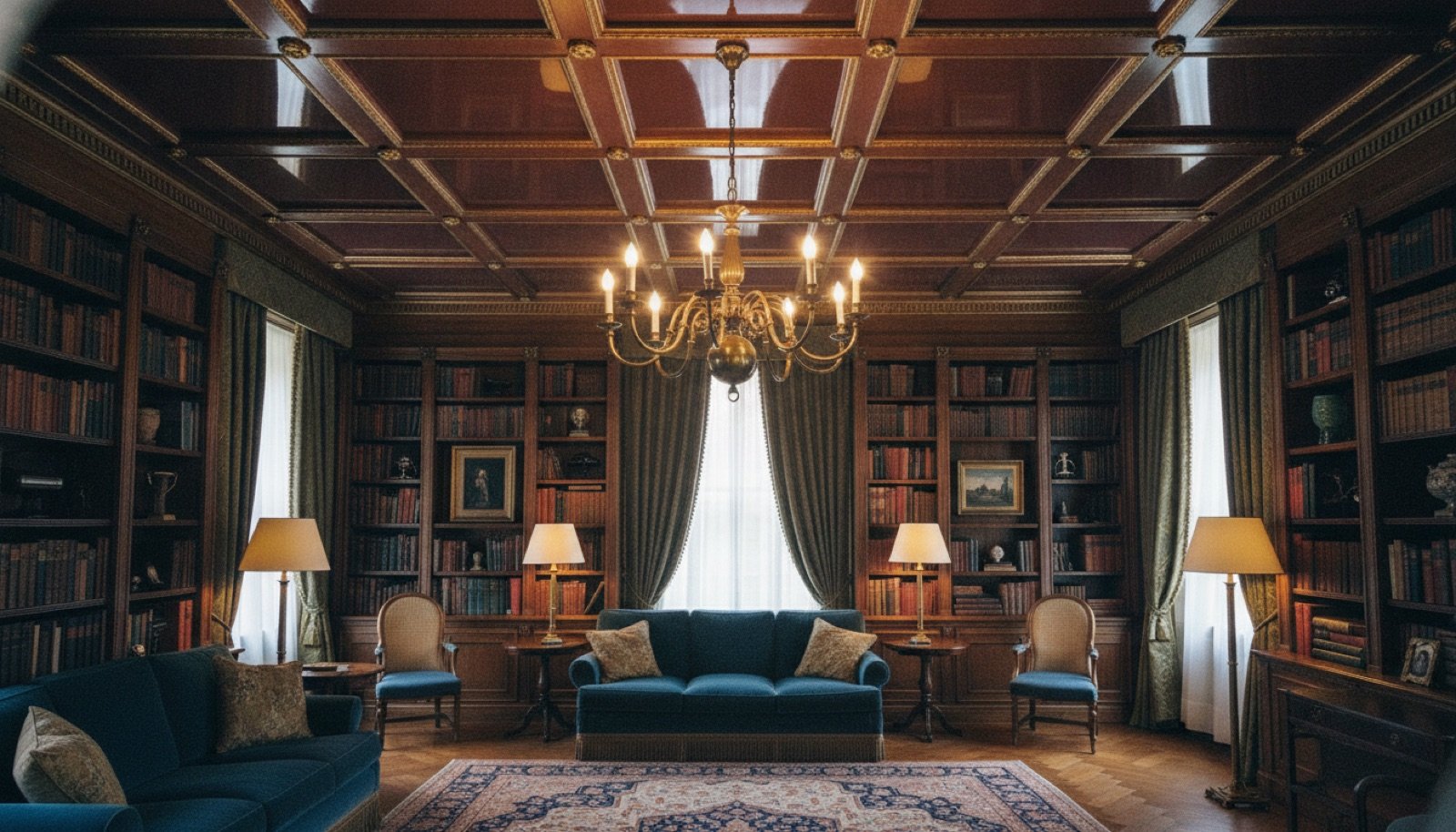
Everyone ignores the ceiling, which is exactly why you shouldn’t. A lacquered aubergine ceiling, a coffered grid picked out in gilt, or a dark wallpaper with a celestial pattern overhead makes the room feel enclosed in the best possible way, like being inside a jewelry box that also contains Dostoevsky.
High gloss on a ceiling bounces lamplight around and makes a low room feel taller, which is the opposite of what most people fear dark paint will do. Hang an antique chandelier on a dimmer and keep it low. It’s jewelry, not a work light.
6. Run a Gallery Wall Straight Through the Shelving
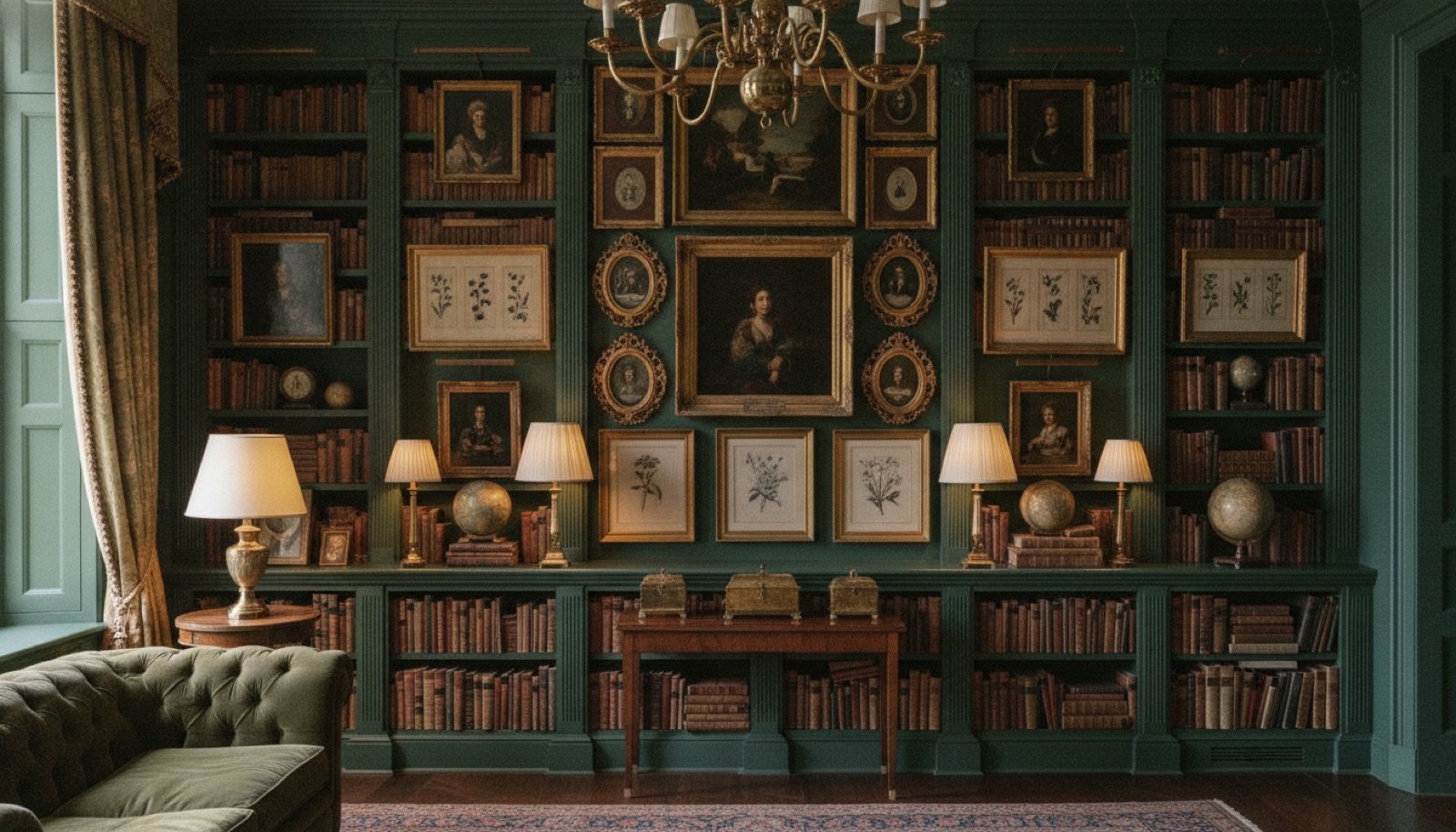
Who decided books and art had to live on separate walls? Hang small oil paintings, botanical prints, and thrifted portraits of strangers directly on the face of the shelving or on the uprights between bays. Let a gilt frame overlap a row of spines. It looks collected over decades, even if you did it on a Tuesday.
Use picture-hanging strips on painted shelf backs, or lean frames in front of books on deeper shelves. The rule is that there is no rule, other than that every frame should be a little bit odd. Curated obsession beats a matching set every time.
7. Layer Rugs Like You’re Hiding Something Under Them
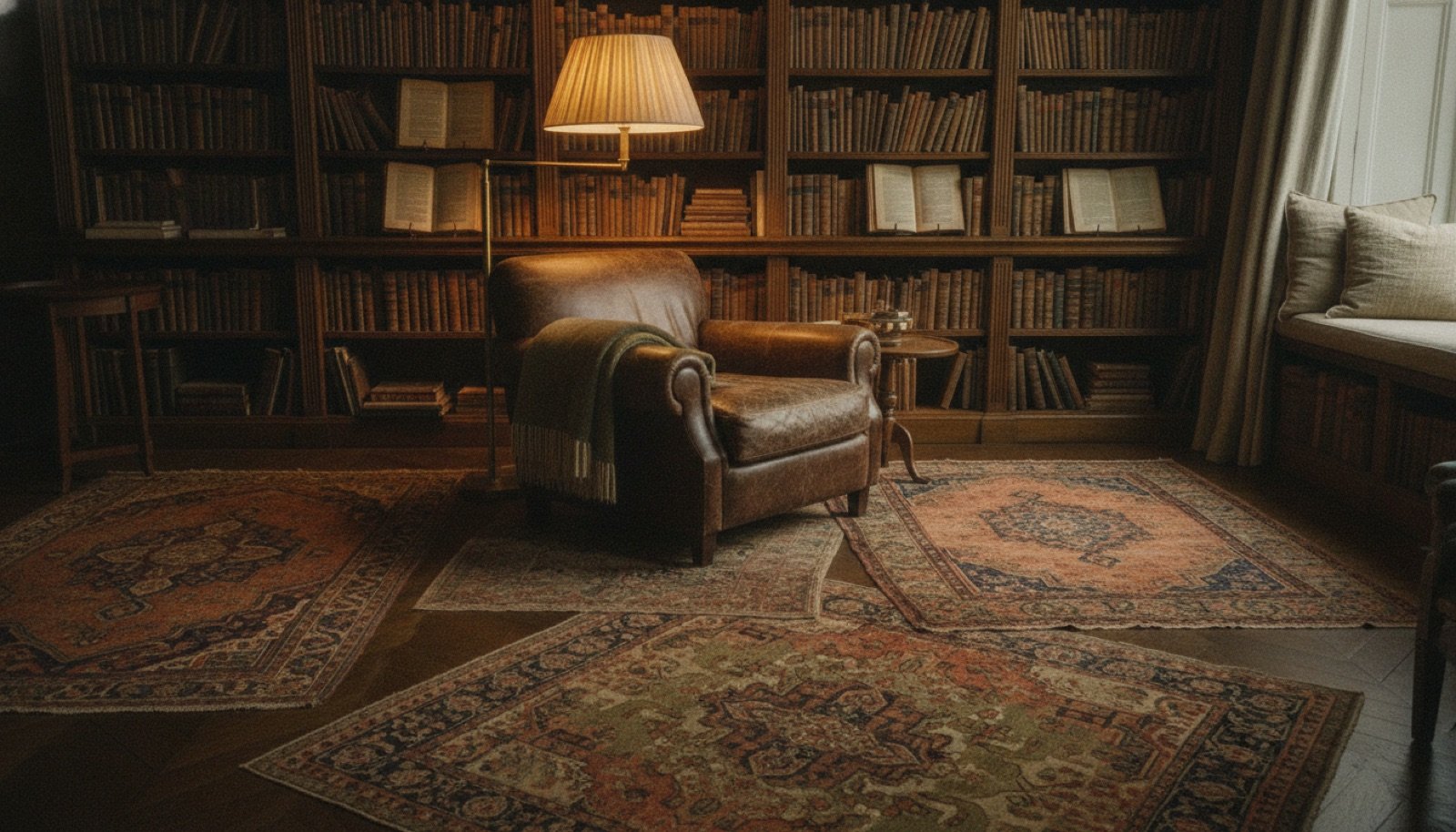
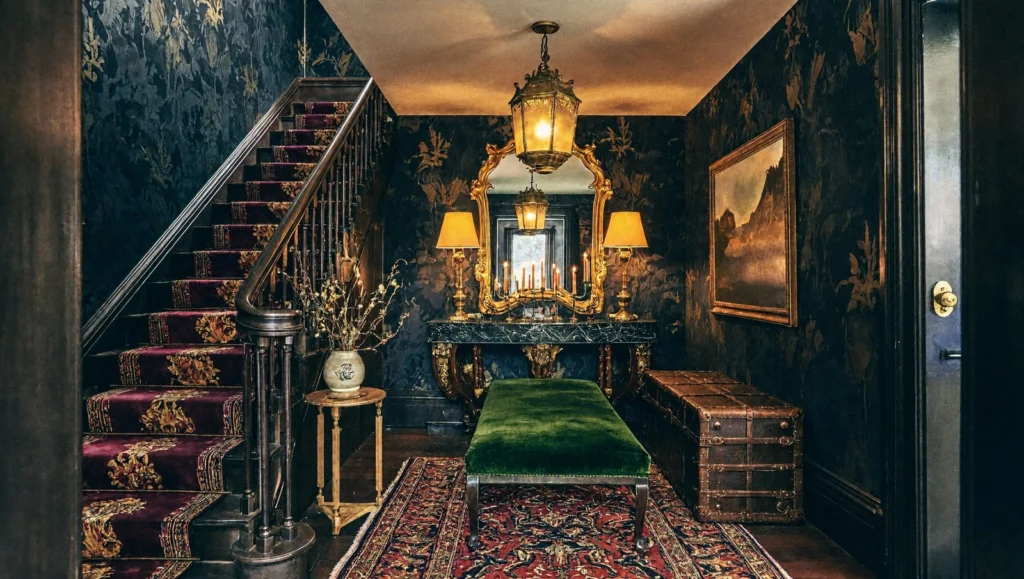
One rug is a rug. Three overlapping rugs is a point of view. Faded Persians, a Turkish runner, a worn kilim, all slightly askew on a dark wood floor. They soften footsteps, absorb sound, and add the warm reds and indigos that make dark walls glow.
If authentic antiques aren’t in the budget, a vintage-wash Persian area rug in a faded red does the heavy lifting, and you can layer a real thrifted runner on top for the patina. Nobody is checking knot counts by lamplight.
8. Hide a Bar in the Bookcase
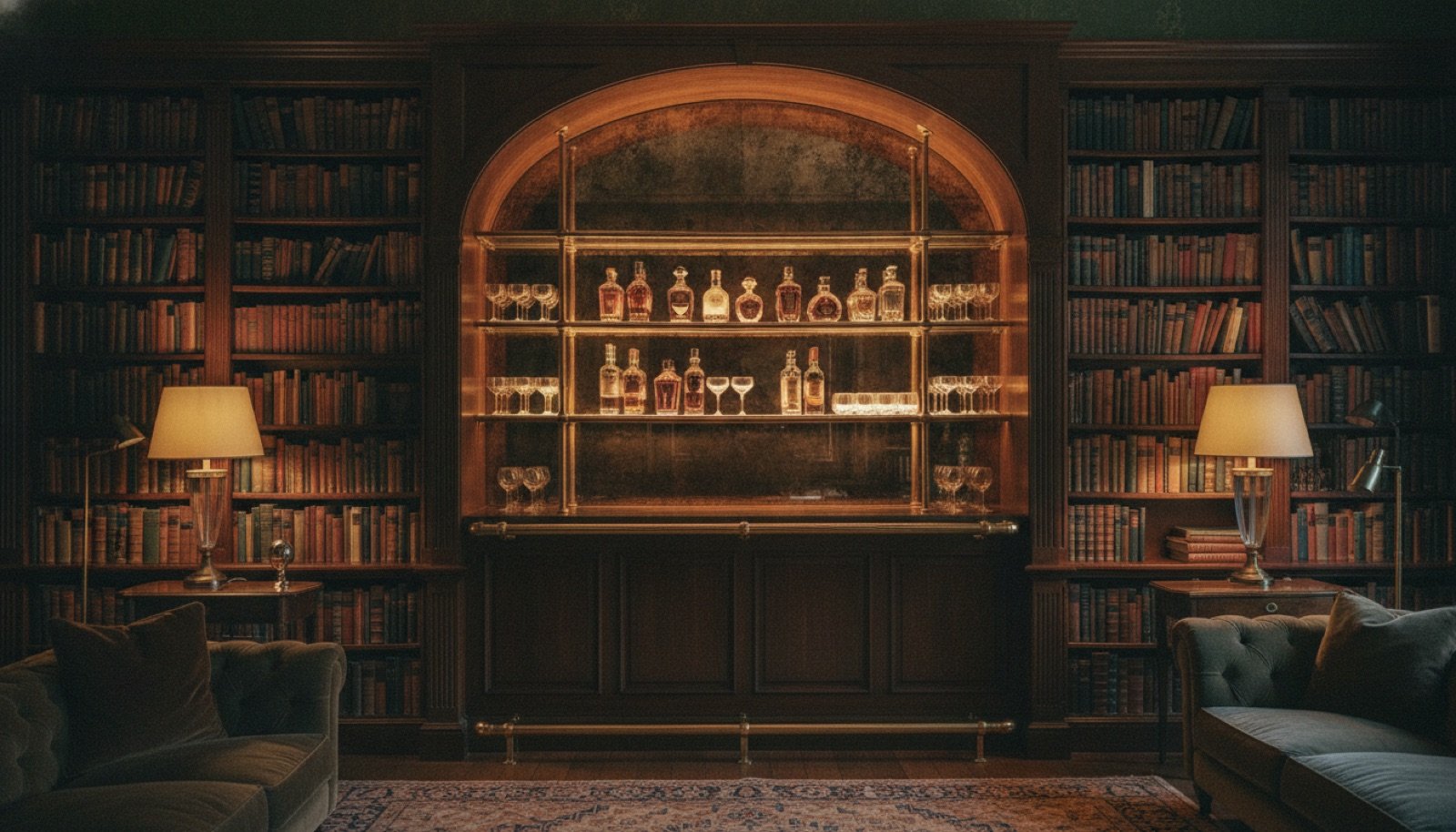
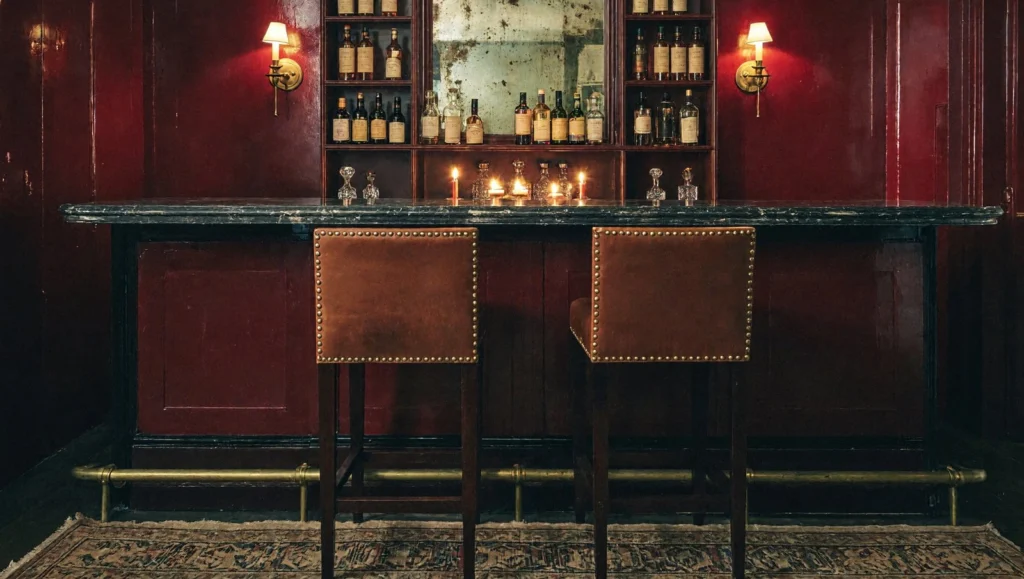
A library without a drink in it is a reading room, and those are for public institutions. Carve out one bay of shelving for a bar: smoked mirror at the back, glass shelves, a row of crystal decanters, a brass rail, and a strip of amber light. It reads as a secret even though it’s sitting in plain sight.
If carpentry isn’t happening, a brass bar cart wedged between two bookcases does the job. Stock it with mismatched vintage coupes and one cut-crystal whiskey decanter. The goal is that every guest eventually ends up in this room, holding a glass, pulling books off your shelves.
9. Style the Shelves With Curiosities, Not Just Books
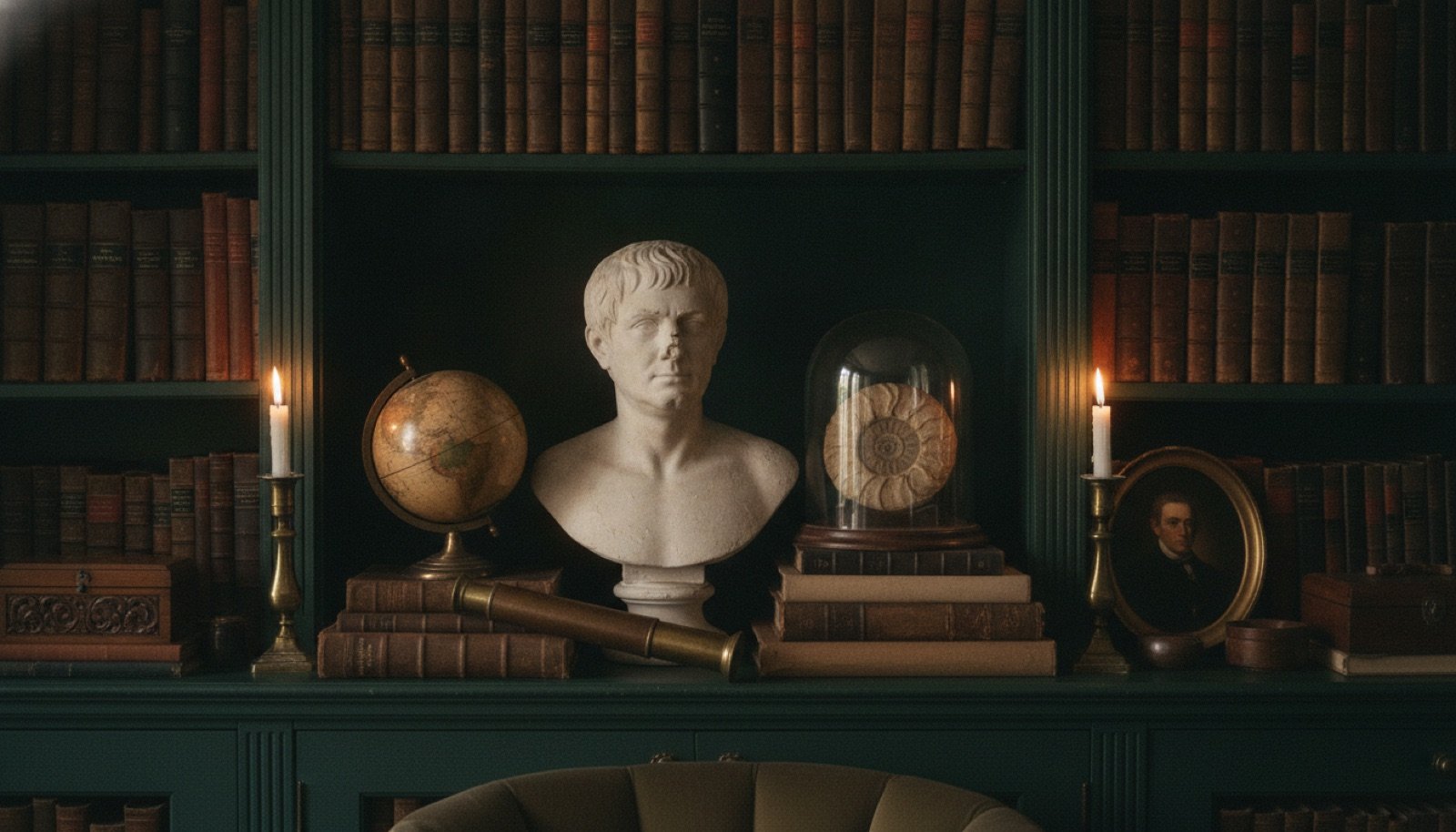
Rows of nothing but books look like a bookshop. Break them up. A plaster bust here, a glass cloche over a fossil there, an antique globe, a brass telescope, a cluster of candlesticks, a tiny portrait propped against the spines. Every fourth or fifth shelf should have an object that makes people ask a question.
Turn some books horizontally and stack them as plinths for objects. Mix spines by color in one section and leave others gloriously random. The trick is variety of scale: tall and short, shiny and matte, precious and slightly ridiculous. That’s what separates a moody home library from a furniture showroom.
10. Build a Window Seat and Drown It in Velvet
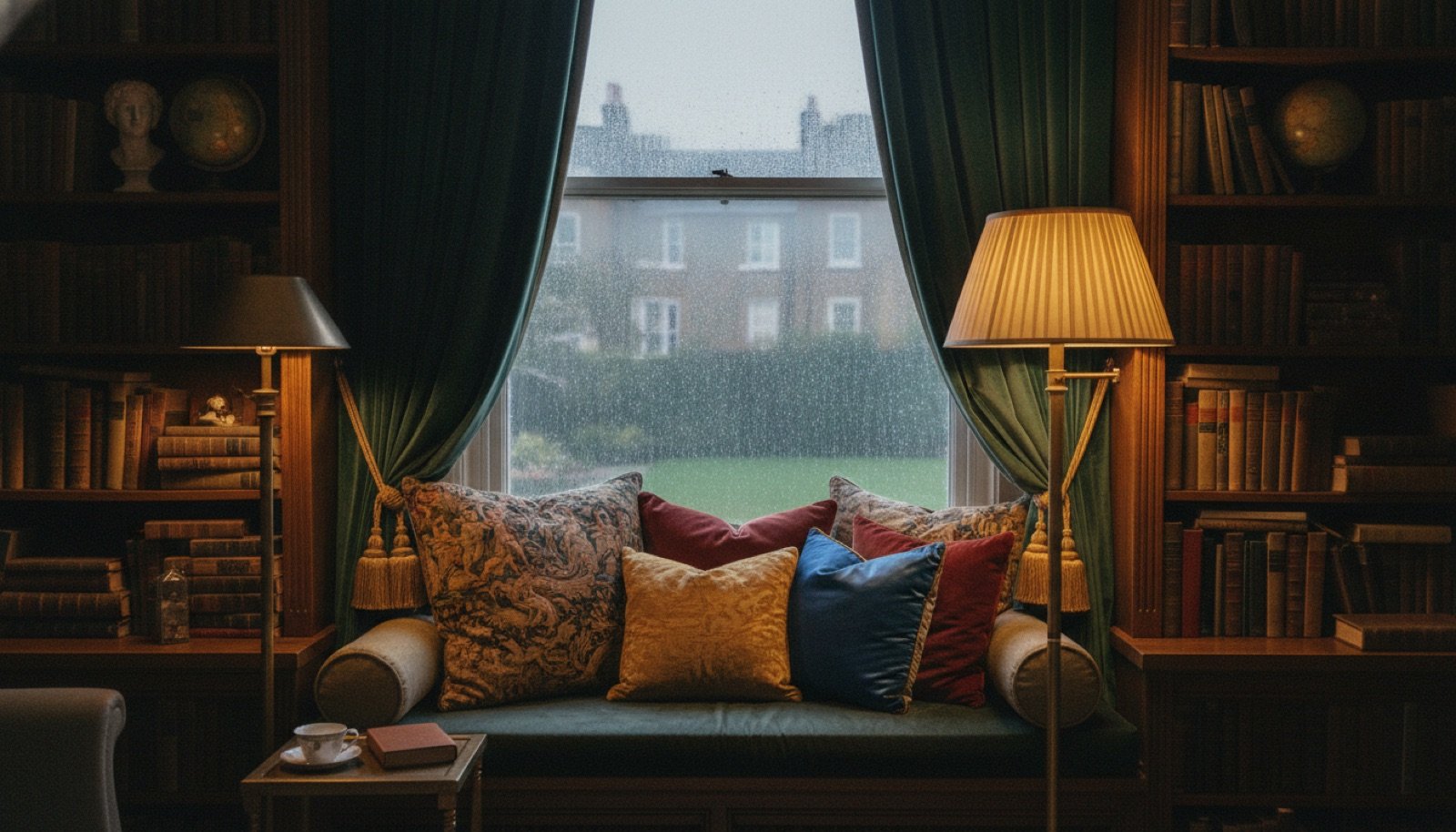
If your library has a window, frame it with shelves and build a seat into the gap. Then hang floor-to-ceiling velvet curtains (emerald, plum, rust) with tasseled tiebacks, and pile the cushion with tapestry pillows until it looks slightly unreasonable. This is where the actual reading happens.
Hang the curtain rod as close to the ceiling as possible and let the panels puddle a couple of inches on the floor. Skimpy curtains are the decorating equivalent of a weak handshake.
11. Give the Fireplace an Overmantel Mirror and a Crowded Mantel
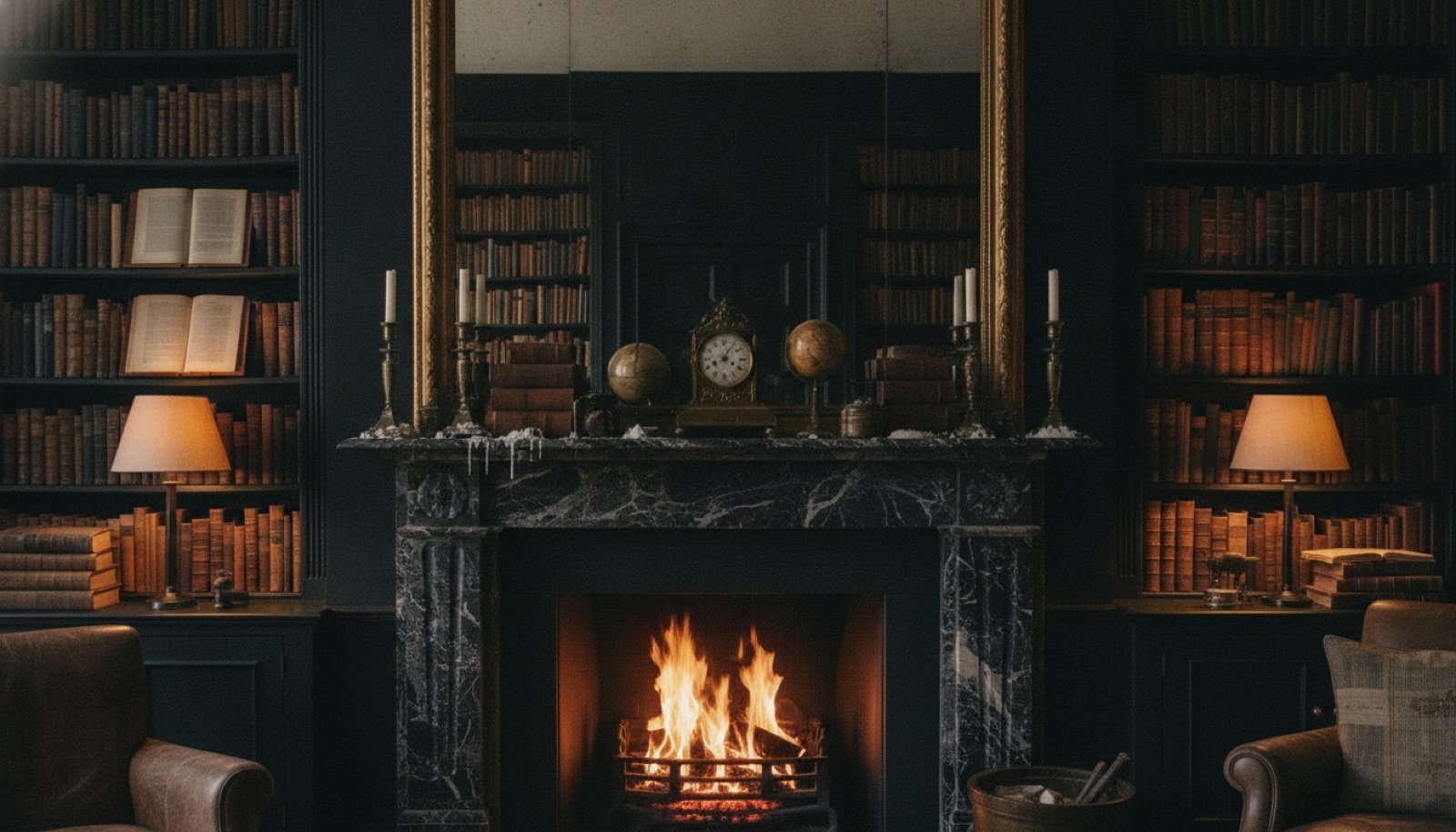
A fireplace in a library is the dream; a gilded mirror over it is the finishing move. An oversized overmantel mirror reflects the shelves on the opposite wall and doubles the lamplight, which matters in a room painted near-black.
Then load the mantel: brass candlesticks of different heights, a small clock, a stack of books, a bust, a vase of dried something. Symmetry is optional and usually suspicious. No fireplace? Lean a big mirror over a console and put candles in front of it. Same spell, smaller budget.
12. Put a Real Desk in the Middle of the Room
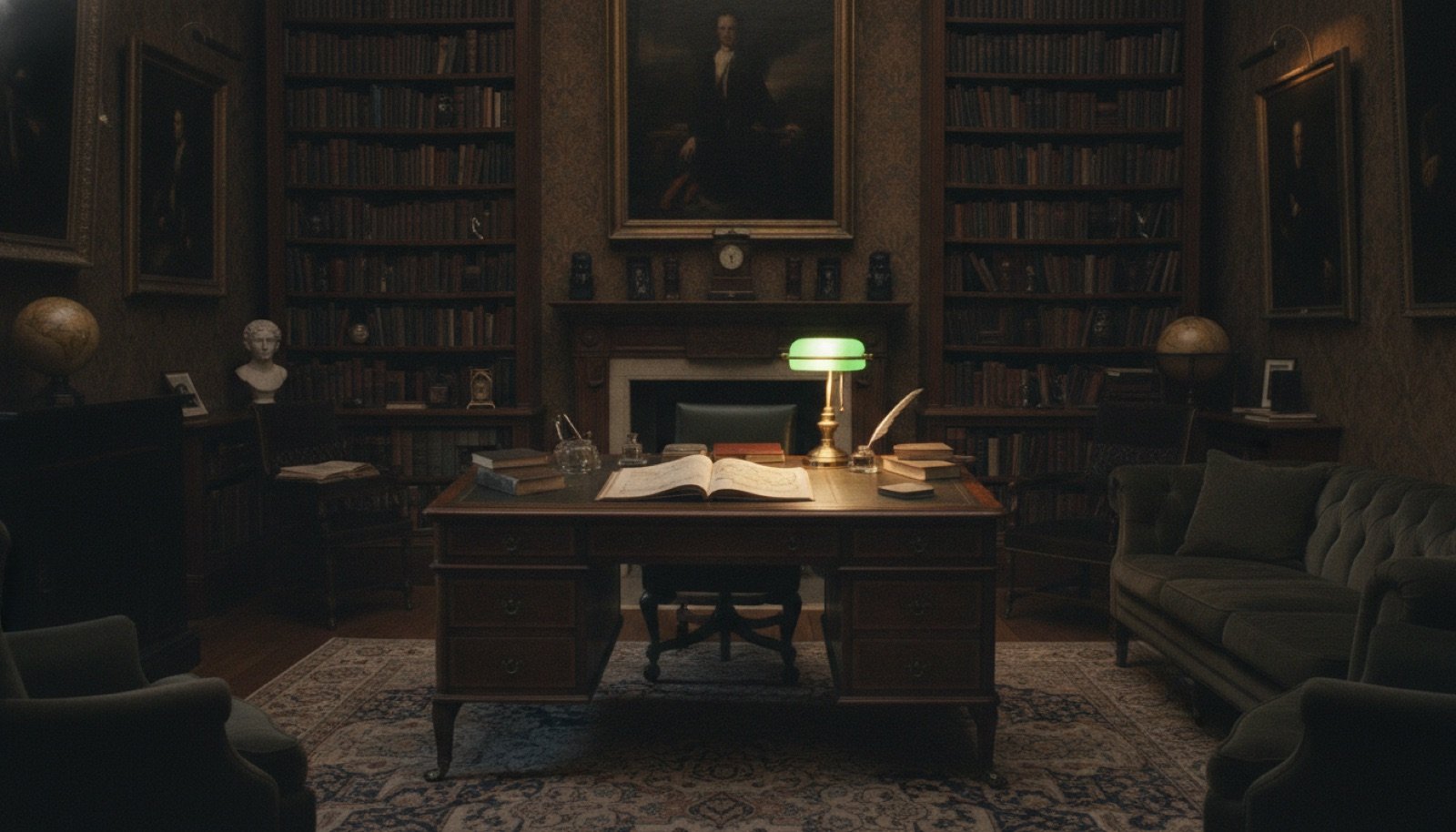
Pushing a desk against the wall is for spreadsheets. In a library, float a big antique desk or library table in the center, facing the door, like you’re expecting visitors with news from abroad. A partners desk, a mahogany writing table, or a farm table with a leather blotter all work.
Top it with a green glass brass banker’s lamp, an open atlas, and a fountain pen you use more for ceremony than writing. It also makes the room work hard: this is where the bills get paid, the letters get written, and the laptop gets hidden in a drawer at five o’clock.
13. Install a Hidden Bookcase Door
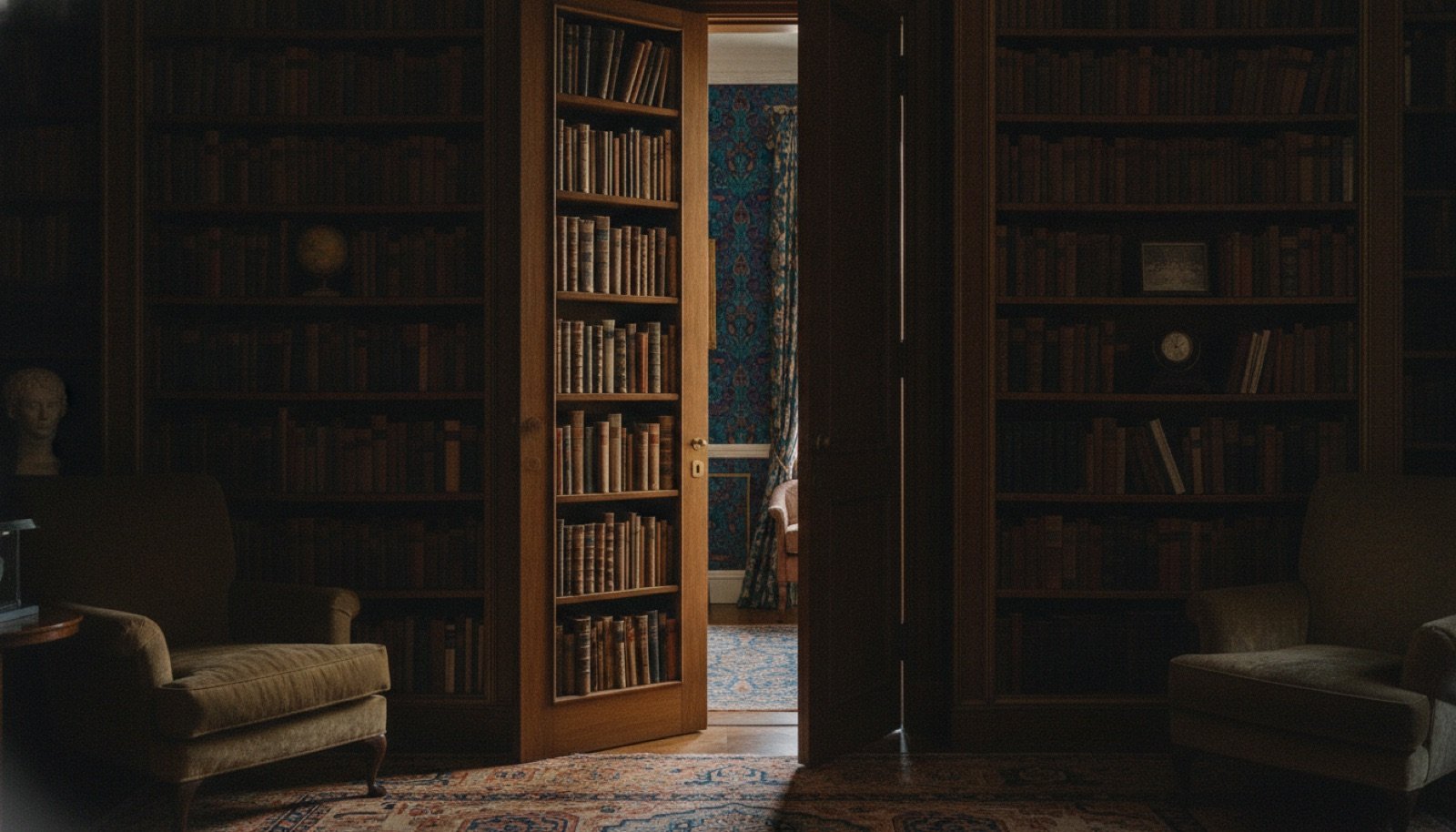
Yes, we went there. A hinged bookcase that swings open to reveal a powder room, a closet, or a second room is the most fun you can have with carpentry. It’s also more achievable than you’d think; pivot hinge kits are made precisely for this, and plenty of people convert an existing doorway.
Load the shelves on the door with lighter objects and paperback-weight books so the hinges don’t sag. And please, put something unexpected on the other side: a jewel-box wallpapered bathroom, a bar, a single chair under a single lamp. A secret door that opens onto the vacuum cleaner is a betrayal.
How to Pull Your Moody Home Library Together
Start with paint and lighting, because those two decisions do eighty percent of the work. Then add seating, then rugs, then the objects that make it yours. Shop vintage first and new second; a library is meant to look accumulated, not delivered. And edit with a light hand. In our world, editing means moving things around, not removing them.
If you only have one wall, the same rules apply at smaller scale: dark paint, a picture light, one leather chair, a stack of rugs, and shelves styled with curiosities. A moody home library is an attitude, not a square footage requirement.
Frequently Asked Questions
What paint colors work best for a moody home library?
Deep, warm-leaning shades do best because they flatter both wood and paper: oxblood, aubergine, bottle green, inky navy, and warm charcoal. Avoid cool, blue-gray blacks, which can make a book-filled room feel cold. Color-drenching the walls, shelves, and trim in one shade gives the richest result.
Won’t dark paint make a small library feel cramped?
It tends to do the opposite. Dark colors blur the corners and edges of a room, so the boundaries are harder to read and the space feels more enveloping than small. The key is layered lighting: picture lights, table lamps, and a dimmable fixture instead of one bright overhead.
How do I light a dark home library for reading?
Use task lighting at the seat (a floor lamp or table lamp with a warm 2700K bulb), picture lights over shelving and art, and a dimmable ceiling fixture for ambience. Aim for at least three light sources at different heights so you can read comfortably without flattening the mood.
Can I create a moody home library without a dedicated room?
Yes. A single wall of dark-painted shelving in a living room, dining room, or hallway can carry the look. Add a picture light, a leather or velvet chair, a layered rug, and a few curiosities among the books, and you have a library corner with the same atmosphere.
How do I keep books safe in a dark, moody room?
Keep books out of direct sunlight, which fades spines quickly, and avoid placing shelves on damp exterior walls. Leave a little space behind books for airflow, dust regularly, and use LED bulbs in picture lights so they don’t heat the spines.