15 Dark Sunroom Ideas for Moody Maximalists
Every sunroom you’ve ever toured was designed by someone terrified of shadow. White trim, glass on three sides, a wicker settee that apologizes for existing — the whole genre built around the idea that a room full of light has to look like a waiting area with better views. We disagree. Dark sunroom ideas are the correction this over-bleached category has needed for a decade. For our kind, a sunroom isn’t a place to fade into the background. It’s the one room in the house where nature is already doing half the decorating, and darkness is what finally lets it perform.
Light bounces differently off charcoal and espresso than it does off eggshell — it pools, it dramatizes, it turns a plant collection into a gallery instead of a garden center. Below, fifteen dark sunroom ideas for anyone ready to stop apologizing for a room that gets this much natural light and start using it properly.
Why Dark Sunroom Ideas Work Better Than the White-Glass-Box Default
Conventional wisdom says sunrooms need pale walls to “maximize” light, as though light were scarce. It isn’t. A sunroom already has more daylight than any other room in the house — that’s the whole premise of the glass. What it’s usually missing is contrast, and contrast is what makes a space feel considered instead of accidental. Dark sunroom ideas work because the windows do the brightening while the walls, floor, and furniture do the atmosphere. More is a religion in this house, and that includes more depth, more saturation, more reasons to linger in a room you used to treat as a hallway with plants in it.
There’s a practical case too: dark surfaces hide the reality of a room exposed to weather, pollen, dust, and the general chaos of being mostly window. A pale sunroom shows every smudge. A moody one absorbs it and looks better for the wear. Deliberate chaos is also low-maintenance chaos.
15 Dark Sunroom Ideas for a Moody, Maximalist Glass Room
1. Charcoal-Lacquered Walls With Unlacquered Brass Trim
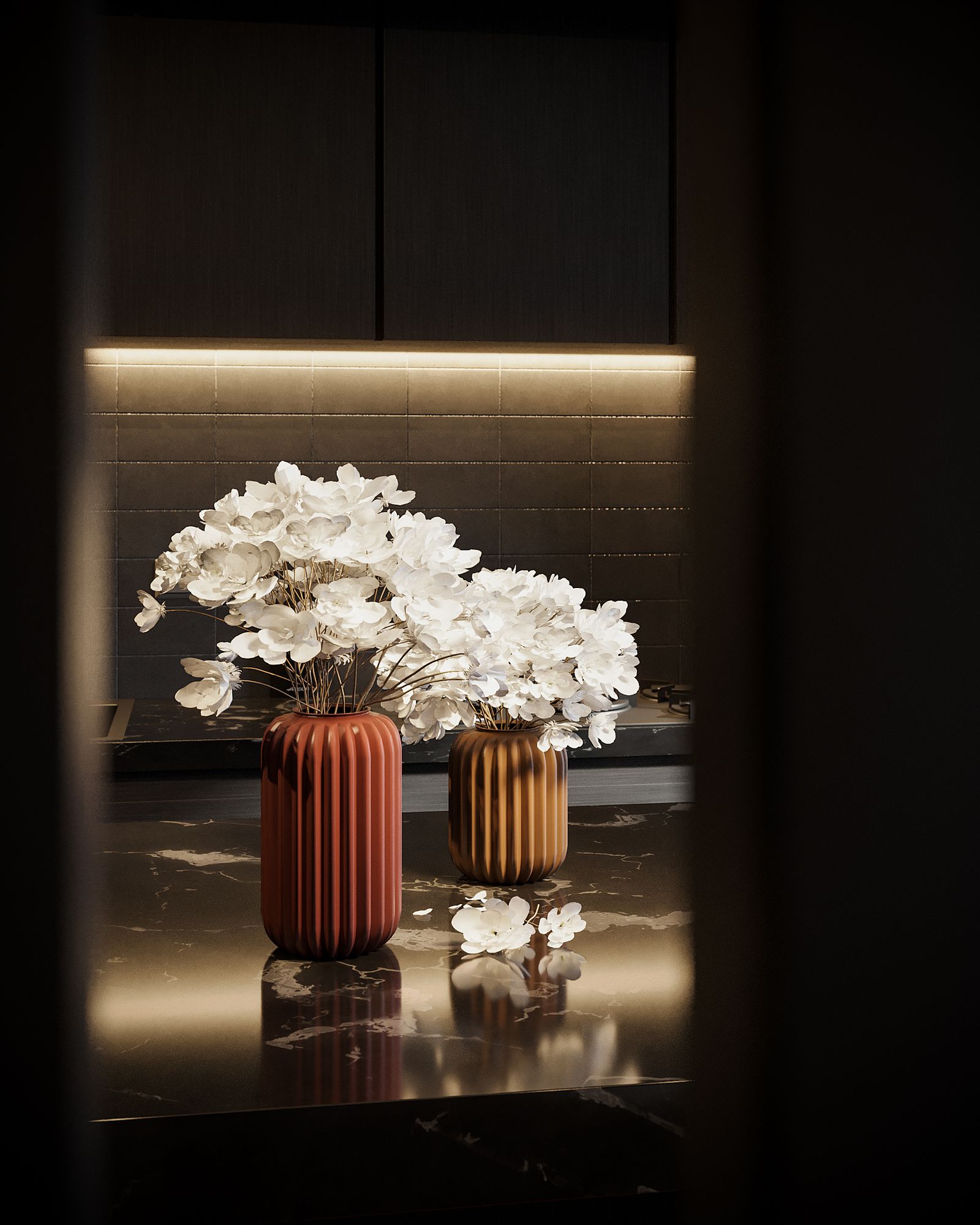
Start with the walls — in a room this glass-heavy, the wall surface does more heavy lifting than usual. A deep charcoal or near-black lacquer finish reflects just enough window light to keep the room from reading as a cave, while giving furniture and foliage something to push against visually. Skip flat matte if you can; lacquer or a high-sheen eggshell catches the shifting daylight all day.
Pair it with unlacquered brass window trim and hardware left to patina naturally. The warm metal against cool charcoal photographs well at 8 a.m. and again at golden hour.
2. Black Steel-Framed Windows for an Industrial Conservatory Look
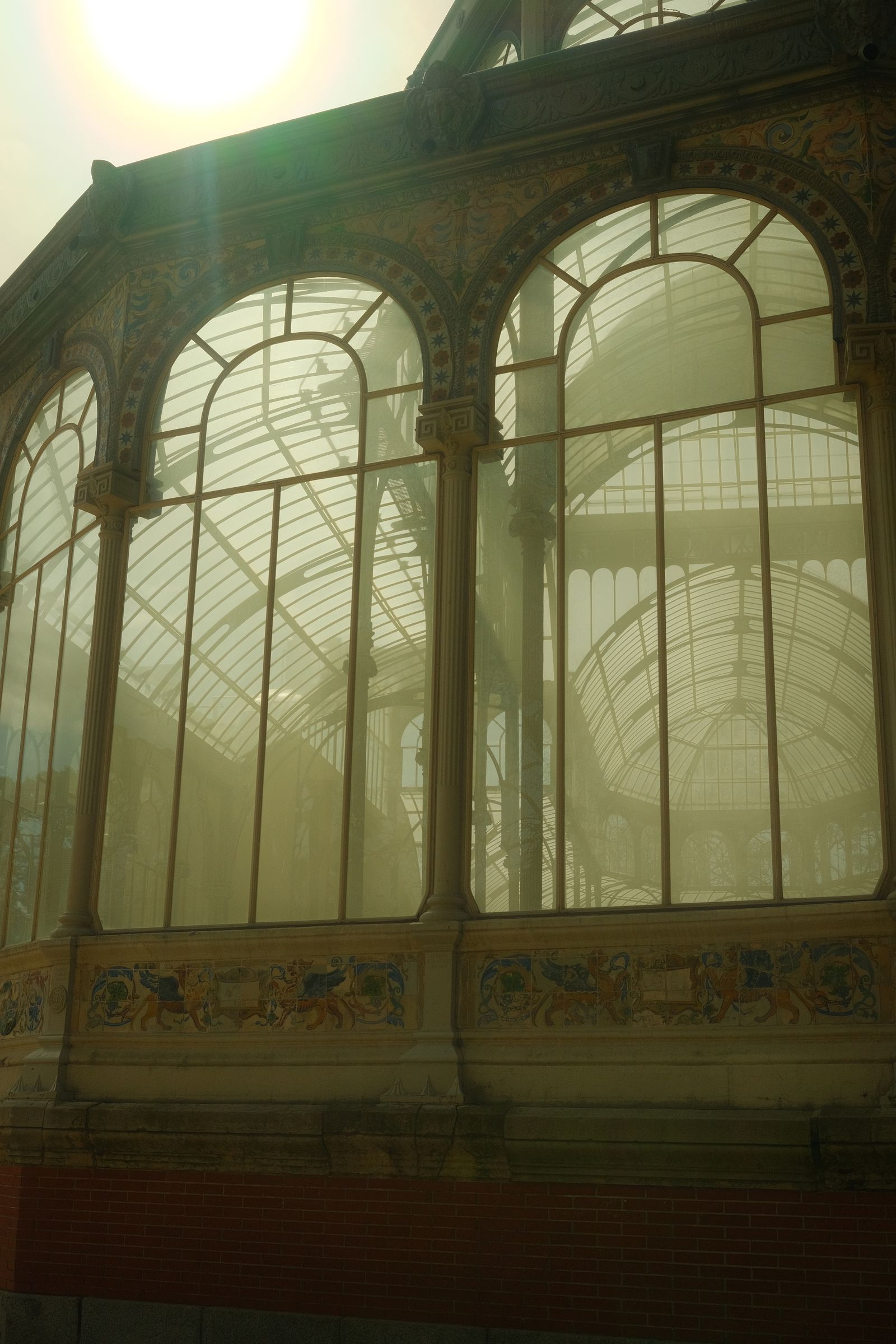
If you’re building or renovating a sunroom from scratch, black steel-framed windows change the entire personality of the space before you’ve hung a single piece of art. Instead of the standard white vinyl grid that reads as suburban add-on, black steel muntins carve the view into something closer to a Parisian atelier or a Victorian glasshouse. It’s the single highest-impact structural choice on this list.
Even if a full window replacement isn’t in the budget, matte black window film or peel-and-stick trim can approximate the look for a fraction of the cost — a shortcut we fully endorse.
3. Paint the Ceiling — The Fifth Wall Doesn’t Get to Hide
An unpainted white ceiling in an otherwise moody sunroom is the decorating equivalent of a sentence that trails off. Carry a deep forest green, aubergine, or the same charcoal as the walls straight up and across the ceiling and the room stops feeling like four surfaces plus an afterthought — especially with exposed beams or a vaulted profile.
Glazed or lightly glossy ceiling paint picks up daylight from every angle the glass provides, so the room never goes flat.
4. Black Rattan and Wicker, Not White
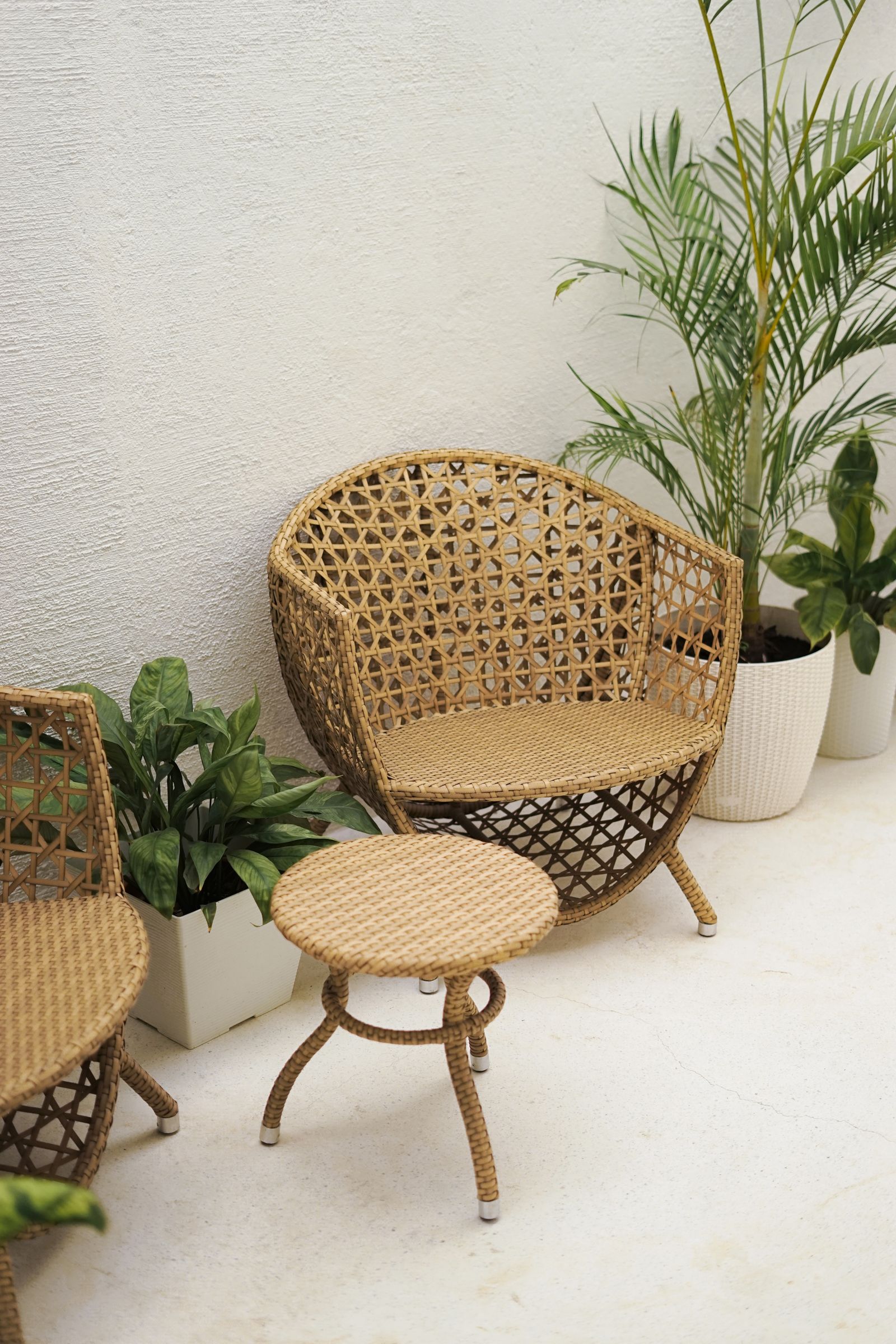
Rattan belongs in a sunroom — that part of the traditional formula is correct. What’s wrong is the assumption it has to be bleached blonde. Black-lacquered or ebonized rattan and wicker keep every bit of the material’s texture and shadow-play while dropping the beachy, bridal-shower connotations entirely. A black rattan armchair like this ebonized peacock-back accent chair reads sculptural instead of seasonal.
Mix finishes rather than matching a full set — one deep-toned rattan armchair, one carved wood bench, one upholstered piece in a jewel-toned velvet. Matching sets are for showrooms. Curated obsession is for us.
5. Moody Botanical Wallpaper on One Wall

Most sunrooms have at least one solid wall doing nothing — a missed opportunity. A dense, dark-ground botanical wallpaper on that wall does what real plants can’t manage alone: it makes the greenery feel infinite, like the room is a clearing in something much larger. Go for illustration-style florals or palm prints on black or bottle-green grounds rather than the airy, sparse patterns marketed for “fresh” spaces.
This is the fastest upgrade on the list for renters unable to touch the glass or structure — peel-and-stick versions look convincing from more than three feet away, which is the only distance that matters.
6. Black-and-Brass Lanterns for After-Dark Ambiance
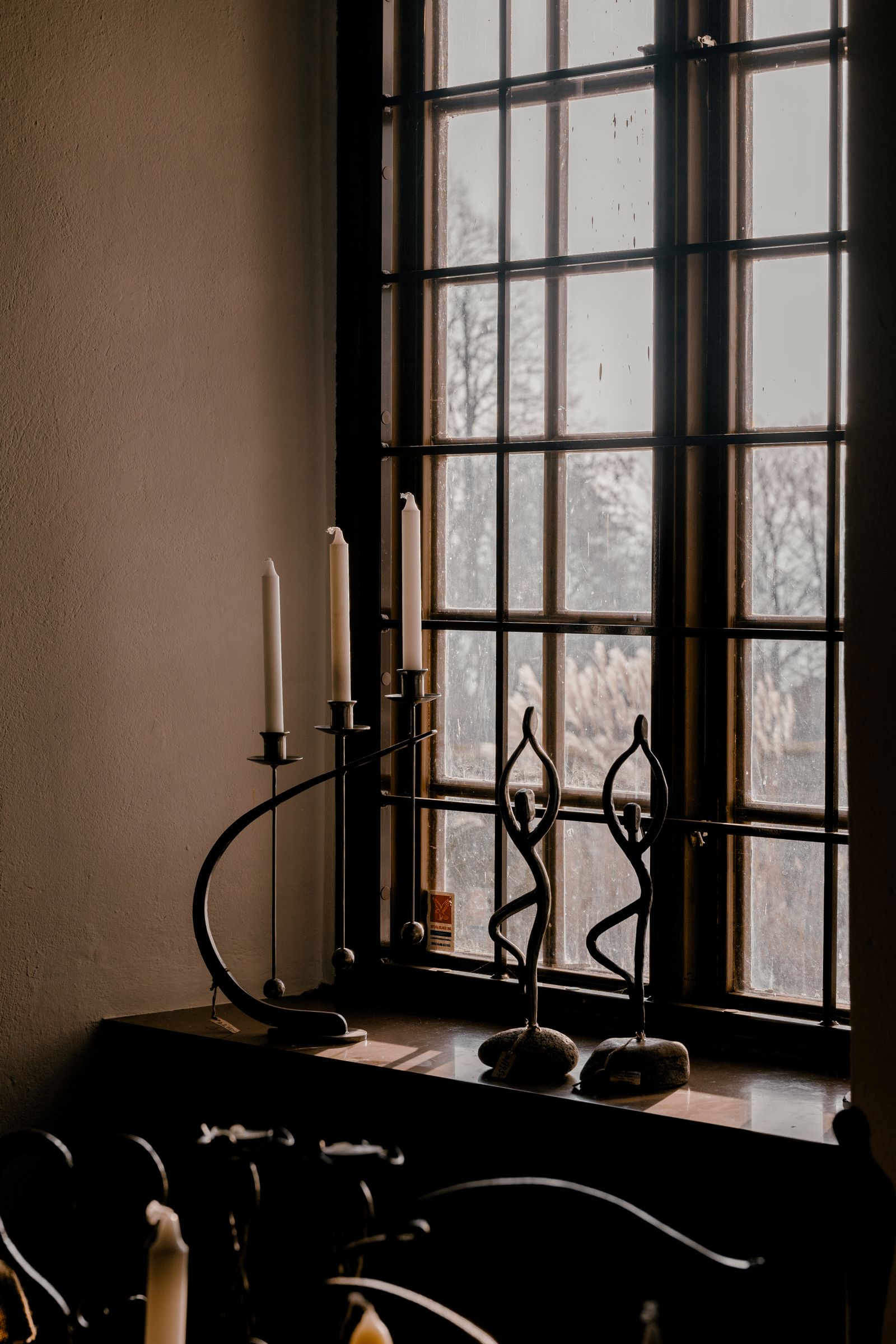
A sunroom’s identity is built around daylight, which means it’s usually the first room to go dead once the sun sets. Solve it with layered lantern lighting rather than a single overhead fixture. An oversized black iron lantern like this candelabra floor lantern anchors a corner and throws flickering, uneven light that reads intimate instead of exposed after dark.
Add two or three smaller brass hurricane lanterns at varying heights — side table, plant stand, floor — so the room gets multiple pools of warmth instead of one flat wash. Dark academia lighting logic, applied to a room usually exempt from it.
7. Smoked Glass and Brass Furniture
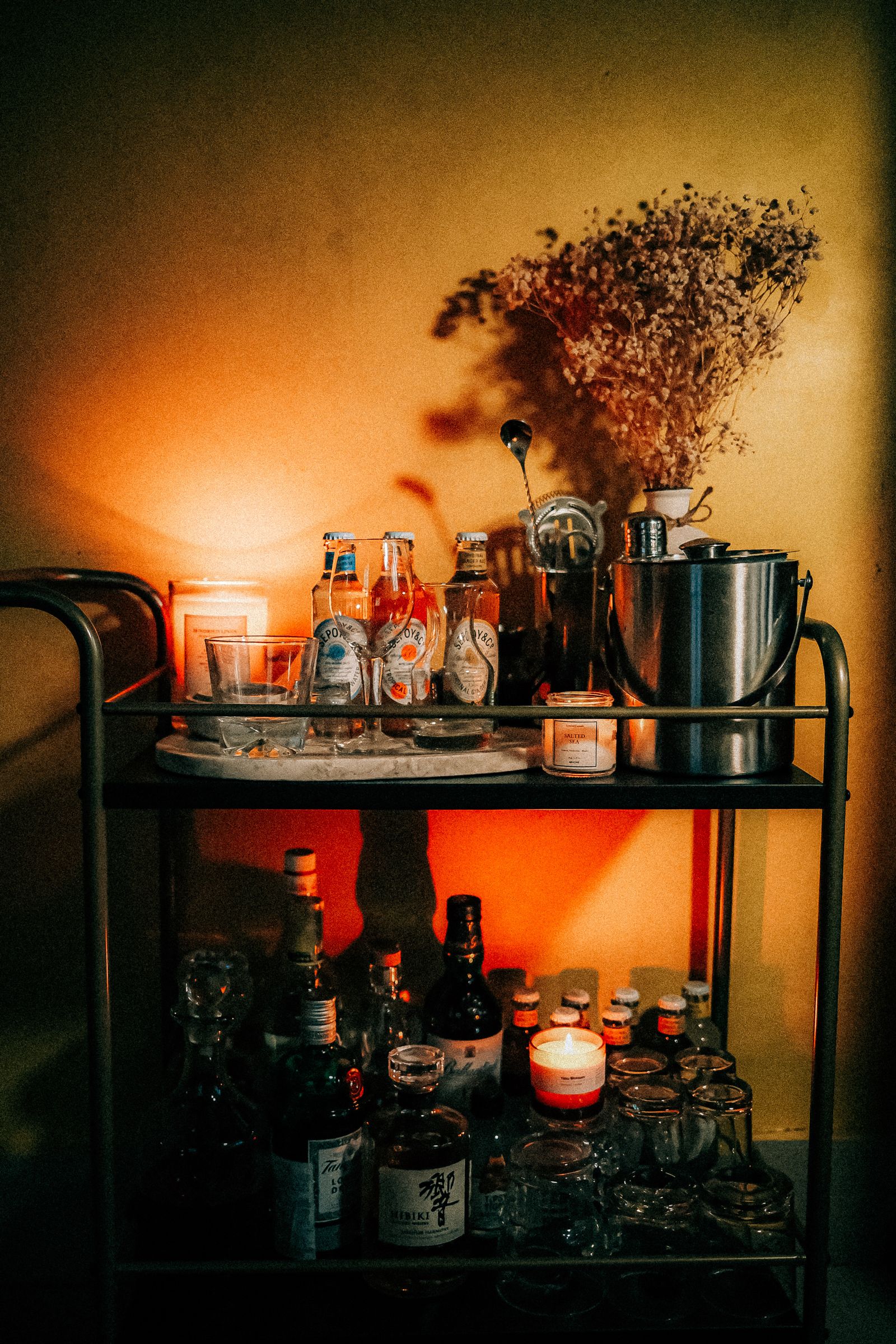
Because a sunroom is already glass-forward architecturally, smoked or bronzed glass furniture extends the material language instead of fighting it. A smoked-glass and brass bar cart or coffee table catches light without adding visual weight, which matters in a room where every other surface is going darker. It’s also, frankly, the most old-money maximalist move on this entire list.
Look for pieces with brass detailing rather than chrome — the warmer metal holds up better against charcoal walls and reads less cold in a room already full of natural light.
8. Dark Terracotta or Ebonized Wood Flooring
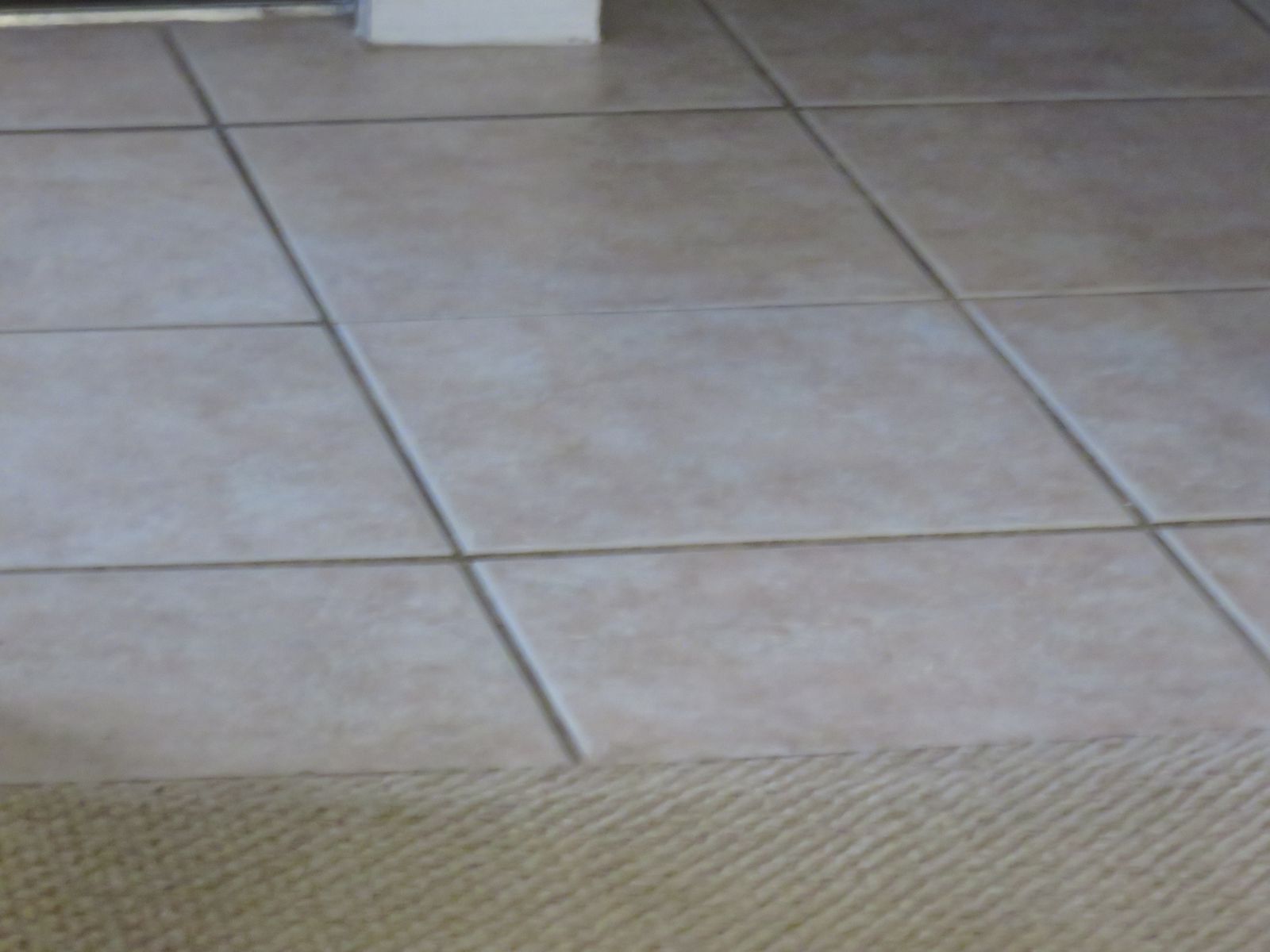
White or pale tile is the default sunroom floor, and it’s the surface most responsible for that clinical, over-bright feeling. Swap it for dark terracotta, slate, or ebonized wood and the room’s entire temperature shifts warmer and richer. Dark flooring also hides the dirt and pollen residue that a glass-walled room accumulates faster than any other space in the house.
If replacing the floor isn’t realistic, a dark-stained floor cloth or an oversized painted rug in a deep palette fakes the effect convincingly from a seating position, which is the only vantage point that counts.
9. A Velvet Daybed or Chaise Reading Corner
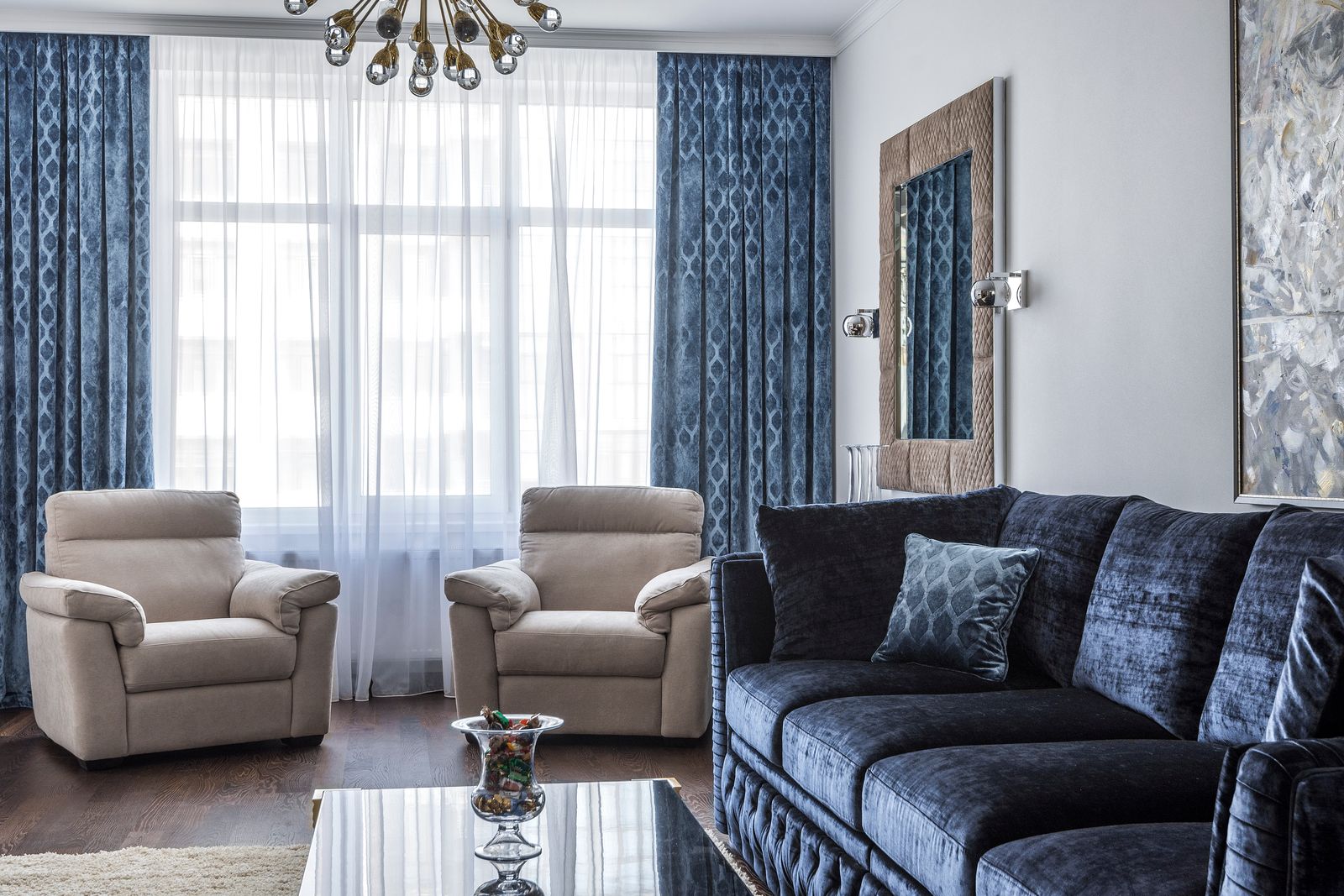
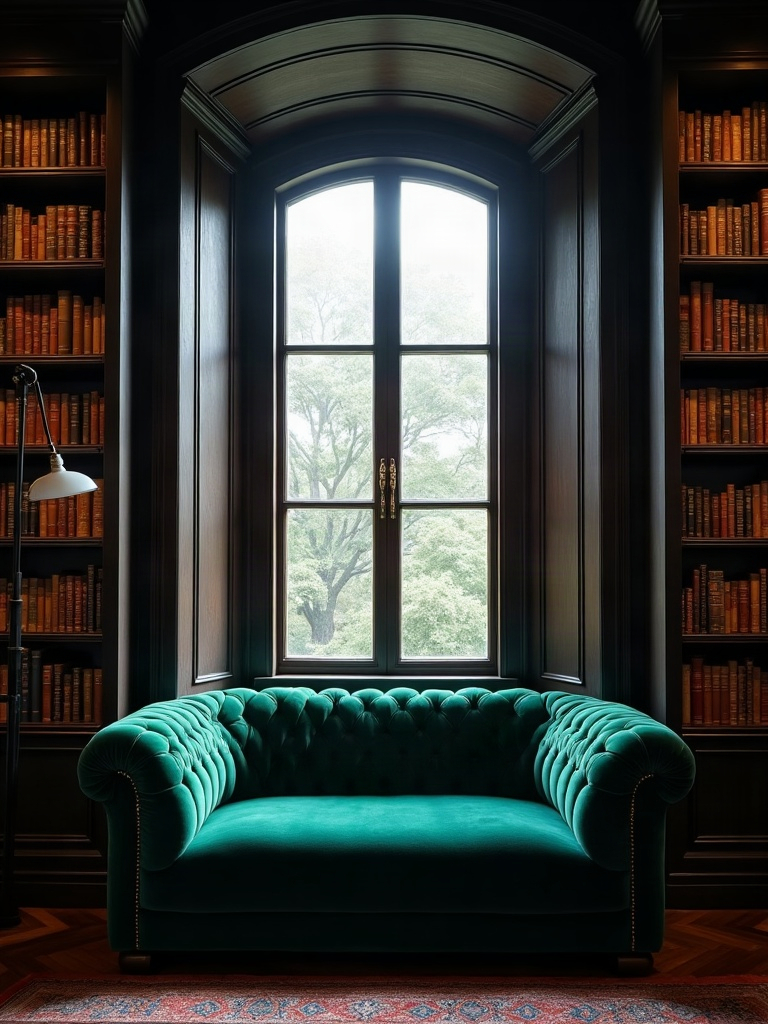
Give the sunroom a destination, not just a pass-through. A tufted velvet daybed or chaise in emerald, oxblood, or ink blue — something like this tufted velvet chaise lounge — turns one corner into a genuine reading nook. Position it to catch the morning light rather than face away from the windows, a mistake we see constantly in otherwise well-decorated sunrooms.
Stack it with mismatched throw pillows in clashing patterns and one heavy wool or velvet throw within reach. A reading corner that looks too tidy has never once been used for reading.
10. A Statement Black Ceiling Fan or Vintage Pendant
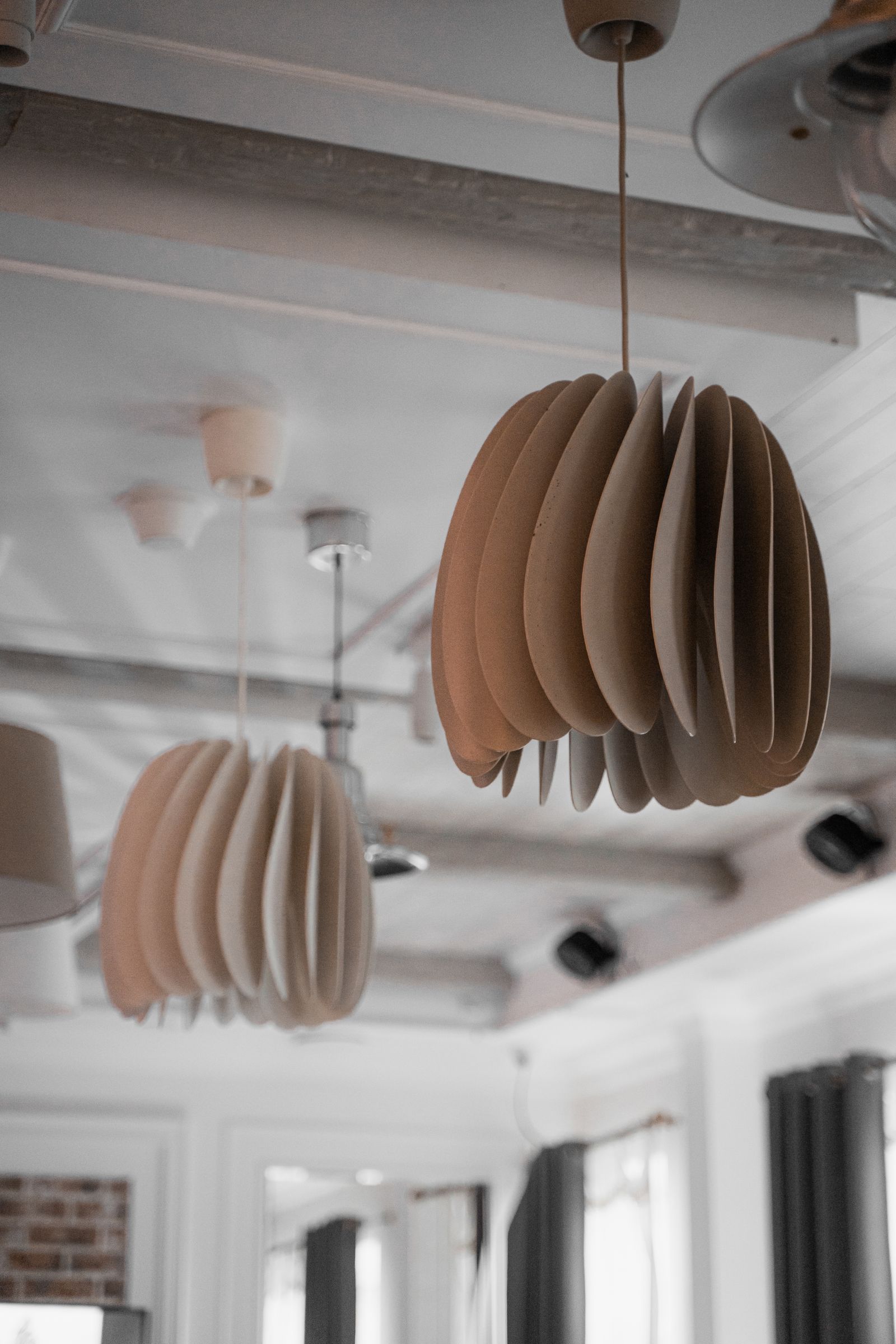
The ceiling fixture in most sunrooms is an afterthought — a builder-grade fan installed for airflow and never reconsidered. Replace it with a black-bladed statement fan with an oil-rubbed bronze or aged brass motor housing, or hang a vintage-style black iron pendant if airflow isn’t a concern. Either choice turns a purely functional element into a focal point, which is the whole point of maximalist design: nothing in the room is allowed to be purely functional.
In a long or narrow room, two smaller fixtures beat one large central piece — it breaks up the sightline, the same principle that makes a gallery wall more compelling than a single oversized painting.
11. A Dense Plant Collection Against Dark Walls

This is the idea that makes everything else on this list click. Plants against a white wall disappear into the general brightness; plants against charcoal, black, or deep green practically glow. Go dense — fiddle leaf figs, trailing pothos, oversized snake plants, something climbing a trellis in the corner. A jungle in mourning, in the best possible way.
Use black or aged terracotta planters rather than pale ceramic, and vary height with a tiered plant stand like this black iron plant stand set. Twelve plants at the same height reads like a nursery. Twelve plants at six different heights reads like a room somebody loves.
12. A Gallery Wall of Vintage Botanical or Oil Paintings
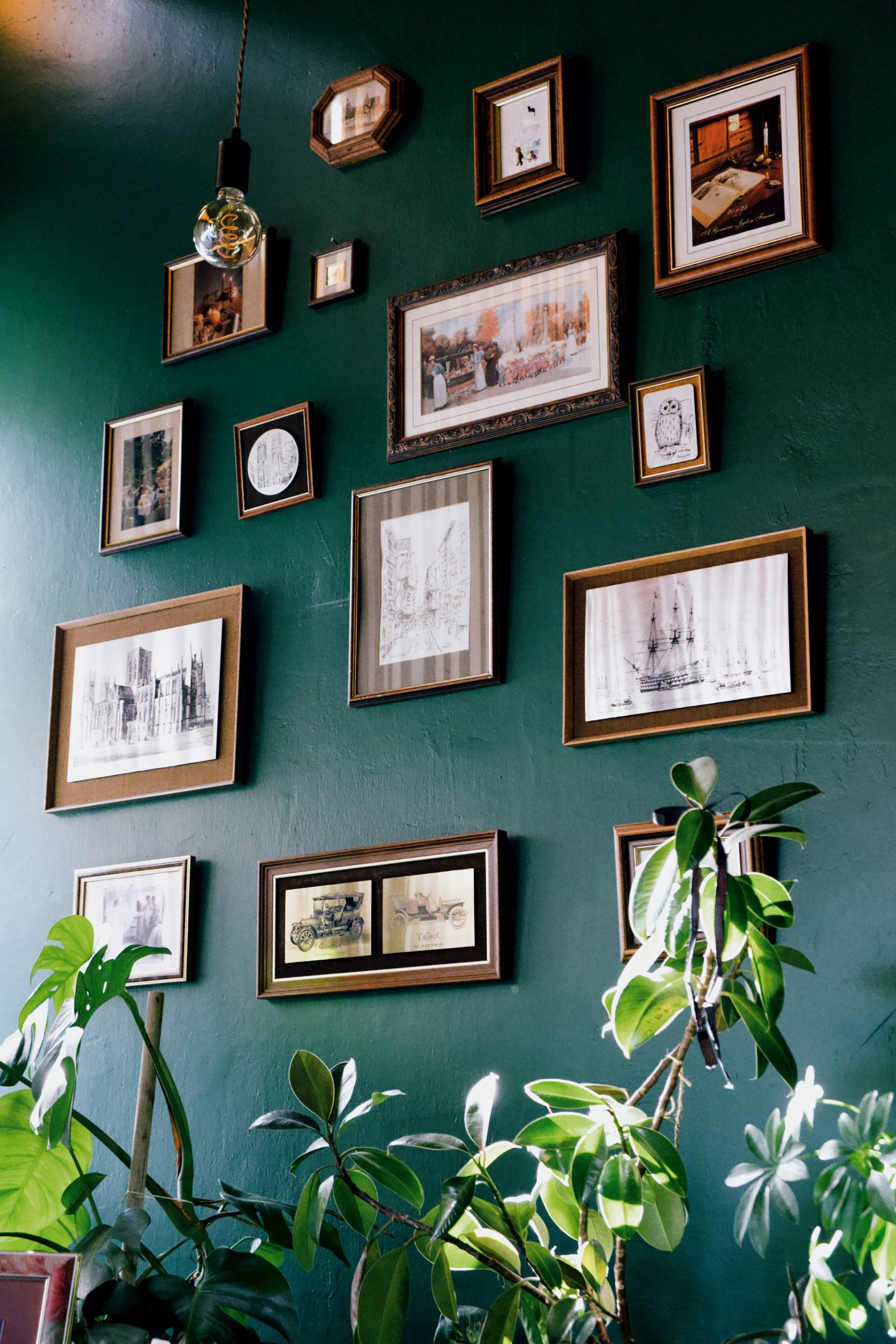
Every remaining blank wall in the sunroom is another missed opportunity. Vintage botanical prints, oil-style florals, and dark still-life paintings in ornate gilt frames read as though they’ve always belonged in this exact spot, especially against a charcoal or bottle-green backdrop. Mismatched frame sizes and finishes are not a flaw here — they’re the entire strategy.
Hang salon-style, edge to edge, with minimal breathing room between frames. A gallery wall with too much negative space is just a wall that hasn’t finished being decorated yet.
13. Bronze Mesh or Black Solar Shades for Glare Control
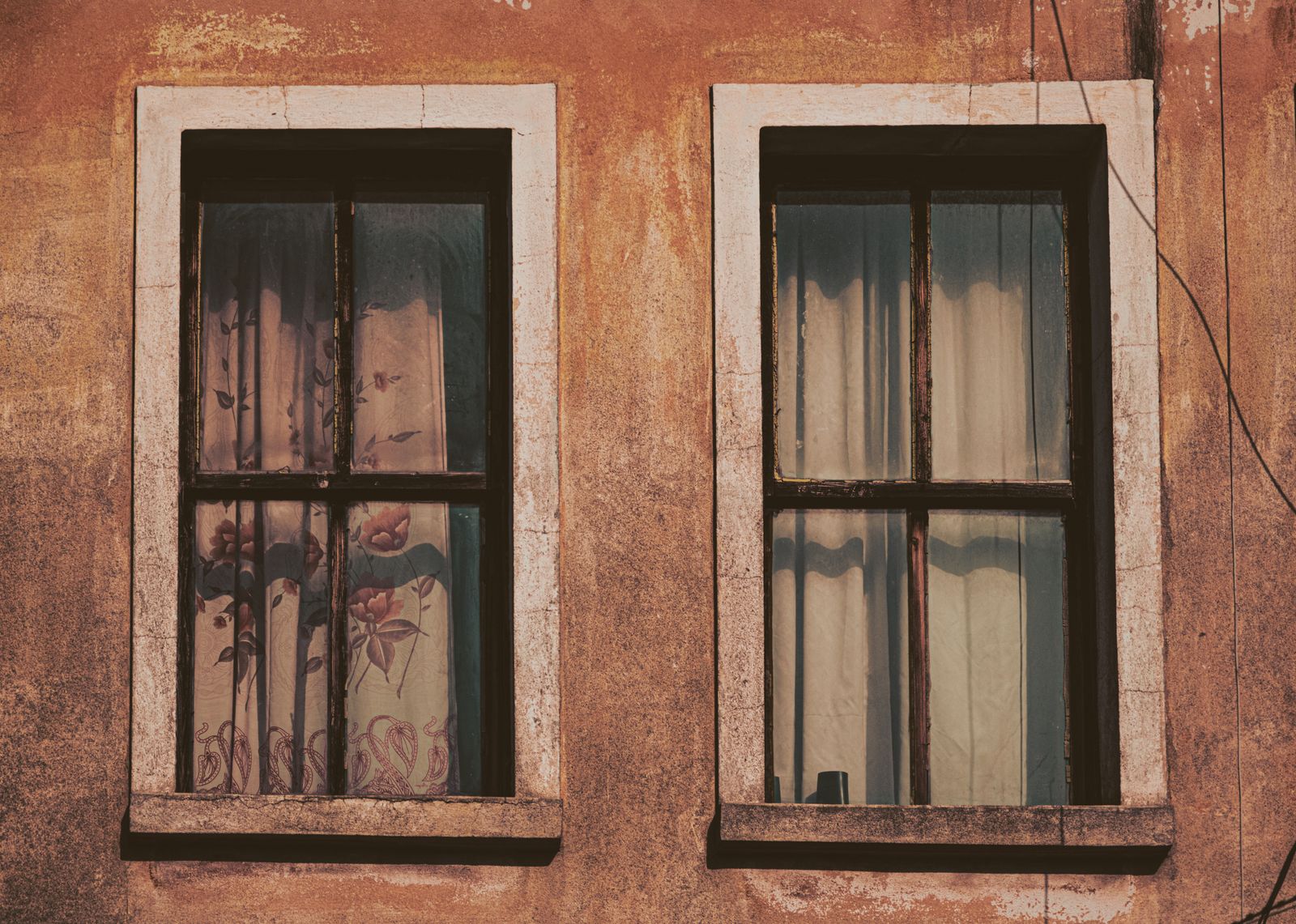
Nobody talks about the unglamorous reality of a glass-walled room — the glare, the heat gain, the afternoon sun turning a reading corner into a greenhouse. Bronze mesh solar shades or matte black roller shades solve the problem without breaking the aesthetic, filtering light through a warm tone instead of stark white fabric.
Choose shades that roll up nearly invisible into the window frame rather than bulky valance hardware — climate control that doesn’t announce itself.
14. Antique Brass or Iron Garden Statuary as a Focal Point

Because a sunroom sits at the threshold between interior and garden, it’s the one room where outdoor-leaning decor doesn’t feel like a costume. An aged brass birdcage, a weathered iron urn, or a piece of reclaimed garden statuary among the plants blurs that indoor-outdoor line intentionally rather than accidentally.
Let it show real patina — the greener and more tarnished, the better it reads against dark walls. A too-shiny brass piece looks staged. A tarnished one looks inherited, and inherited always wins.
15. Layered Persian or Moroccan Rugs Over Dark Stone or Tile
Finish the floor the way you’d finish any room in a maximalist house: with pattern on pattern. A dense, richly colored Persian or Moroccan-style rug — something like this hand-knotted jewel-tone area rug — laid over dark stone, tile, or wood grounds the seating area and adds a second layer of saturation the room’s paint and furniture alone can’t provide.
Layer a smaller vintage runner or kilim partially on top for texture, and don’t worry about the pattern “matching” the rest of the room. Done right, nothing here matches. Everything just belongs.
Bringing Dark Sunroom Ideas Together Without Losing the Light
The mistake people make when they hear “dark sunroom” is assuming the goal is to dim the space down to nothing. It isn’t. Every idea on this list works with the light already flooding through the glass, not against it — charcoal walls that catch a sheen, brass that warms in direct sun, plants that finally get to be the main character. Done well, this is still, technically, the brightest room in the house. It just no longer looks like a laboratory.
Start with one or two changes — the wall color and the lighting, most likely. Dark sunroom ideas compound quickly once the bones are in place, and a room this exposed to daylight will show you within a week whether the palette is working. If it isn’t dramatic enough, it almost never is on the first pass. Lean darker.
Frequently Asked Questions
Will a dark sunroom feel too small or closed in?
Not if the glass stays uncovered where possible. A sunroom’s defining feature is its window-to-wall ratio, and that ratio doesn’t change when you paint the walls charcoal — the room still gets the same volume of daylight. What changes is contrast, which most people experience as more dimension, not less space. The rooms that feel small are the ones where dark walls are paired with heavy drapery blocking the glass, not the ones where the paint itself goes dark.
What’s the best dark paint color for a sunroom specifically?
Charcoal, deep forest green, and aubergine all perform well in high-light rooms because they shift noticeably throughout the day rather than reading as flat black. True black can work too, especially in lacquer or semi-gloss finishes that catch reflection, but it demands more consistent light than a sunroom with heavy tree cover or northern exposure can always provide. Test a large sample swatch across a full day before committing — sunroom light changes more dramatically than light in any other room.
Do dark sunroom ideas work with a lot of plants, or will the plants suffer?
Dark walls have no effect on plant health — plants respond to the light hitting their leaves, not the color behind them. If anything, a dark backdrop makes it easier to spot a plant that’s struggling, since yellowing or sparse foliage shows up far more clearly against charcoal than it does against white. The one adjustment worth making is grouping plants slightly closer to the windows than you might in an all-white room, simply because the contrast reads best when the greenery is clearly catching direct light.
Is a dark sunroom harder to keep cool in summer?
Dark interior wall paint has minimal impact on room temperature compared to the glass itself, which is the real driver of heat gain in any sunroom. Bronze mesh or black solar shades, discussed above, do far more to manage summer heat than your wall color choice ever will. If anything, darker interior surfaces can make a room feel psychologically cooler in the evening, since they absorb glare rather than bouncing bright white light back at you during the hottest hours.
Can I do a dark sunroom on a rental budget without repainting?
Yes — this is one of the more renter-friendly rooms in the house to transform, since so much of the drama comes from furniture, textiles, and lighting rather than permanent finishes. Peel-and-stick botanical wallpaper on one wall, black rattan and velvet furniture, layered lanterns, a dense plant collection, and a bold rug will get you most of the way to the full look without a single wall being repainted or a landlord being consulted.