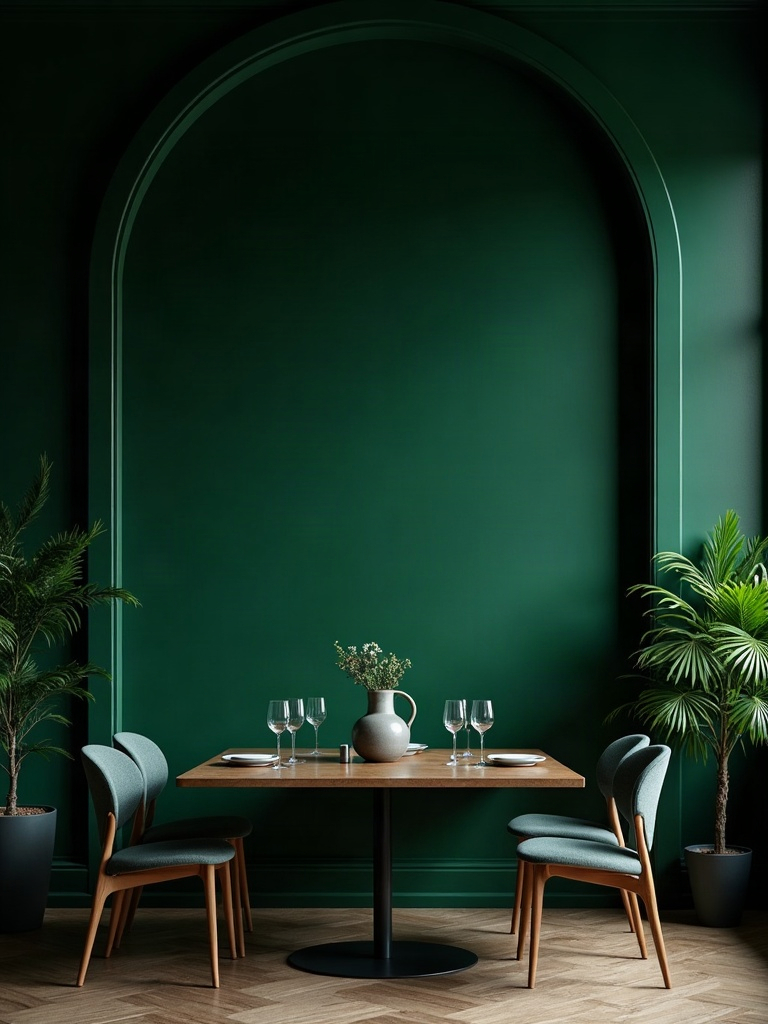
15 Dark Academia Reading Nook Ideas for Book Lovers
A dark academia reading nook is not a corner with a lamp and a paperback. It is a shrine. It is the one square footage of your home where you have decided, unapologetically, that a person should sit down and disappear into a story for three hours while surrounded by cracked leather, tarnished brass, and the smell of old paper. For our kind, more is a religion, and a reading nook is where that religion gets its altar. This is the room where an empty wall is a missed opportunity, not a design choice.
We’ve gathered fifteen ways to build a reading nook that reads less like a Pinterest board and more like a private study smuggled out of a Gothic novel. Some of these ideas work in a full spare room. Others fit into a stair landing, a bay window, or a six-square-foot gap between your bookshelf and your radiator. All of them commit to the same deliberate chaos that defines everything we build over here.
You don’t need permission for any of this. You don’t need a designer to tell you that a taxidermy bird under a glass dome belongs next to your reading chair, or that your bookshelf should look like it’s been fed for twenty years instead of assembled last Tuesday. That instinct is the whole point. People like us don’t decorate around a theme; we build rooms that argue with each other and somehow still agree by the time the lamp is lit.
What Makes a Dark Academia Reading Nook Different From Just “A Dark Corner”
A lot of people slap a black paint sample on a wall, add a lamp, and call it dark academia. That’s not it. A real dark academia reading nook has layers: architectural texture (paneling, molding, exposed brick), a seating piece with actual presence, lighting that pools rather than floods, and objects that suggest a life lived among books rather than a room staged for one. It should feel like it belongs to a person who has been collecting things for decades, not a person who bought a “moody vibe” bundle last weekend. That’s the difference between decorating and curated obsession.
Think of it as a stage set for one very specific character: someone who reads footnotes for fun, keeps a decanter within arm’s reach whether or not it’s ever poured, and has strong opinions about which translation of a three-hundred-year-old novel is worth owning. Every object in the nook should support that fiction, even if the person actually living there just wants somewhere quiet to finish a paperback before bed.
15 Dark Academia Reading Nook Ideas Worth Stealing
1. Claim a Window Bay With a Tufted Bench
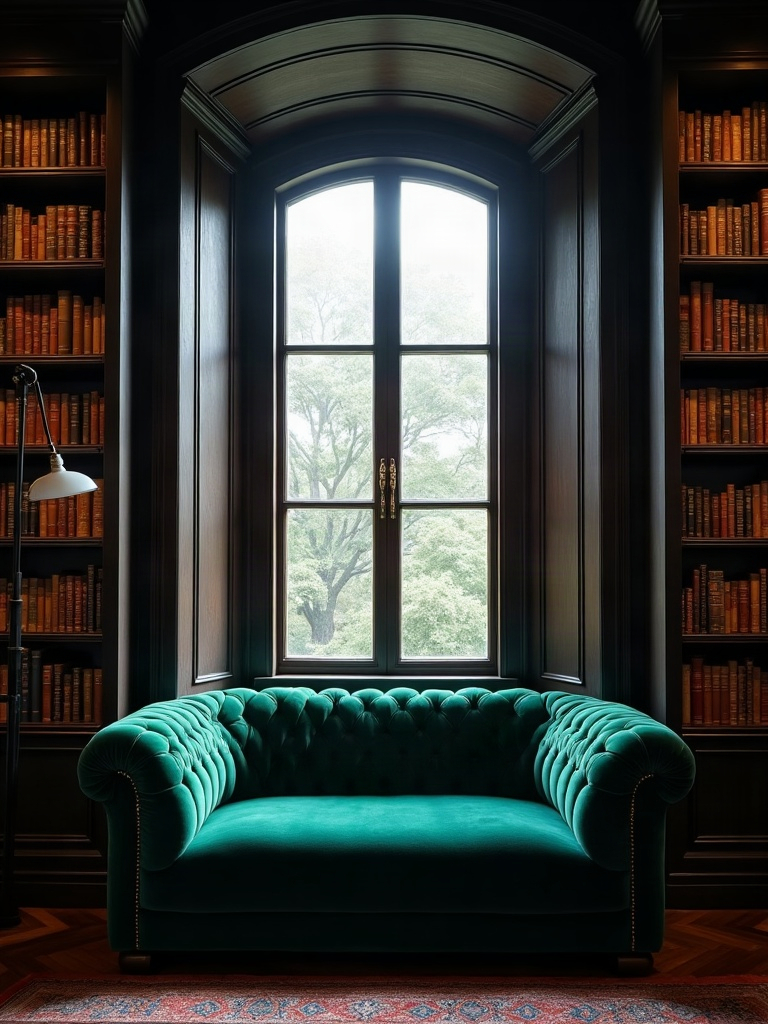
If you have a bay window, you already have the bones of the best reading nook in the house. Build or buy a tufted bench in oxblood leather or dark forest velvet, run it the width of the window, and pile it with mismatched pillows in clashing patterns — paisley next to tartan next to something with a stag on it. Nobody said it had to match.
Frame the window with heavy curtains in a color darker than the walls. The point isn’t to block light; it’s to control it, so the one beam that gets through in late afternoon feels earned.
2. Build a Wall of Mismatched Bookshelves
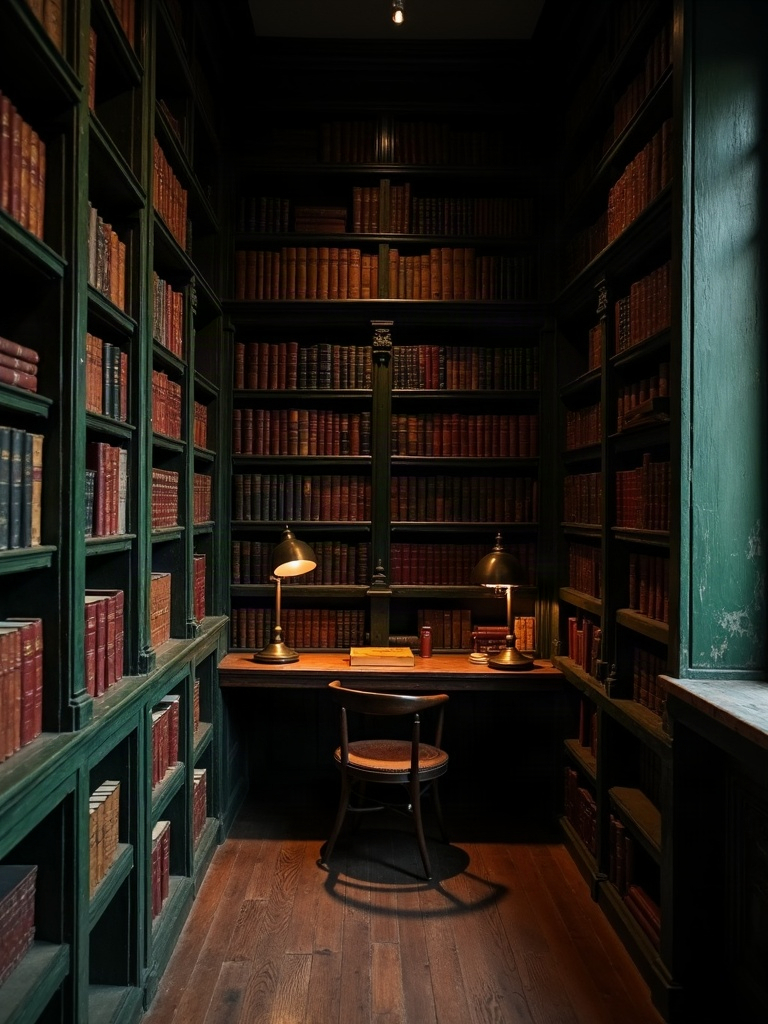
Skip the matching IKEA billy set. A proper reading nook wants shelves that look collected — a tall dark walnut case next to a shorter black iron one, floor-to-ceiling on one side and waist-high on the other. Overfill every shelf. Books stacked horizontally on top of vertical rows, spines facing in on some for texture, out on others for color.
3. Install a Wingback Chair, Not a Reading Chair
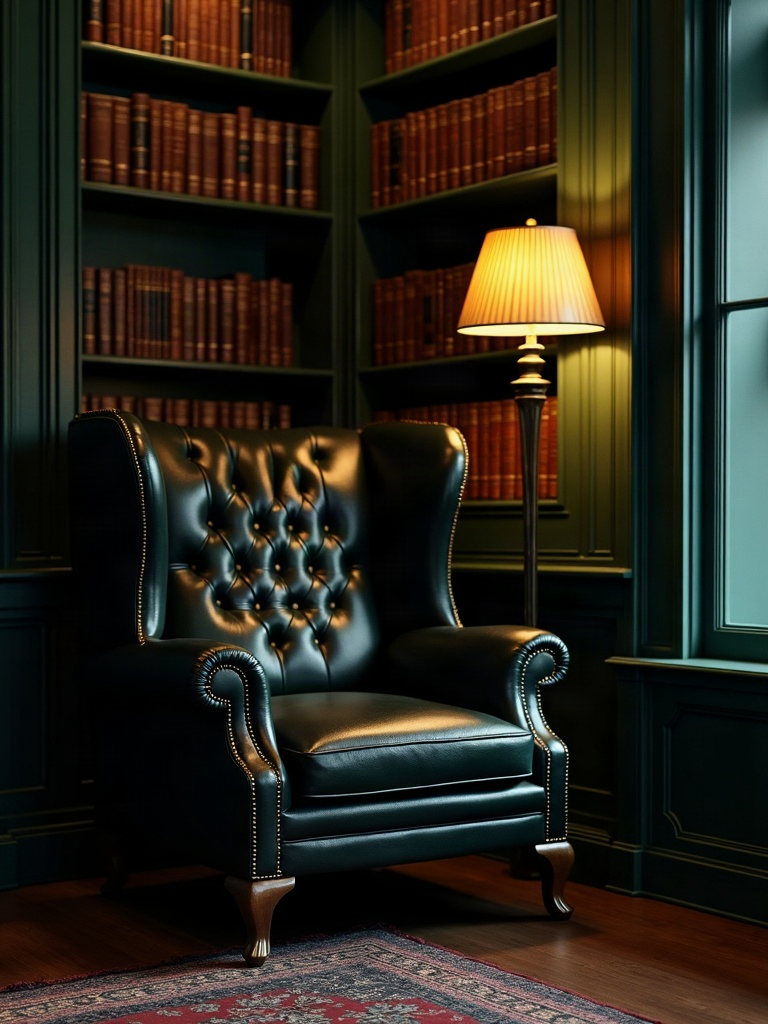
There’s a difference. A “reading chair” is ergonomic and beige. A wingback is a statement — high-backed, upholstered in something with a little shine to it (velvet, mohair, a deep jewel tone), and slightly too formal for casual sitting. That’s exactly why it works. Sitting down in it should feel like an event.
Pair the chair with a low side table close enough to hold a stack of books, a glass, and a candle without you having to lean. The proportions matter here — too far away and the whole arrangement looks staged instead of lived-in.
4. Layer Lighting Instead of Using One Overhead Fixture
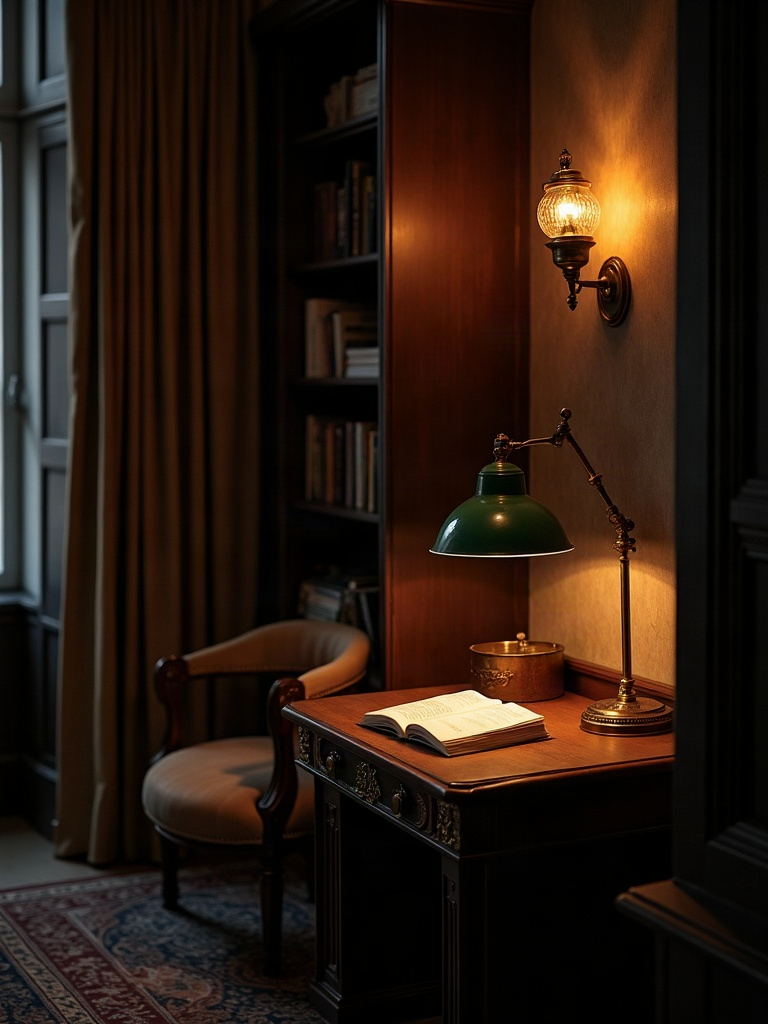
Overhead lighting is the enemy of every reading nook worth sitting in. It flattens everything and makes deliberate chaos look like a mess instead of a mood. Use at least three light sources at different heights: a floor lamp behind the chair, a small brass or banker’s lamp on a side table, and one flickering candle-style sconce on the wall.
5. Paint the Nook a Shade Darker Than the Rest of the Room
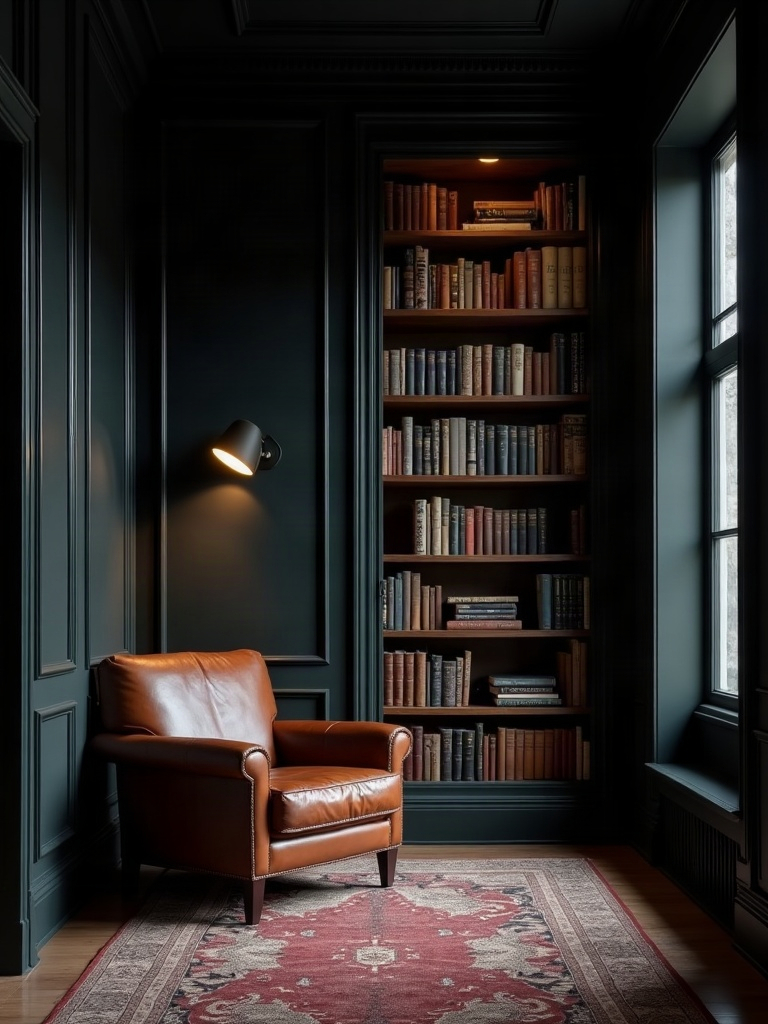
If your walls are already deep, go one shade deeper in the nook itself — a recessed alcove, a chimney breast, the wall behind the chair. Forest green, oxblood, near-black navy, aubergine. The goal is a room that feels like it’s holding its breath around you, not a wash of one flat color from floor to ceiling.
6. Hang Art Salon-Style, Floor to Near-Ceiling
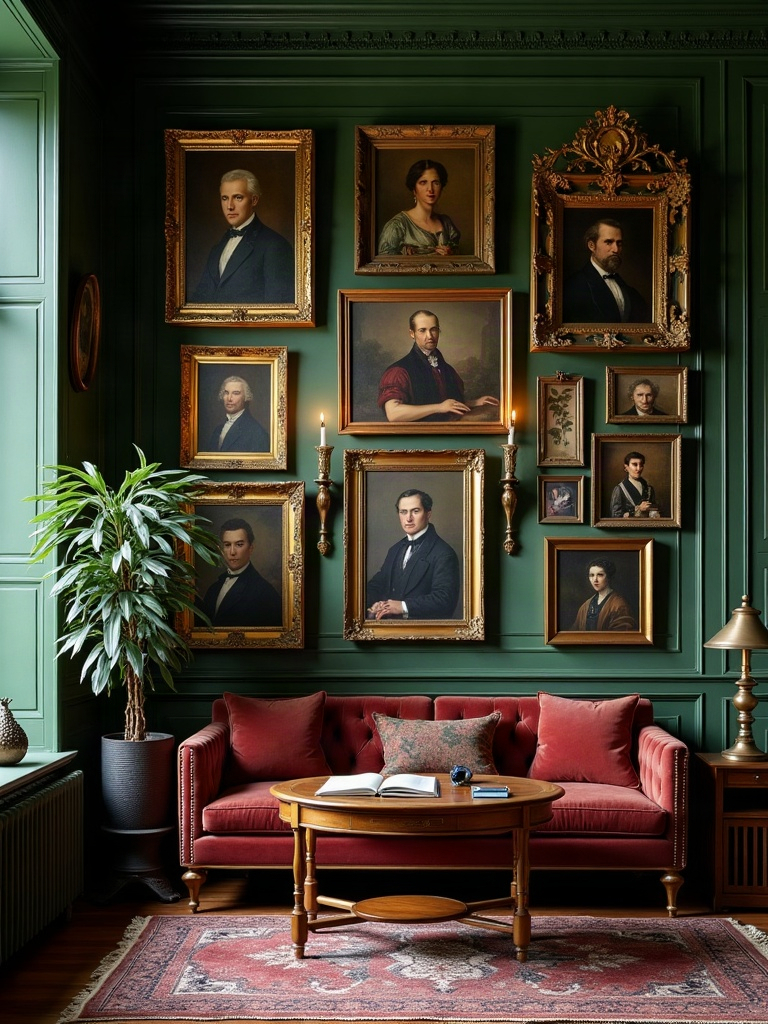
One framed print above the chair is not a nook with any ambition, it’s a hotel room. Cover the wall salon-style instead: oil-style portraits, botanical prints, an old map, a moody landscape, a few gilt-framed mirrors mixed in to bounce the lamplight around. Frames should not match. Ornate gold next to black lacquer next to a chipped antique frame you found for eight dollars.
Hang some pieces low, almost at shoulder height when seated, so the wall feels like it’s closing in around the chair rather than floating above it. That’s the difference between a gallery wall and a room that actually envelops you.
7. Add a Rolling Library Ladder Even If You Don’t Need One
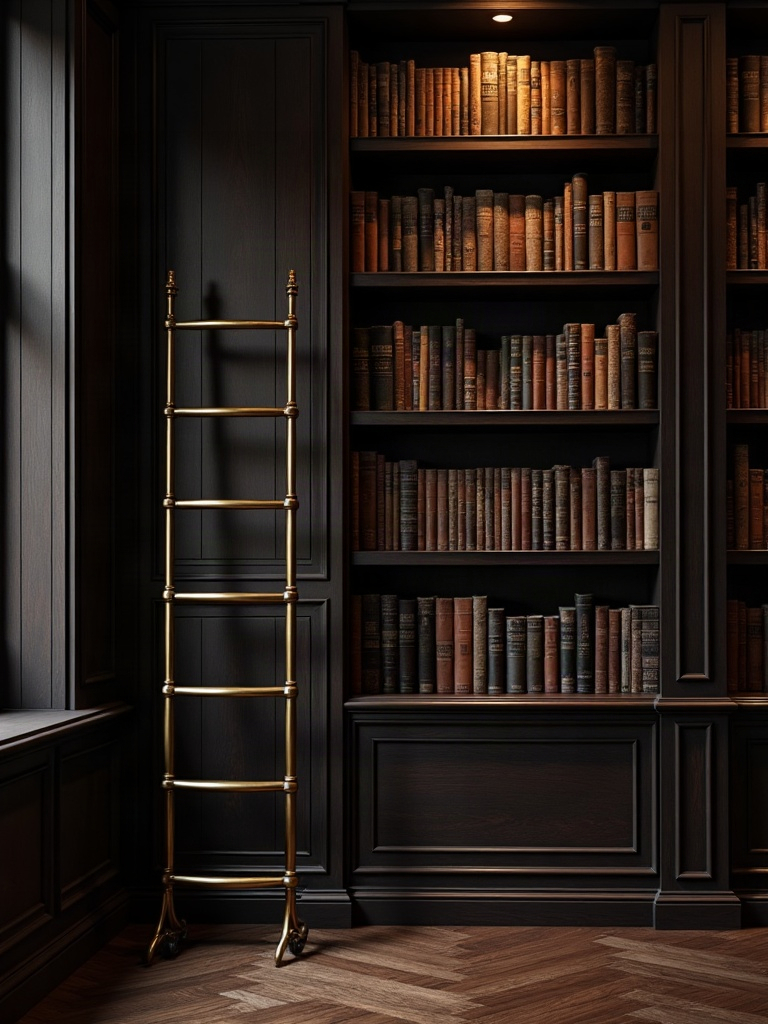
Functionally unnecessary, aesthetically non-negotiable. Even a six-foot bookshelf looks more serious with a ladder leaned against it. It’s the single fastest way to make a nook read as “private library” instead of “corner with books.”
8. Bring In a Globe, a Skull, or Both

Curiosities are the backbone of dark academia styling. A weathered globe on a wooden stand, a resin or brass skull on the side table, a taxidermy-style bird under a glass dome — pick your poison. These objects do the work that a single throw pillow never could.
9. Use a Persian or Distressed Rug, Never a Flat-Weave Neutral
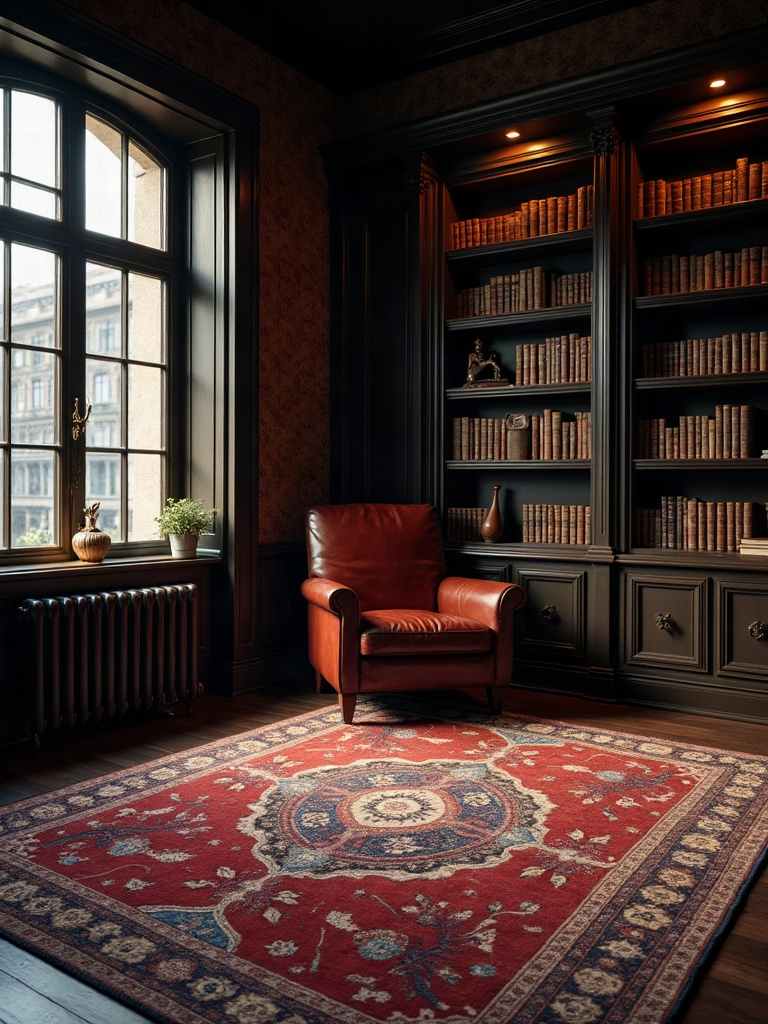
The floor deserves the same attention as the walls. A worn, richly patterned rug — deep reds, blues, and golds, ideally one that already looks like it’s survived a century — grounds the whole nook. A flat beige jute rug will undo everything else you just built.
If you can layer two rugs of different sizes and patterns, even better. A large faded Persian under a smaller, brighter kilim adds the kind of visual depth that a single rug, however nice, can’t manage on its own.
10. Install Wainscoting or Picture-Frame Molding
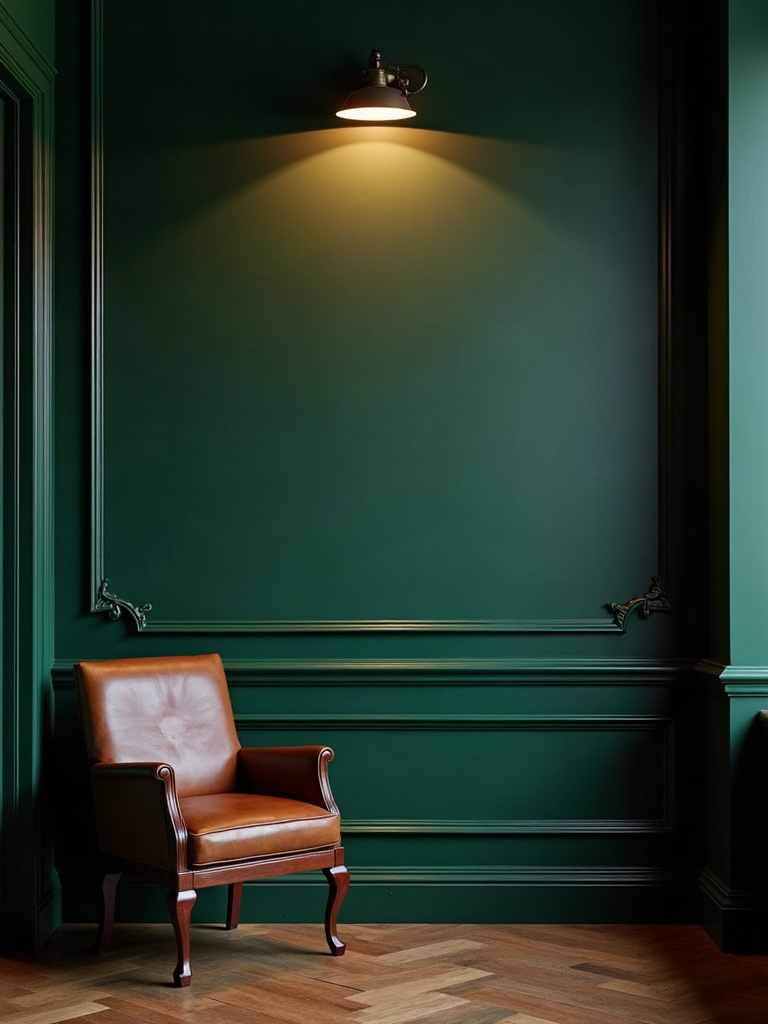
Architectural detail sells the “old money library” fantasy faster than any accessory. Dark-painted wainscoting, picture-frame molding, or even peel-and-stick panel molding (nobody will know) gives the nook the bones of a room in an old estate rather than a rental corner.
11. Stack Books as Furniture, Not Just Reading Material

Use stacked hardcovers as a side table riser, a plant stand, or a coaster tray. This isn’t precious — it’s practical maximalism. A nook without books doing double duty as decor is a nook that isn’t trying.
12. Add a Velvet or Chenille Throw in a Clashing Jewel Tone
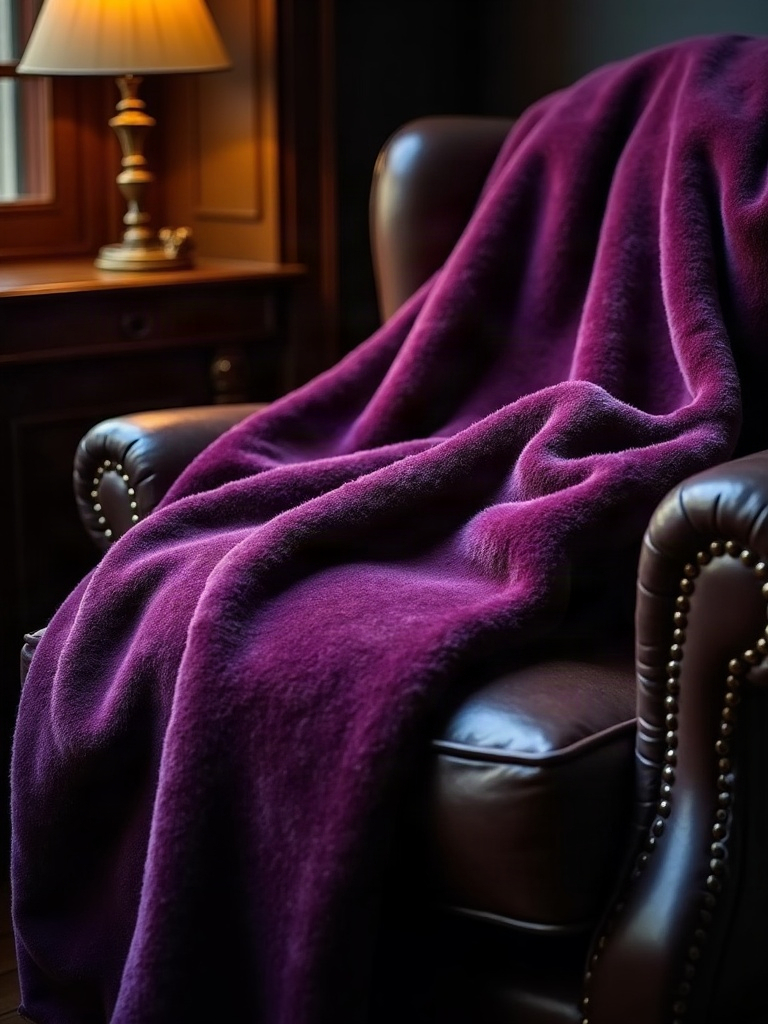
Function and texture in one move. Drape it over the arm of the chair, half on the floor, deliberately imperfect. A burgundy chair wants a mustard or bottle-green throw thrown over it, not a matching one.
13. Bring In Dense, Architectural Plants
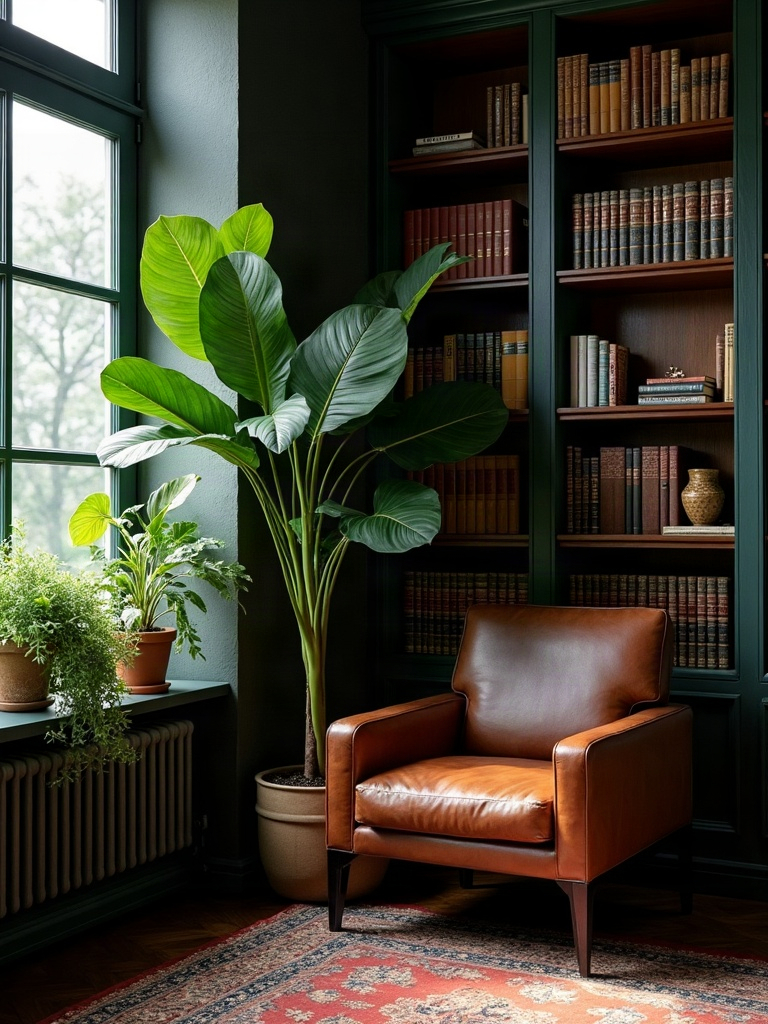
Skip the delicate succulents. Dark academia plants are big, dark-leaved, and slightly gothic: fiddle leaf figs, rubber plants, snake plants, or a trailing pothos climbing up a bookshelf. Pot them in aged brass, black ceramic, or a chipped urn — never plastic.
Let one plant get slightly out of control. A pothos vine looping along the top of a bookshelf and down the side of a frame reads as intentional wildness, not neglect, and it softens all that dark wood and leather with something alive.
14. Use a Chesterfield Footstool or Ottoman as a Bookshelf
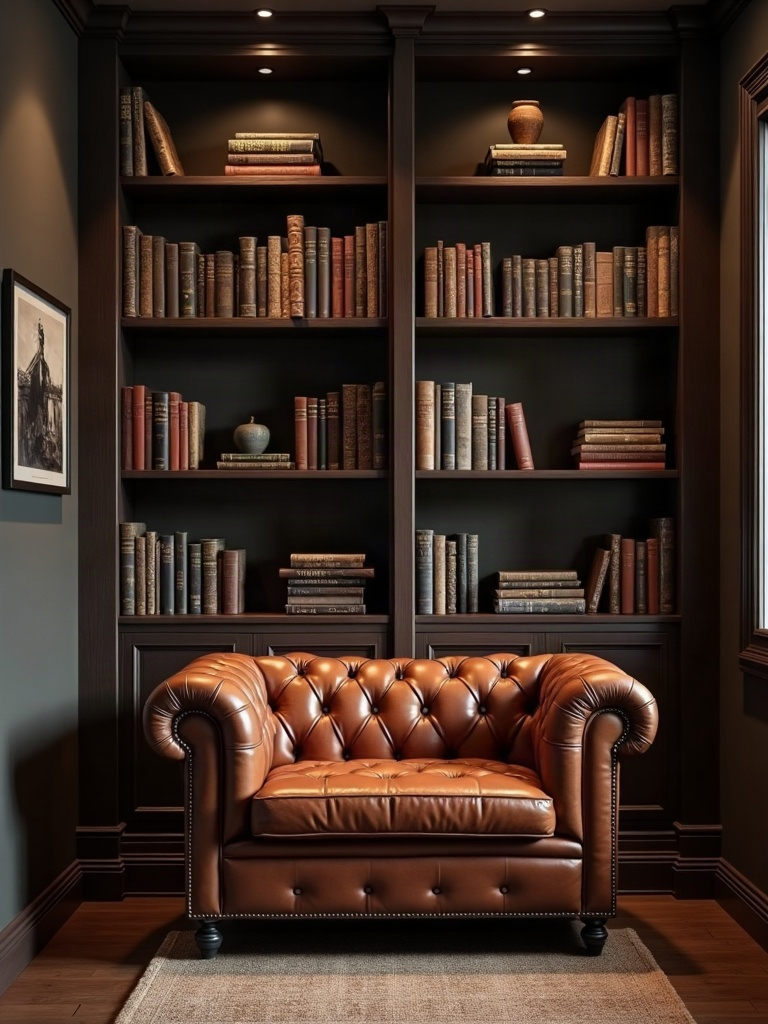
An old leather Chesterfield ottoman with a hinged top does double duty as extra seating, a footrest, and hidden storage for the overflow books that didn’t make the shelves. It also adds another layer of cracked, worn leather to the room, which is never a bad thing here.
15. Finish With a Leather Journal and Fountain Pen Displayed, Not Hidden

Small objects sell the story. A worn leather journal left open on the side table, a fountain pen resting across it, an inkwell nearby even if it’s decorative — these tiny details are what make a dark academia reading nook feel inhabited instead of staged.
Making a Small Space Work as a Reading Nook
Not everyone has a spare room to convert. A dark academia reading nook can live in a stair landing, a closet with the door removed, or a single deep windowsill. The rules don’t change, only the scale — layered lighting, one statement seat, dense books, and at least one curiosity object. A six-square-foot nook with all four of those elements will always beat a full room with none of them. This is the whole point of curated obsession: it’s not about square footage, it’s about density of intention.
If you’re working with a closet, remove the door entirely and treat the opening like a proscenium arch — something to frame, not hide behind. A single sconce, a fold-down desk, and a curtain you can draw when you want privacy will do more than most people manage in a full spare bedroom. Small spaces force editing, and editing, done right, still leaves room for more is a religion — it just means every object has to earn its spot twice as hard.
Frequently Asked Questions
What colors work best for a dark academia reading nook?
Deep, saturated tones read best: forest green, oxblood, aubergine, near-black navy, and charcoal. Pair them with brass, aged gold, and warm wood tones so the space feels rich rather than flat. Avoid anything cool-toned or stark — the goal is warmth in the dark, not a cave.
Do I need a whole room for a dark academia reading nook?
No. Some of the best reading nooks in this style live in a single window bay, a stair landing, or a repurposed closet. What matters is layered lighting, a seat with real presence, and a dense collection of books and objects — not the size of the footprint.
What kind of lighting is essential for this look?
Layered, low, and warm. Combine a floor lamp, a small desk or banker’s lamp, and at least one wall sconce or candle-style fixture. Avoid overhead lighting entirely if you can — it flattens the mood this aesthetic depends on.
How do I add this style without repainting my whole room?
Use curtains, a rug, and a wingback chair to introduce the dark palette without committing your walls. A single deep-toned accent wall behind the chair, paired with a salon-style gallery arrangement, can carry the whole aesthetic even in a rented apartment.
What’s the biggest mistake people make with dark academia decor?
Being too tidy. A single tasteful bookshelf and one framed print reads like a hotel lobby, not a reading nook with any soul. This style depends on density: overfilled shelves, mismatched frames, layered textiles, and objects that look collected over years, not purchased in one order.