15 Gothic Bathroom Ideas for Dark, Dramatic Spaces
Somewhere between the marble spa bathroom and the sad builder-grade half bath, an entire aesthetic got left behind: the bathroom as chapel. Gothic bathroom ideas aren’t some niche corner of Pinterest anymore — they’re a full renunciation of the all-white, all-quartz, all-nothing bathroom that’s been sold to us as sophisticated for the last decade. We don’t buy it. Not for a second.
A bathroom is a room like any other, which means it deserves the same deliberate chaos we bring to the living room: black lacquer, wrought iron, a mirror with an actual point of view. If your bathroom currently looks like a dentist’s waiting room, or worse, a hotel lobby with delusions of restraint, keep reading. These 15 ideas are how our kind takes back the smallest room in the house — and makes it the one guests remember.
What Actually Makes a Bathroom Gothic (Hint: It’s Not Just Black Paint)
Here’s where most “dark bathroom” content gets it wrong. Painting a wall black and calling it a day isn’t gothic — it’s just dark. The ones that actually hold up are built on ornament: arched silhouettes, wrought iron, stained glass, tarnished brass, velvet that’s seen better decades and is prouder for it. Gothic isn’t a color story. It’s a commitment to drama, to history that may or may not be yours, and to the belief that a bathroom mirror should look like it belongs in a cathedral, not a big-box showroom.
More is a religion in this house, and the bathroom doesn’t get an exemption just because it’s the smallest room on the floor plan. Every surface in there — the mirror, the light fixture, the window — is an opportunity, and an empty wall next to your tub is a missed opportunity we’re not willing to let slide.
15 Gothic Bathroom Ideas Worth Stealing
Below are fifteen ideas we’d install in our own homes tomorrow, ranked loosely from full-commitment renovations to rental-friendly swaps you can execute this weekend. Take what serves your curated obsession and leave the rest.
1. Drench the Room in Black — Walls, Ceiling, Trim, All of It
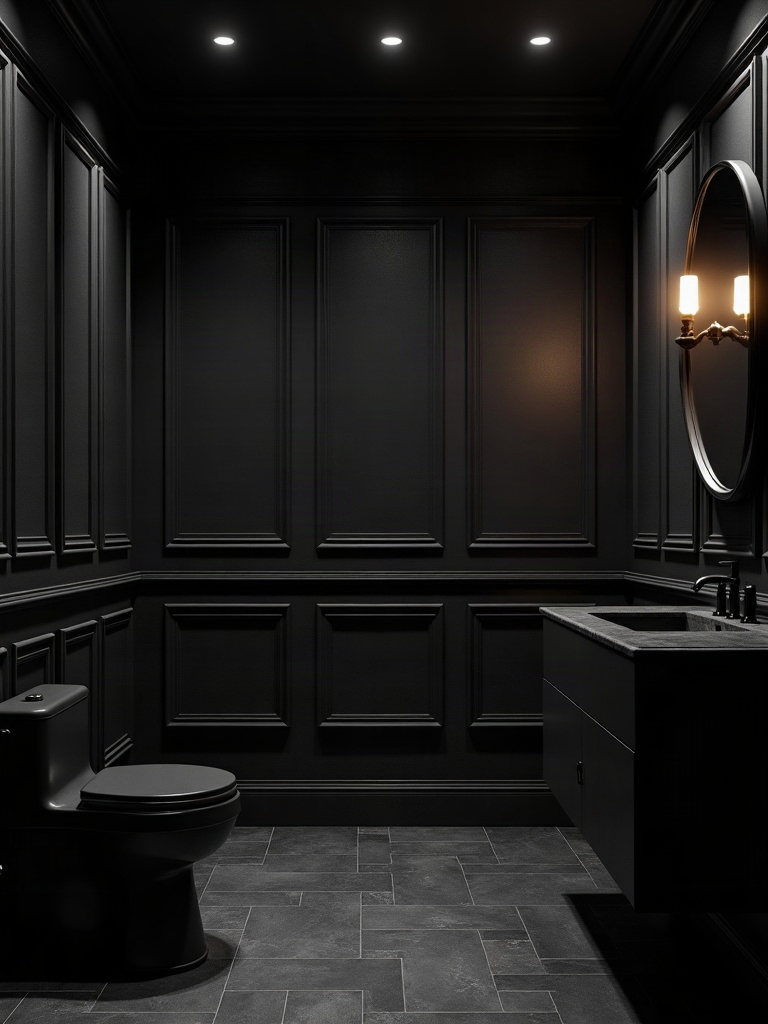
The fastest way into gothic territory is drenching: walls, ceiling, and trim painted the same near-black, so the room stops reading as “a white box with one dark wall” and starts reading as an actual environment. Reach for a warm black — an off-black with a hint of bottle green or oxblood — rather than a true jet, so the room feels moody instead of like a cave with a toilet in it.
Drenched rooms live or die on lighting. Skip the overhead can light entirely and layer in sconces, a pendant, and candlelight where code allows. The dark surfaces will swallow harsh light and flatter warm light, which is exactly the trade we’re making.
2. Hang a Wrought Iron Vanity Mirror Like It’s a Family Heirloom
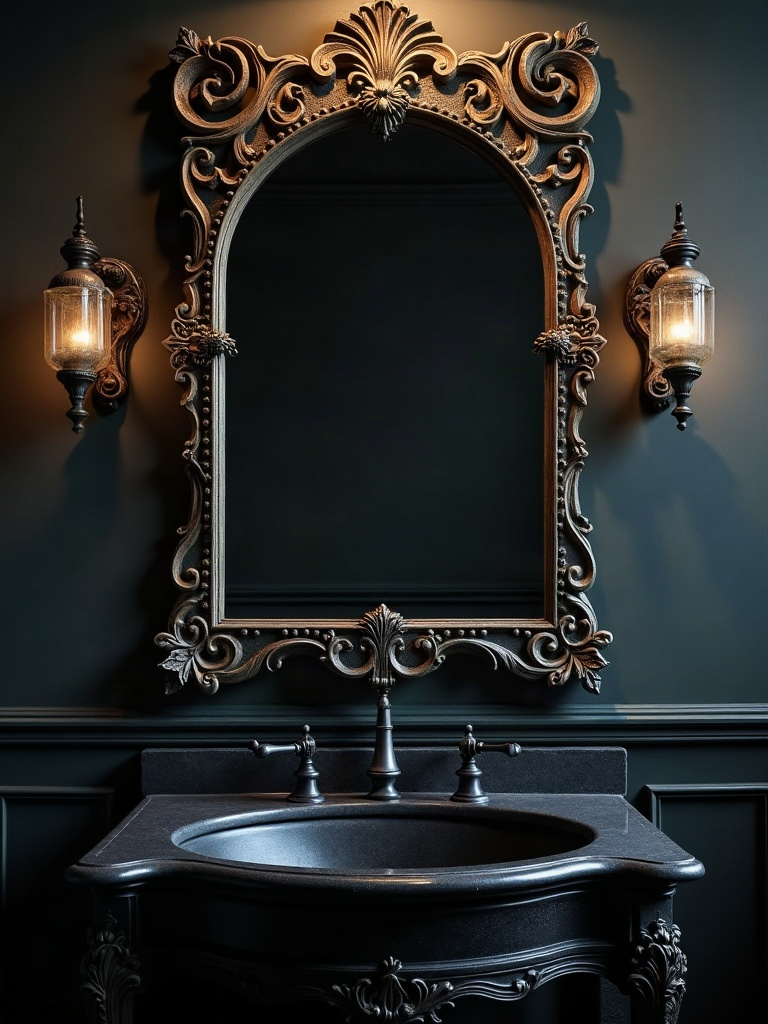
A builder-grade mirror over the sink is the single biggest tell that a bathroom hasn’t been touched since it was built. Swap it for a wrought iron arched mirror with actual scrollwork, and the whole vanity wall reorganizes itself around it. This is the cheapest, fastest swap on this entire list, and arguably the highest-impact.
Don’t center it timidly over a single sink and call it done — go slightly oversized for the wall. A gothic mirror that’s too small just looks like an apology.
3. A Clawfoot Tub in Black or Aged Bronze
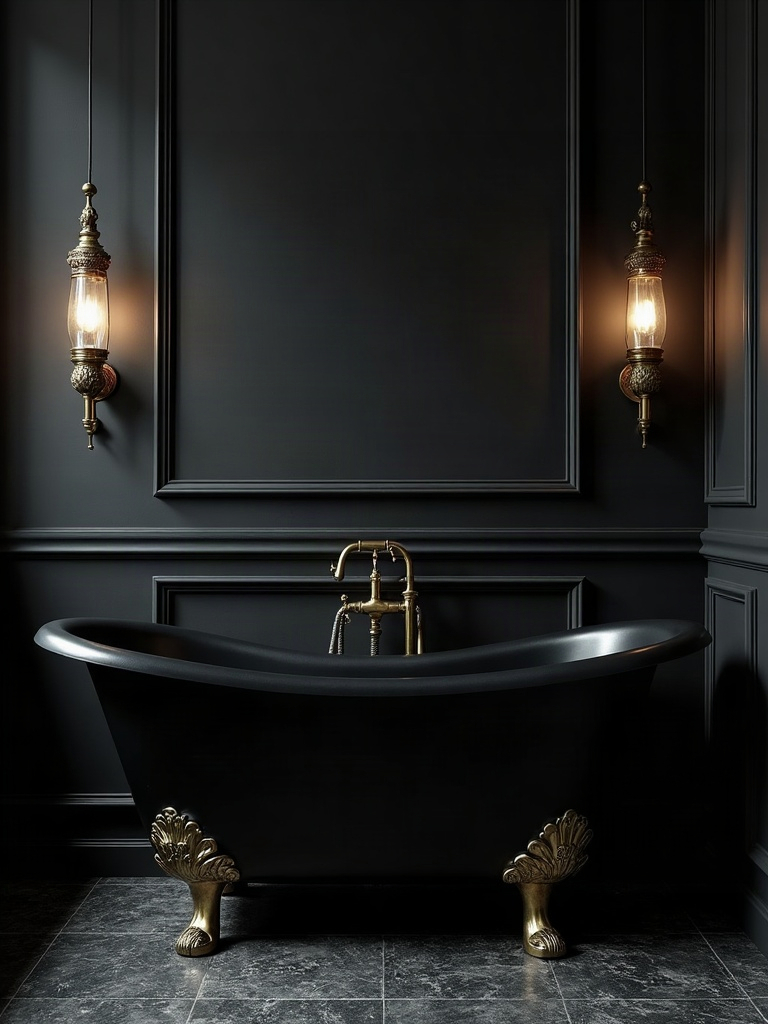
White clawfoot tubs have been done to a fault; a clawfoot painted matte black, aged bronze, or oxidized copper is a different animal entirely. It reads as an object rather than a fixture, which is exactly the point — gothic bathroom ideas treat the tub as a centerpiece, not a utility.
If a full tub swap isn’t in the budget, refinishing the exterior of an existing clawfoot in a dark enamel gets you most of the drama for a fraction of the cost.
4. Work a Gothic Arch In Wherever You Can Fit One
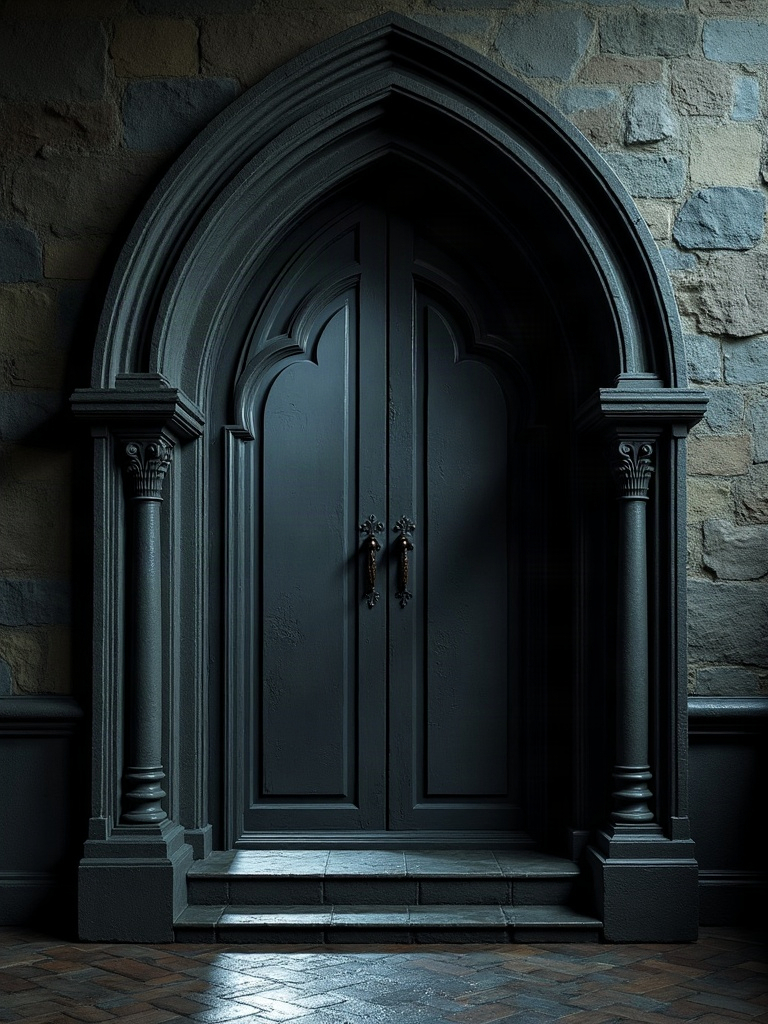
The pointed or rounded gothic arch is the single most recognizable shape in this entire aesthetic, and it doesn’t require architectural work to steal. An arched mirror, an arched niche cut into the shower wall for shampoo, arched wall tile laid vertically behind the vanity — any of these smuggles a cathedral silhouette into a standard rectangular room.
If you’re tiling from scratch, ask your installer about an arched tile pattern above the tub. It costs more in labor than a straight run, but it’s the difference between a nice bathroom and a room people photograph.
5. Mix Brass and Black Hardware Like You Actually Mean It
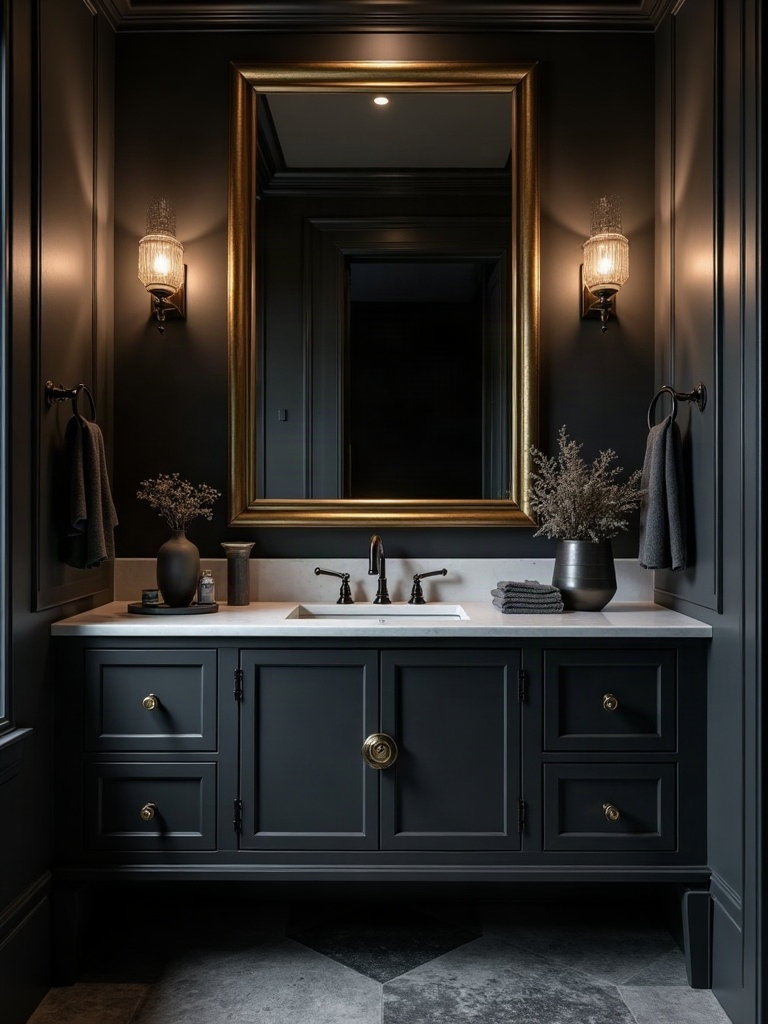
The matchy-matchy rule — one metal finish throughout — is a minimalist-adjacent idea we have no interest in. Aged brass faucets against black iron towel bars, brass drawer pulls on a black vanity, a brass-framed mirror over black fixtures: the contrast is what reads as intentional rather than accidental.
Unlacquered brass is worth the upcharge here. It tarnishes and darkens over time, which means the room only gets moodier the longer you live in it.
6. Stained Glass in the Window, Real or Faux
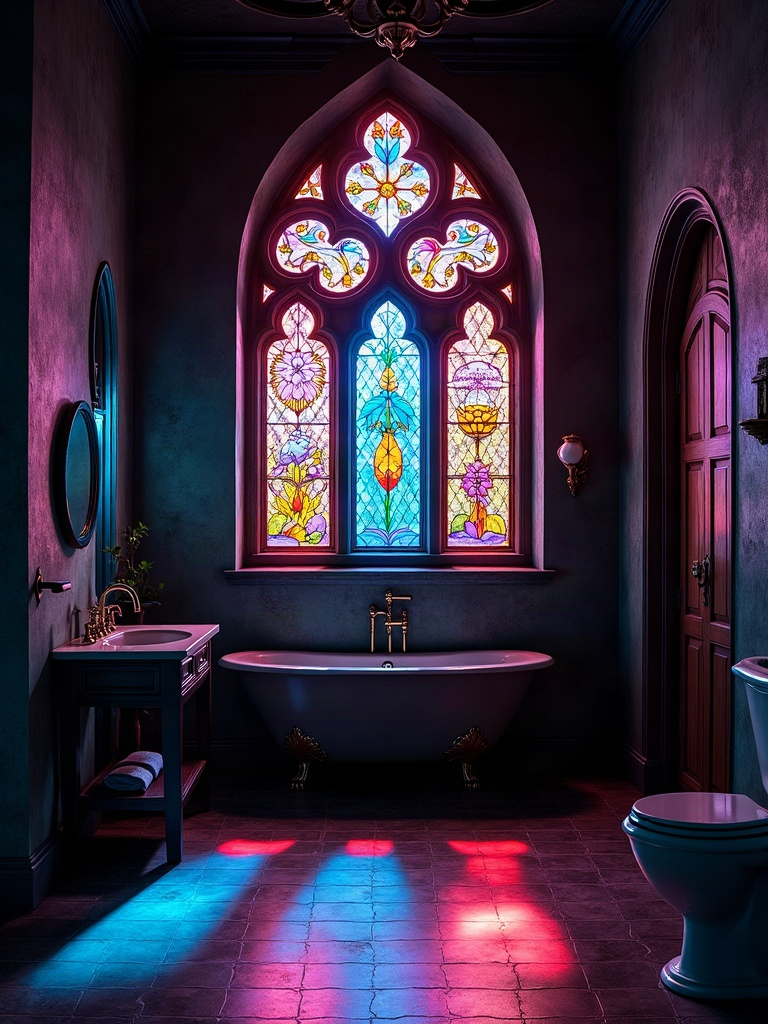
A single stained or leaded-glass window pane turns ordinary daylight into something closer to a chapel at dusk, colored light spilling across dark tile in a way no light fixture can replicate. Salvage yards and antique shops are the best source for actual antique panes; a faux stained-glass film applied to existing glass gets you eighty percent of the effect for a fraction of the price and effort.
Even a small accent pane in a transom above the door does the job — you don’t need to replace the whole window to get the effect.
7. Damask or Botanical Wallpaper With Actual Bite
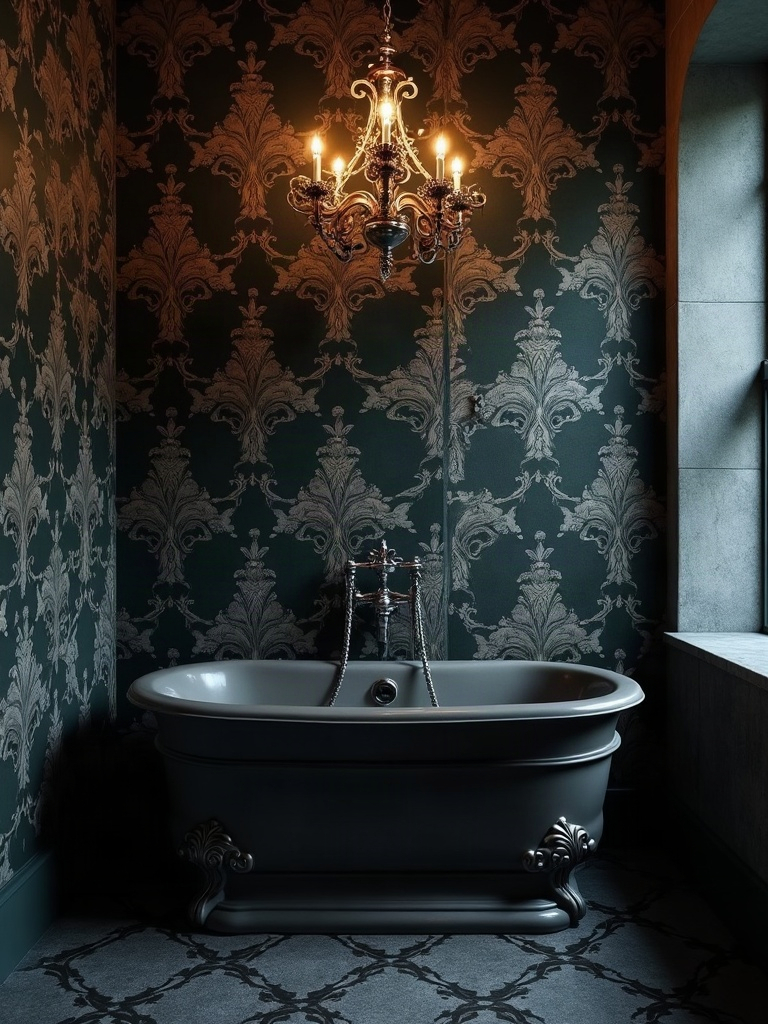
A dark, densely patterned botanical or damask peel-and-stick wallpaper on one wall — or, if you’re committed, all four — does more heavy lifting than almost anything else on this list. Look for patterns with real ink saturation and metallic detail rather than a washed-out print; a timid pattern reads as decoration, a bold one reads as a decision.
Powder rooms and half baths are the ideal testing ground if you’re nervous about pattern in a room you shower in daily. Small room, maximum commitment, minimal risk.
8. Hang Velvet Curtains Instead of a Glass Shower Door
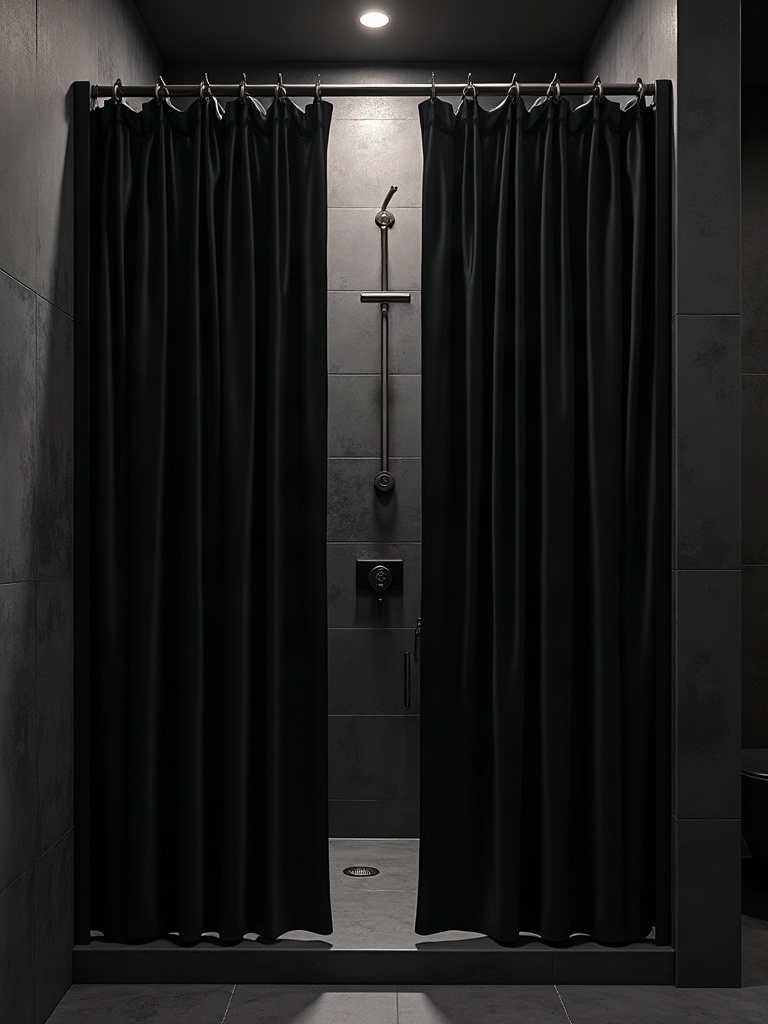
A blackout velvet curtain on a tension rod in place of a sliding glass door softens the entire room instantly and adds the kind of texture no hard surface can. Choose a deep jewel tone — emerald, oxblood, aubergine — and let it pool slightly at the floor rather than hovering exactly at tub height.
This is also the single easiest idea on this list to reverse if you rent, which makes it a low-risk way to test how far you actually want to take the aesthetic before committing to tile.
9. Candelabra-Style Lighting Over the Vanity
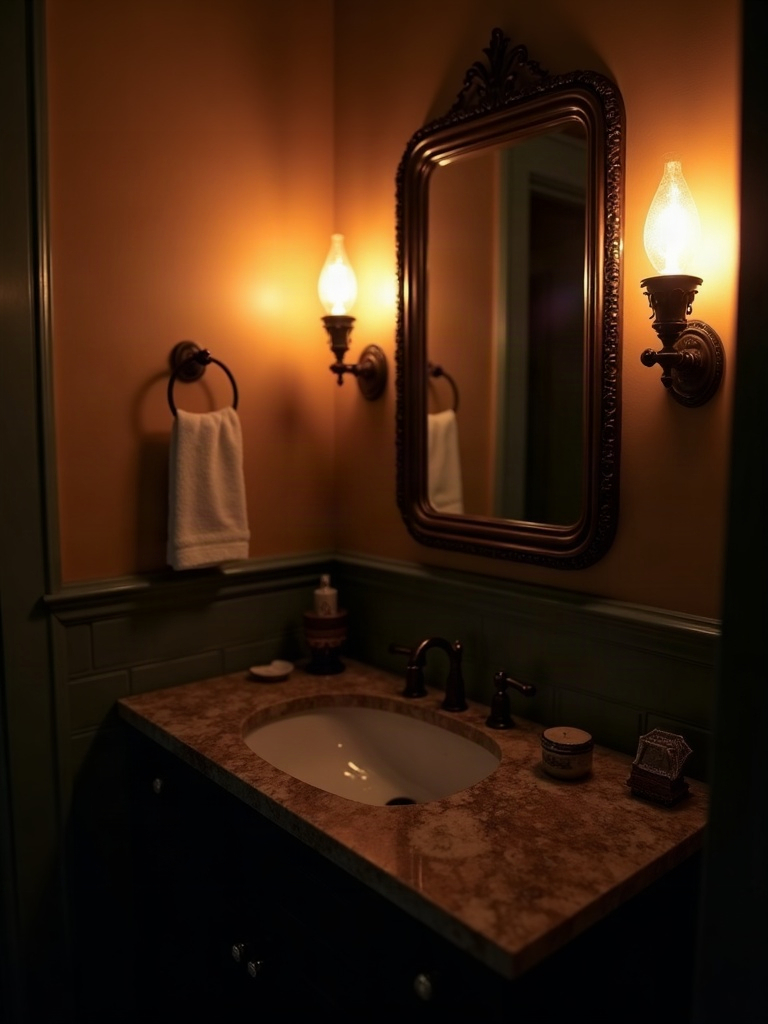
Trade the standard vanity light bar for a candelabra-style wall sconce or small chandelier in aged brass or black iron. The multi-arm, candle-bulb silhouette is doing most of the work here — it immediately reads as ceremonial rather than functional, which is the whole point of this aesthetic.
Warm bulbs are non-negotiable. A candelabra fixture with a cool white LED inside it undoes the entire effect in one flip of the switch.
10. Dark, Heavily Veined Stone (or a Convincing Stand-In)
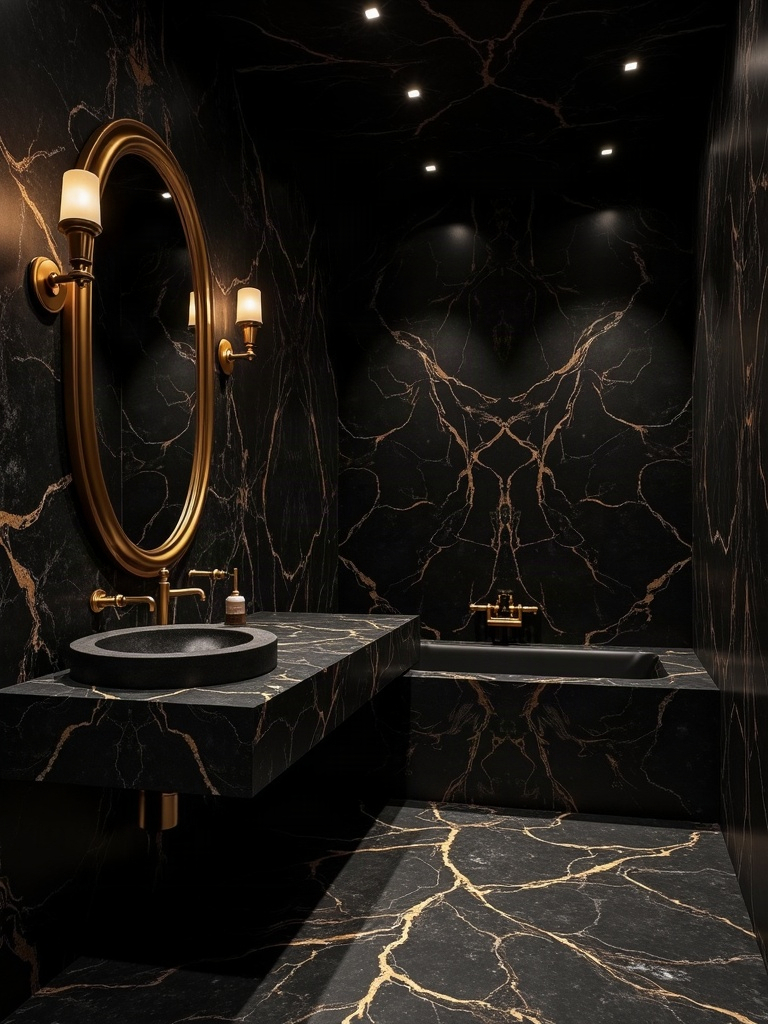
Black or deep green marble with dramatic white veining on a vanity top or shower wall gives the room a sense of weight and permanence that paint alone can’t fake. If the real stone isn’t in the budget, large-format porcelain slabs printed with the same veining are close enough that most guests won’t clock the difference.
Keep the veining bold rather than subtle — a busy, dramatic pattern is far more forgiving of water spots and daily use than a pale, quiet one.
11. An Antique Apothecary Cabinet Instead of a Medicine Cabinet
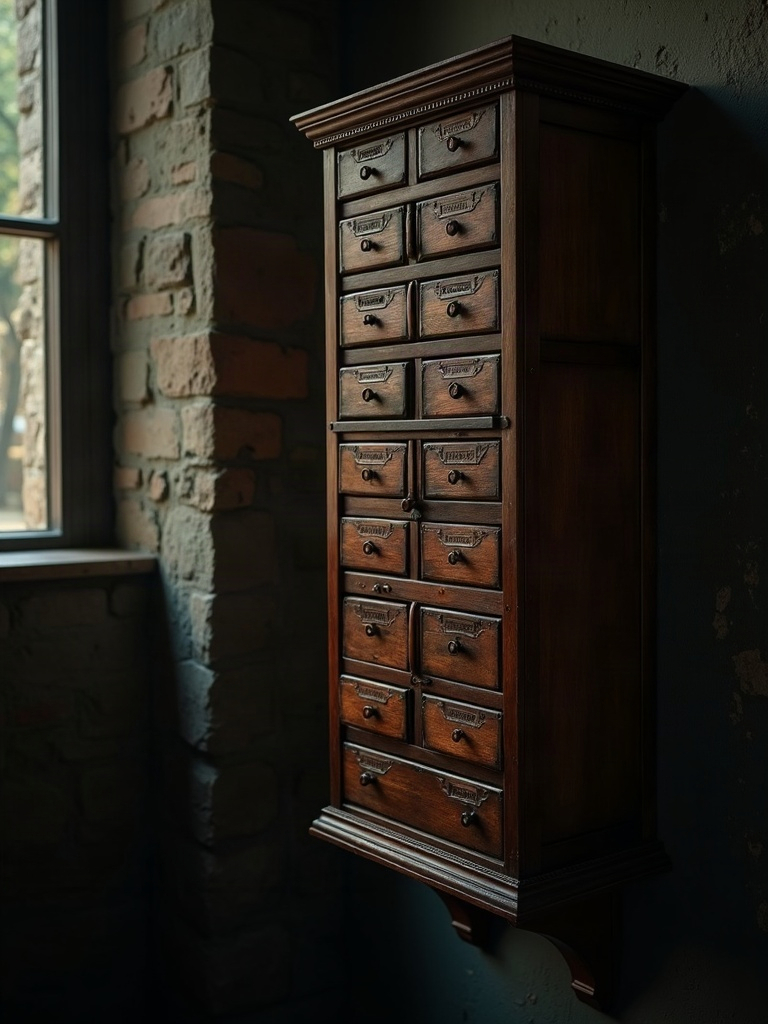
Skip the mirrored medicine cabinet entirely and bring in an antique-style apothecary cabinet with small glass-front drawers for storage. It functions exactly the same way — toothpaste, floss, the usual — but it looks like it belongs in a Victorian pharmacy rather than a suburban builder spec.
These pieces also solve the eternal bathroom storage problem without a single visible plastic organizer, which matters more than people admit.
12. Gilded, Ornate Frames Around Absolutely Everything
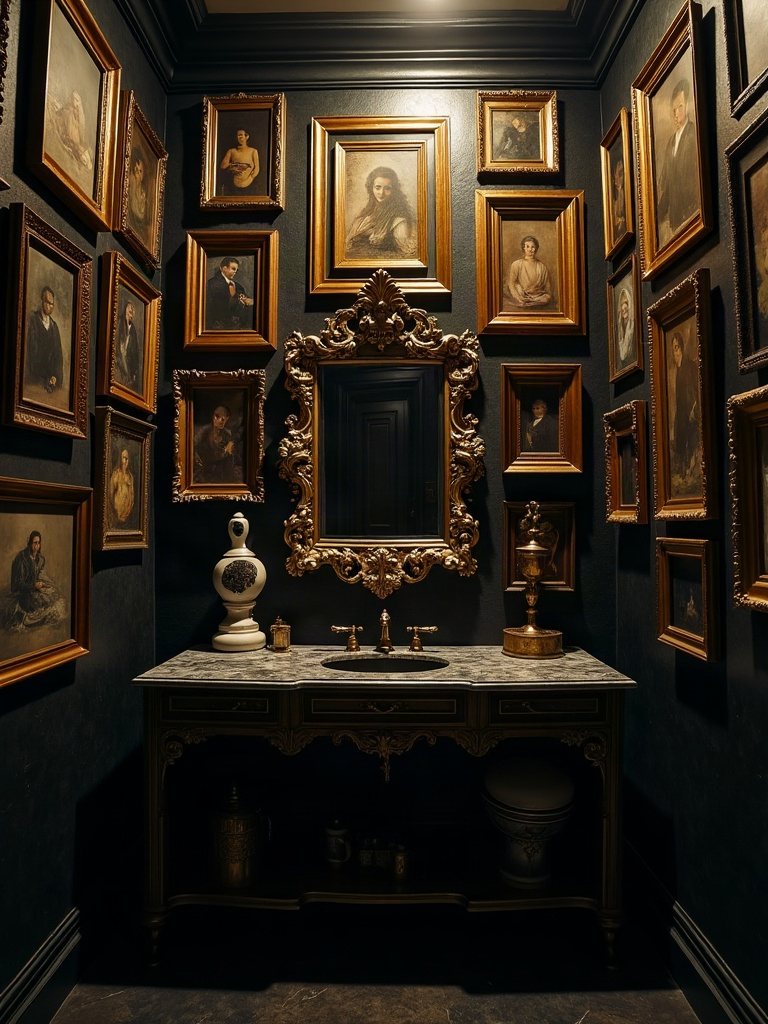
Take whatever’s already hanging in the bathroom — art, a mirror, even a framed print of a botanical illustration — and reframe it in gilded, carved gold. The frame does more to sell “gothic” than the content inside it; an ornate frame around a plain print instantly outranks a plain frame around expensive art.
Thrift stores and estate sales are the best hunting ground for these. You’re looking for weight and detail, not condition — a little tarnish is a feature here.
13. Moody Botanical or Anatomical Prints on the Wall
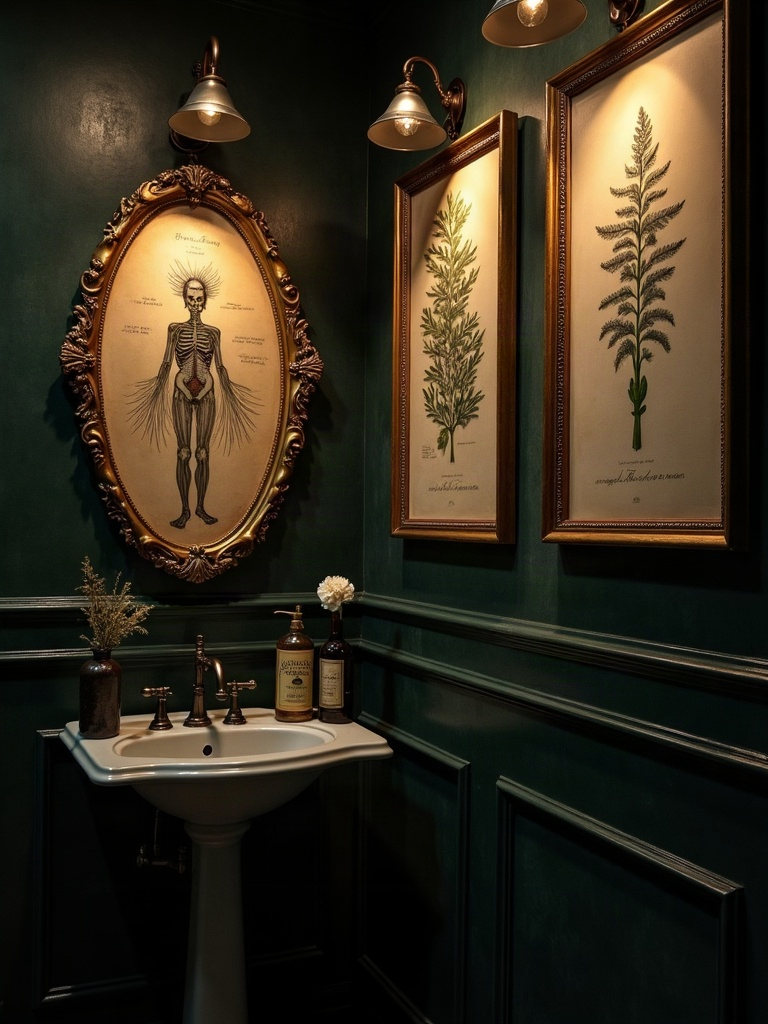
Dark-background botanical illustrations, antique anatomical drawings, or moody still-life prints do for the walls what wallpaper does for the whole room. Cluster three or four in mismatched gilded frames rather than hanging one large piece centered and alone — a single tidy frame reads as decoration; a dense little gallery reads as an obsession, which is the goal.
Don’t worry about matting everything in the same color or frame style. Mismatched, layered, slightly chaotic is the entire aesthetic working as intended.
14. Gargoyles, Busts, and Objects With an Actual Attitude
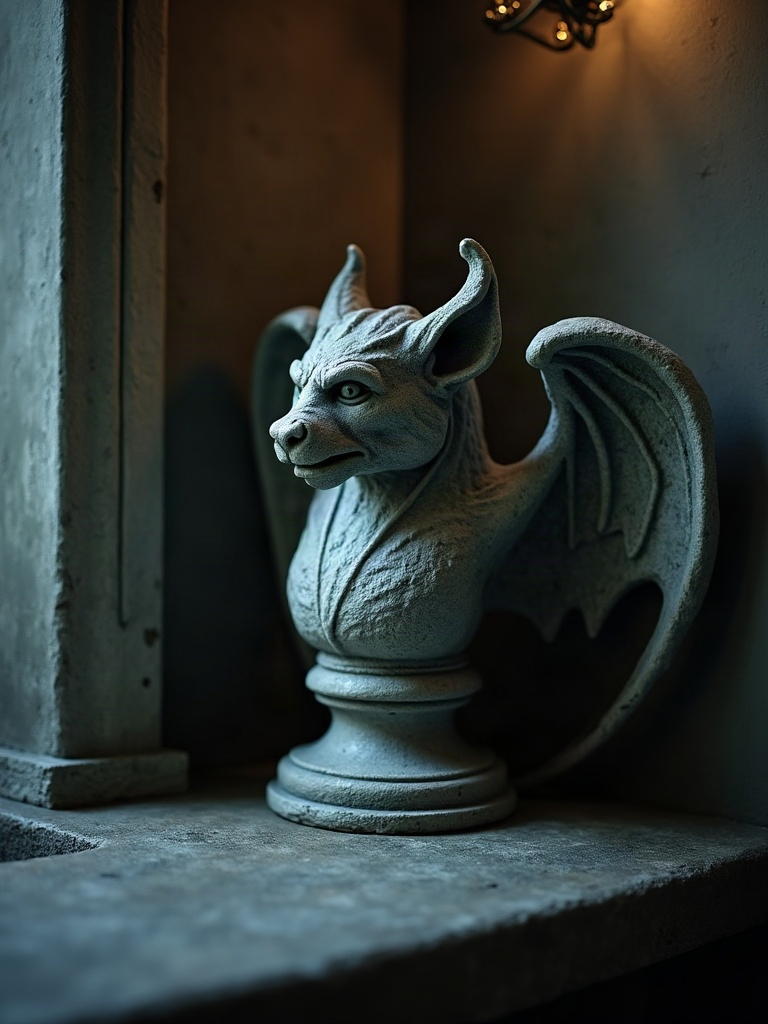
A small stone or resin gargoyle on a windowsill, a classical bust on top of the cabinet, a taxidermy piece if you’re truly committed — these are the details that separate a merely dark bathroom from an actual gothic bathroom. Object choice is where personality lives; without it, black paint and iron hardware is just a color scheme.
One or two well-chosen objects beat five mediocre ones. Pick pieces with real presence and let them hold court rather than crowding the shelf.
15. A Chandelier Where a Flush Mount Used to Live
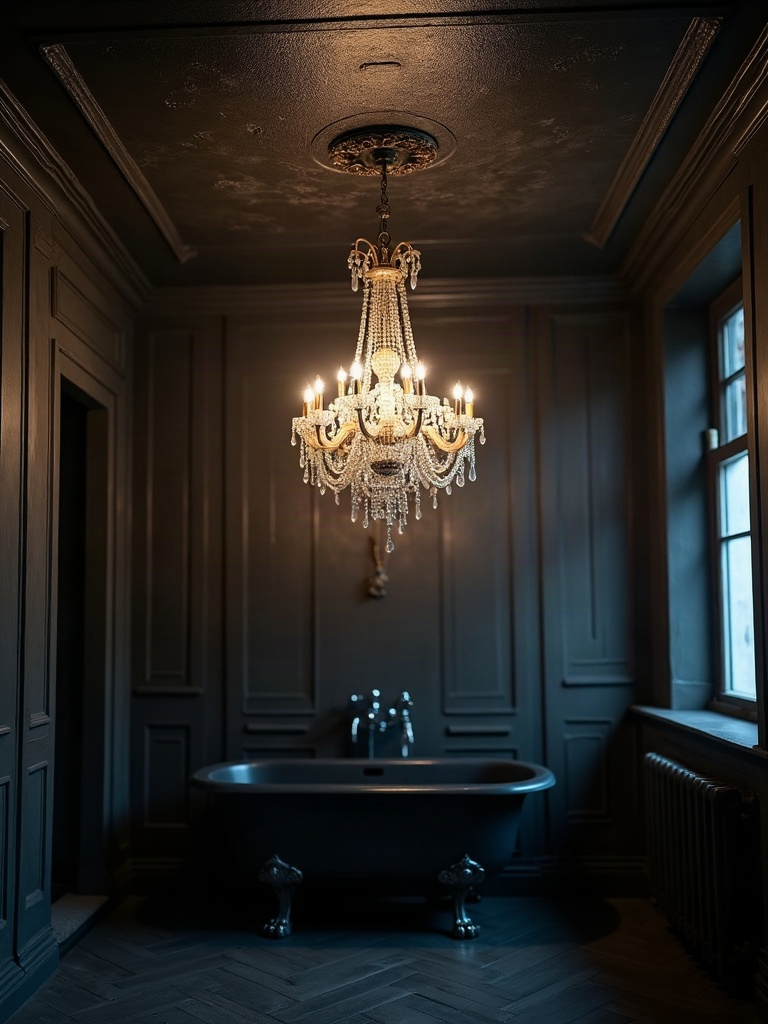
If your bathroom currently has a builder-grade flush mount overhead, replace it with an actual small chandelier — iron, crystal, or a mix of both. It sounds like overkill for a room this size until you see it lit at night, throwing shadow and pattern across a dark ceiling instead of flat white light straight down.
Just confirm the fixture is rated for damp locations if it’s going directly over a tub or shower — the drama isn’t worth an electrical hazard.
Committing to Gothic Without Gutting the Whole Bathroom
You don’t need to renovate down to the studs to pull off gothic bathroom ideas convincingly. The mirror, the lighting, and the textiles are doing more work than the tile ever will — swap those three first and live with it for a month before you touch anything permanent. If you’re renting, lean entirely on curtains, wallpaper you can peel off, framed prints, and hardware you can swap back at move-out. Nothing on this list requires demolition; it requires commitment to a point of view, which costs nothing but nerve.
Frequently Asked Questions About Gothic Bathroom Ideas
Is this look too dark for a small bathroom?
No — small bathrooms are actually the ideal testing ground for this style, since a drenched dark room with good layered lighting tends to feel intimate and enclosed rather than cramped. The mistake is going dark on the walls but keeping flat, cool overhead lighting; fix the lighting first and the darkness stops feeling like a liability.
What paint color reads as gothic without going flat black?
Look for near-blacks with an undertone — a black with a touch of green, plum, or oxblood in it reads as far richer and more intentional than a true, flat black, and photographs better under warm light. Bottle green and deep aubergine are also solidly within the gothic palette if full black feels like too much of a leap.
Can renters actually pull off this look without a renovation?
Absolutely. Peel-and-stick wallpaper, a velvet curtain instead of a shower door, an oversized wrought iron mirror, swappable cabinet hardware, and a plug-in sconce or two get you most of the way there without touching a single permanent fixture, and everything reverses cleanly at move-out.
Will a gothic bathroom clash with a lighter living room or kitchen?
Not if you carry even one or two elements through the rest of the house — a brass finish, a similar frame style, a recurring dark accent color. A house doesn’t need every room in the same palette to feel considered; it needs a thread connecting them, and that thread can be as small as matching hardware.
What’s the one thing to avoid in this style?
Cold, blue-toned light. It’s the single fastest way to undo every other idea on this list — a beautifully drenched, wrought-iron, velvet-curtained room still reads sterile under the wrong bulb. Warm light, layered from multiple sources, is non-negotiable.
A gothic bathroom isn’t a phase you grow out of — it’s a stance. Pick two or three ideas from this list, commit fully, and let the rest of the house catch up to the one room that finally has some nerve.