This post contains affiliate links. As an Amazon Associate, Home Sweet Eclectic earns from qualifying purchases. Read our affiliate disclosure.
Maximalist decor is the art of filling a room on purpose. It means more color, more pattern, more objects and more personality, all arranged so the eye has somewhere thrilling to go and a reason to keep going. It is not “buy everything.” It is “keep everything that makes you grin, and give it a stage.”
If minimalism asks what you can live without, maximalism asks what you can’t stop looking at. The answer is usually a clashing rug, a wall of mismatched frames, a velvet sofa in a color your landlord has never heard of, and a shelf of weird little treasures you picked up at flea markets. Done well, it feels generous, warm and wildly specific to you.
This guide covers what maximalism in interior design actually is, how it differs from clutter, the five principles that hold it together, quick maximalist decor ideas for every main room, how to start small or in a rental, and the mistakes that turn “joyful” into “storage unit.” I’m not a decorator by trade, just someone with a deep love for interiors and a strong opinion about beige.
What Is Maximalism in Interior Design?
Maximalism is a decorating style built on abundance and intention. Saturated color, layered pattern, stacked textures, visible collections and art hung everywhere it fits. The goal is a room that tells a story about the person who lives there, loudly.
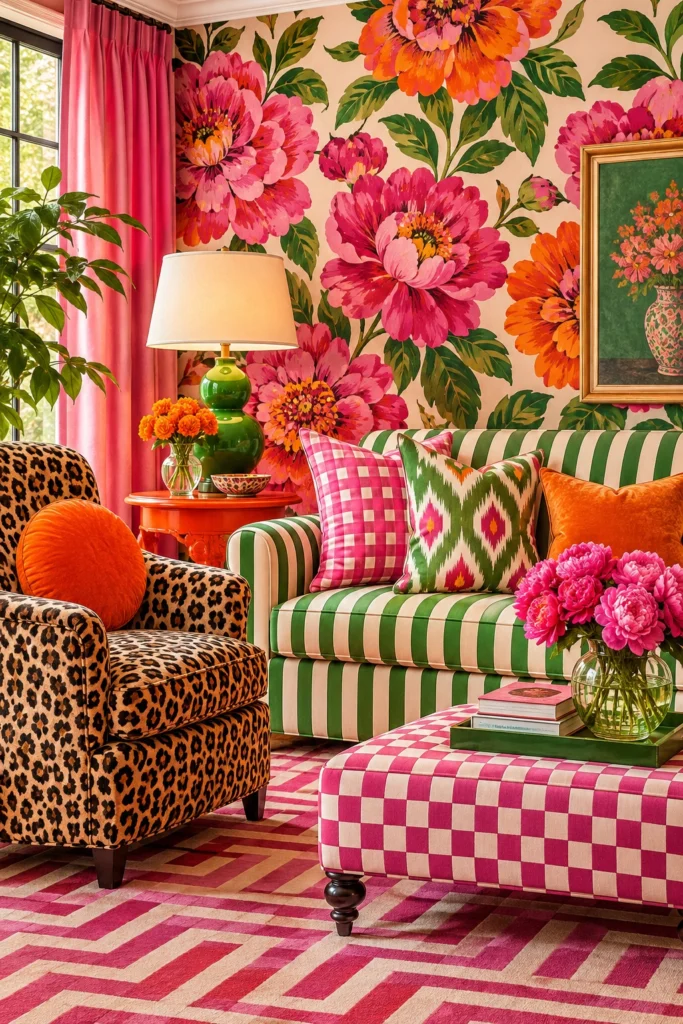
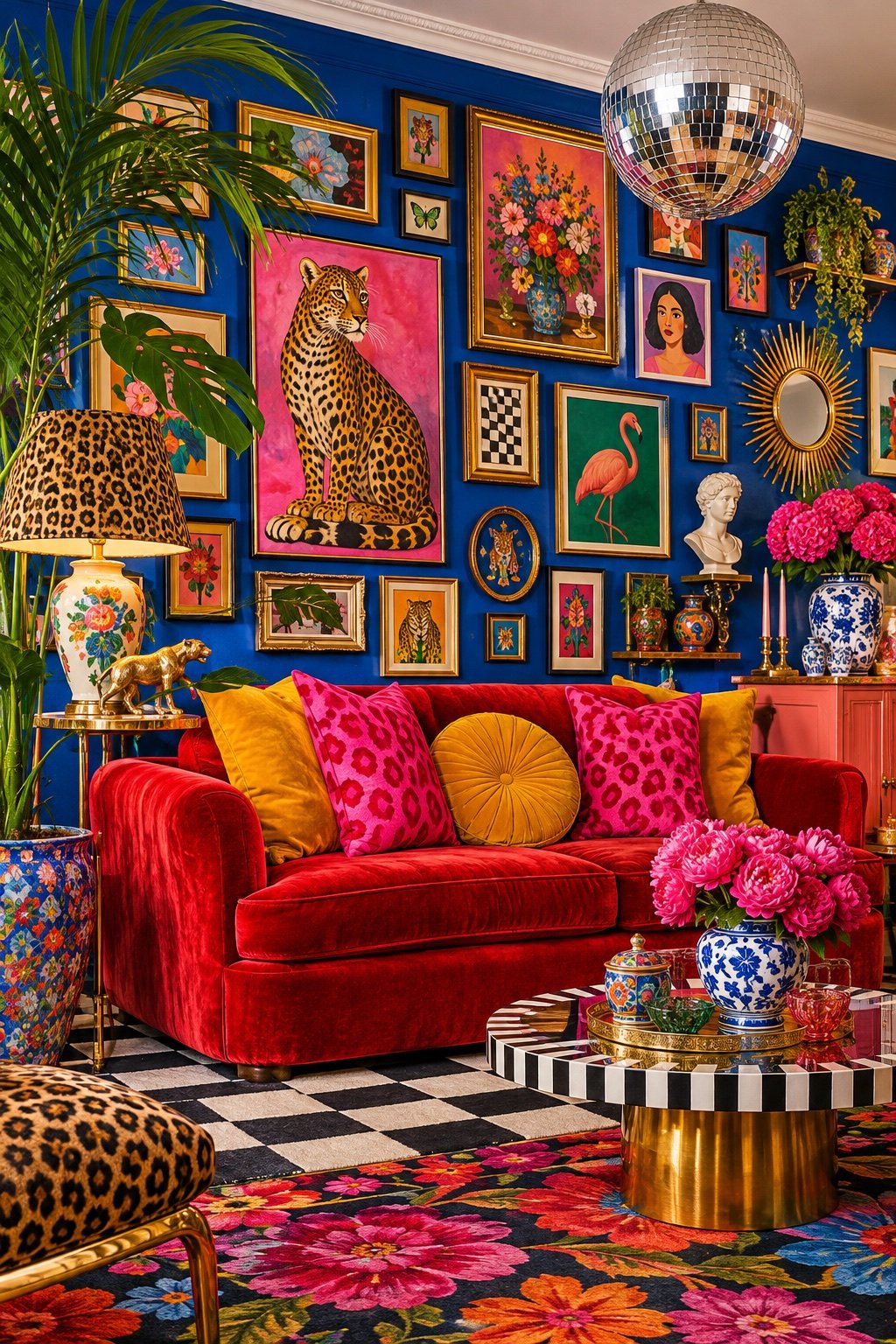
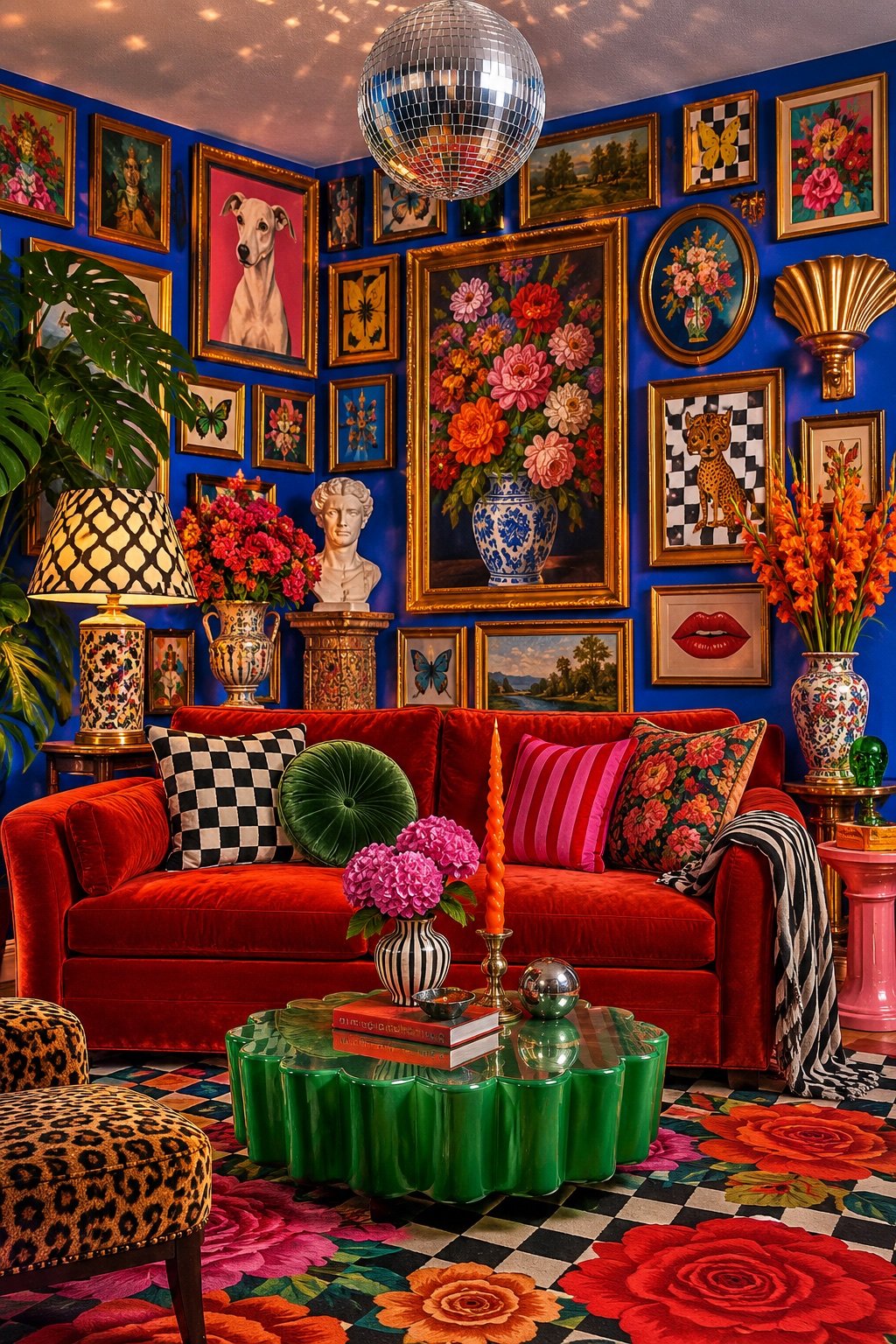
The modern version is playful rather than precious. Think color-blocked walls, a squiggly mirror next to a thrifted oil painting, a leopard-print ottoman on a checkerboard floor, and a disco ball hanging over the dining table for no reason except that it’s fun. Kitsch is welcome. Humor is welcome. Groovy curves and seventies shapes are very welcome.
What it is not: a showroom of expensive antiques, gilt everything, or a hushed “quiet luxury” palette with one throw pillow doing all the work. Maximalism can absolutely include old pieces, but they’re there to be mixed, clashed and played with, not worshipped.
Maximalism vs. clutter: the difference
This is the question everyone asks, and the answer is simple: maximalism is curated, clutter is accumulated.
- Every object has a reason. In a maximalist room, you can explain why that ceramic frog is on the mantel. Clutter is the stuff you never decided on.
- Things are grouped. Maximalists cluster objects by color, shape or theme so they read as one display. Clutter is scattered randomly across every surface.
- Surfaces still work. You can still set down a coffee cup. If you can’t, it’s clutter.
- There’s a through-line. A repeated color, a recurring motif or a consistent mood ties the chaos together. Clutter has no thread at all.
A good test: take a photo of the room and look at it on your phone. Maximalism looks like a magazine spread with a lot going on. Clutter looks like a “before” photo.
The Core Principles of Maximalist Decor
Maximalism looks rule-free, but the rooms that work all lean on the same five ideas. Learn these and you can break everything else.
1. Color: commit, then commit again
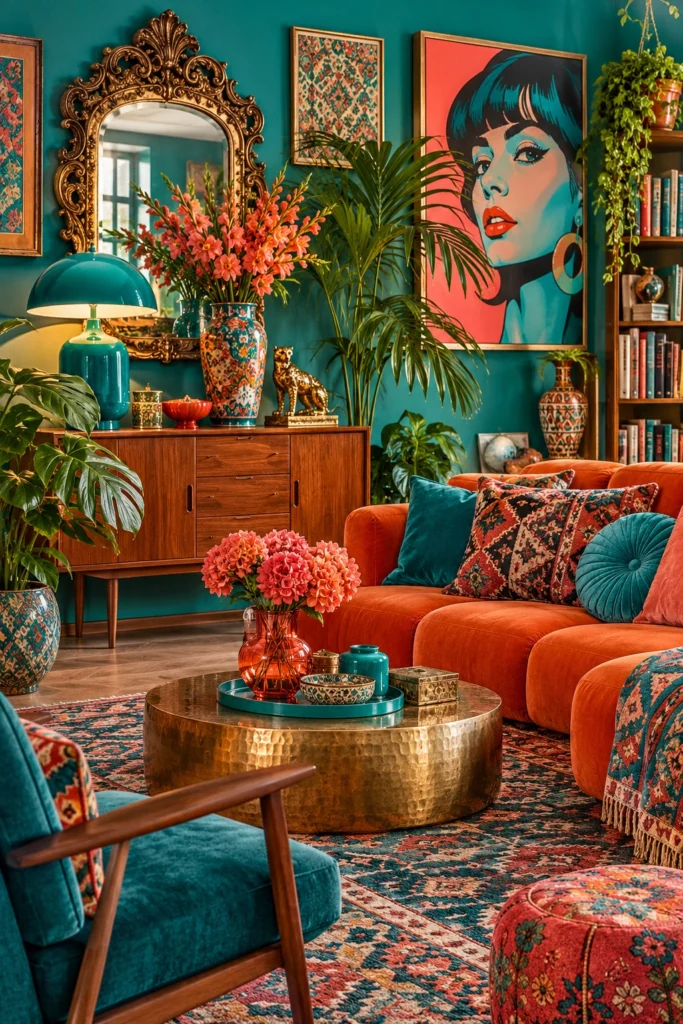
Color is the backbone of the maximalist decorating style. Pick a dominant hue and use it generously, on walls, ceiling, trim and even the radiator. Then add two or three supporting colors that either clash on purpose (pink and red, orange and purple) or sit opposite each other on the color wheel (cobalt and tangerine, emerald and coral).
Paint the ceiling. Seriously. A colored ceiling is the fastest way to make a room feel wrapped and intentional rather than half-finished. Color-drenching, where walls, trim and ceiling all match, gives you a bold base that makes everything you add look deliberate.
If you want to understand why certain combinations make you feel energized or cozy, read up on the psychology of color in eclectic maximalism before you buy a single sample pot.
2. Pattern: clash with a plan
Pattern clashing is the fun part, and it’s less risky than it sounds. The trick is to vary the scale. Pair one big, bold pattern (an oversized floral wallpaper) with one medium pattern (a striped armchair) and one small pattern (a ditsy print cushion). Three different sizes stop the patterns fighting for the same space.
Share at least one color across every pattern in the room. That shared hue is the glue. Stripes, checks and florals can all live together if they’re speaking the same color language.
3. Layering: build in depth
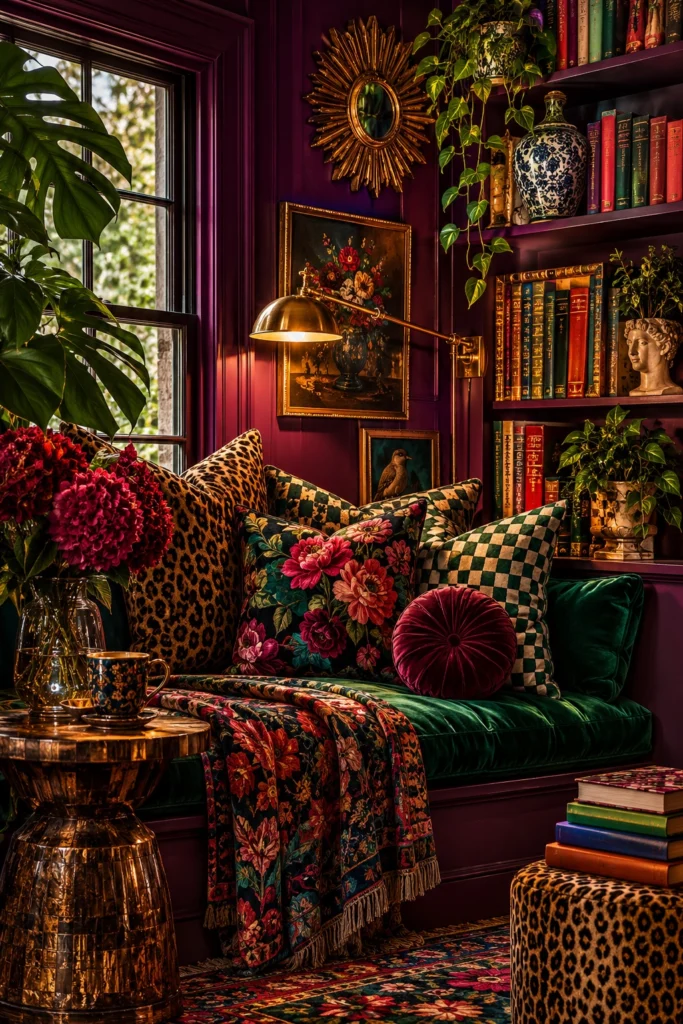
Layering is what makes a maximalist room feel rich instead of flat. Rugs on rugs. Throws over sofas. Curtains with tiebacks and trim. Art leaning on shelves in front of art hanging on walls. Plants in front of mirrors.
Mix textures as hard as you mix patterns: velvet next to rattan, glossy lacquer next to chunky wool, ceramic next to brass. Texture gives the eye variety even when colors repeat, and it makes a room feel touchable.
4. Collections: display, don’t hide
Collections are the heart of maximalism. Vintage glassware, pottery, records, toy robots, souvenir plates, shells, ceramic animal figurines: whatever you love, give it a home in plain sight.
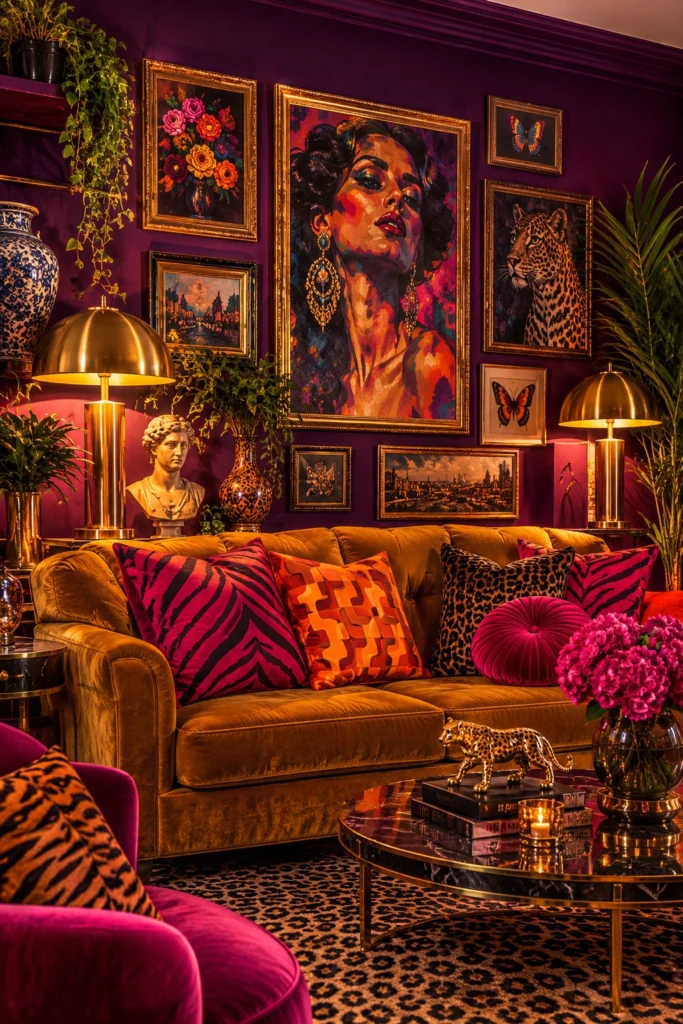
Display collections in groups, never sprinkled one per room. Ten blue vases together look like an exhibit. Ten blue vases scattered across the house look like you forgot to put them away. Glass-front cabinets, wall-mounted plate racks and deep floating shelves all help. And don’t be shy about scale: one huge piece can anchor a whole collection, as these oversized art and statement statues prove.
5. A point of view: the secret ingredient
This is what separates great maximalist rooms from merely busy ones. Decide what the room is about. A seventies supper club. A tropical fever dream. A pop-art kid’s bedroom for adults. A witchy botanical den. Your point of view tells you what to keep, what to cut and what to buy next.
The best rooms feel like they belong to one specific, slightly eccentric person. If you need help finding your story, this piece on weaving narratives into maximalist rooms is a great place to start.
Maximalist Decor Ideas, Room by Room
You don’t need to overhaul your whole home at once. Here are quick, specific maximalist decor ideas for each main room, each one designed to make an immediate splash.
Living room
- Build a ceiling-high gallery wall. Mix oil paintings, posters, mirrors, plates and textiles. Start with your biggest piece slightly off-center and work outward.
- Go big on the sofa color. A jewel-tone or candy-bright sofa becomes the anchor everything else bounces off.
- Layer two rugs. A large flat-weave base with a smaller, punchier rug on top, slightly askew.
- Add lighting at three heights. Overhead, table and floor. A sculptural pendant or a fringed lamp counts as decor, not just light.
For more inspiration, scroll through these eclectic maximalist living room ideas.
Bedroom
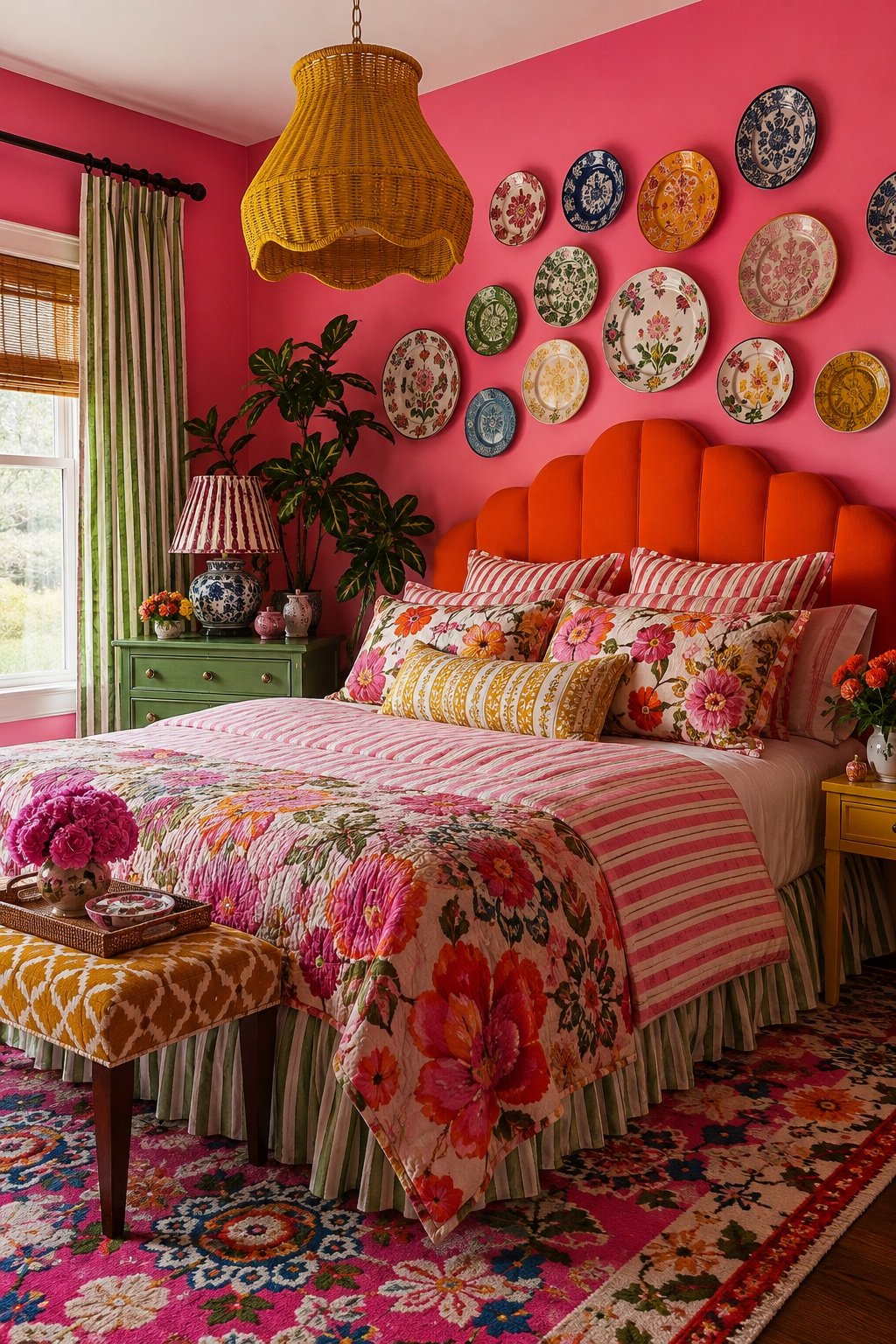
- Make the headboard a statement. Upholstered in a loud print, painted directly onto the wall, or replaced with a dramatic textile hanging.
- Pile on the bedding. Clash a patterned duvet with striped sheets and a mountain of mismatched cushions.
- Wallpaper the ceiling. You see it every night, so make it count.
- Use mismatched nightstands. One vintage, one modern, both painted in colors from your palette.
There’s a whole world of ideas in these eclectic maximalist bedroom ideas, from moody to wildly bright.
Kitchen
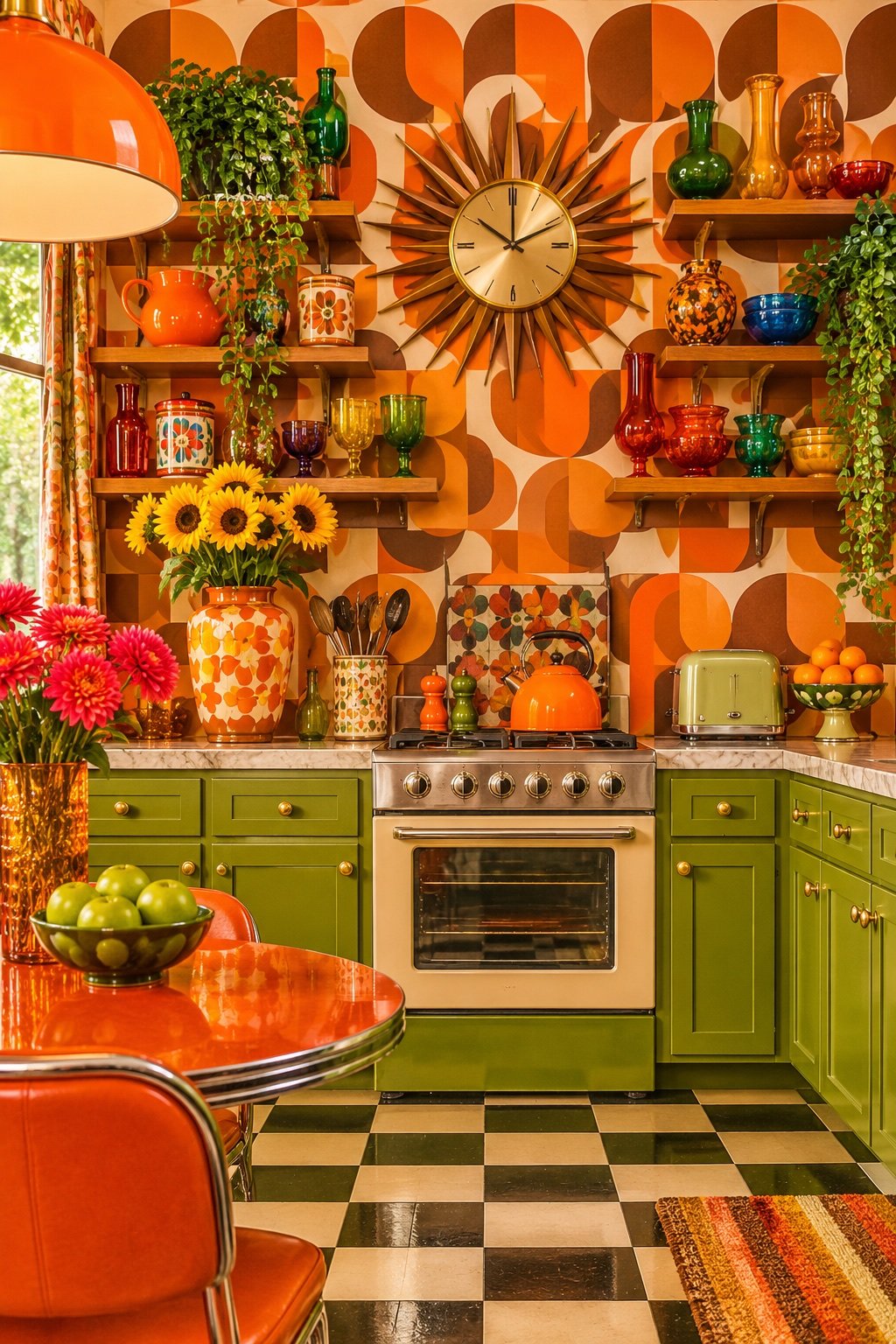
- Paint the cabinets. Green, red, cobalt, two-tone. Painted cabinets transform a kitchen more than almost anything else.
- Swap closed uppers for open shelving. Then fill it with your most colorful dishes and glassware in grouped displays.
- Hang art in the kitchen. Framed prints, a small oil painting by the window, a vintage food advertisement. Kitchens deserve art too.
- Add a bold backsplash. Patterned tiles or, for renters, a peel-and-stick tile decal.
If retro is your flavor, these maximalist kitchens with seventies style are pure joy.
Bathroom
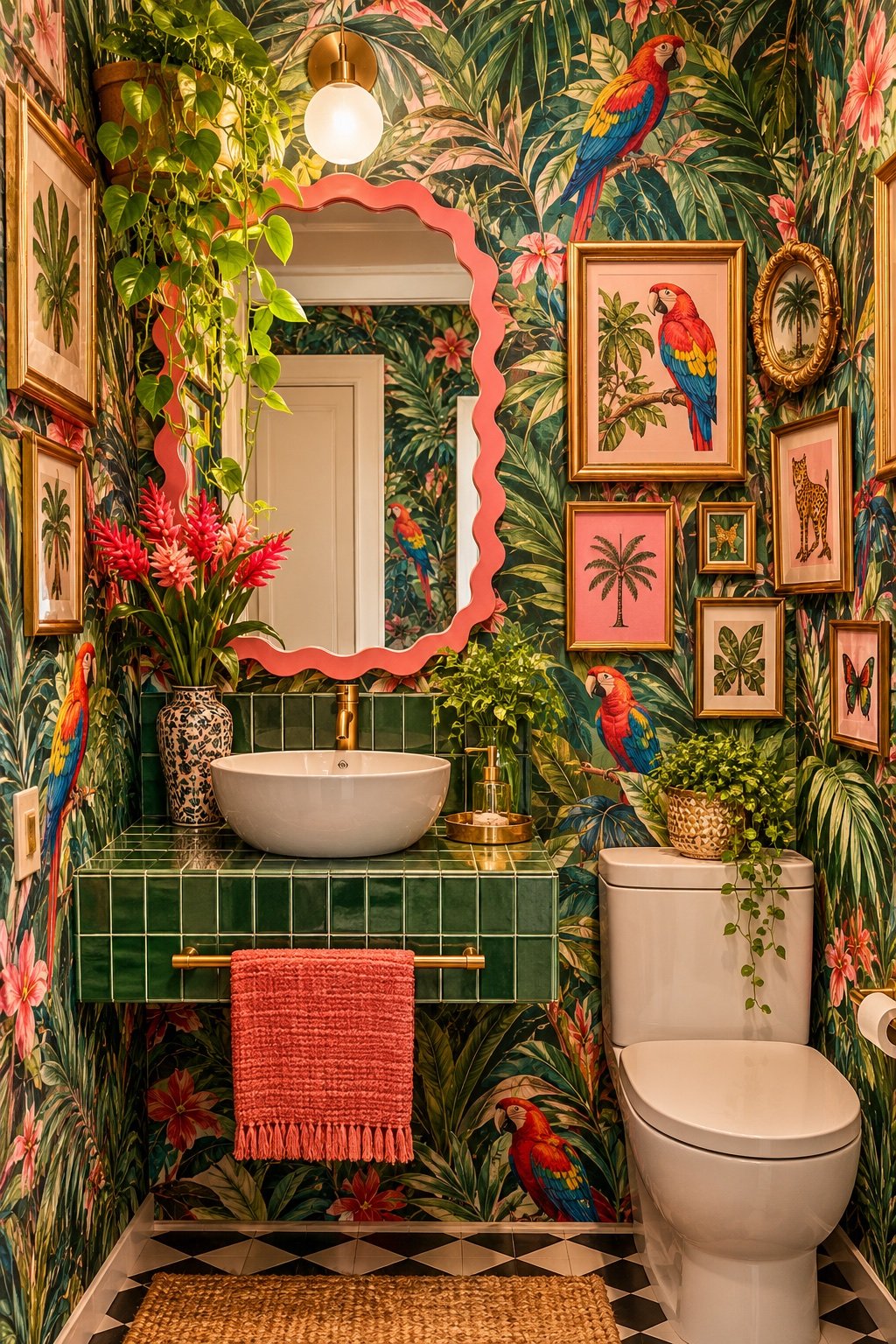
- Wallpaper everything. Bathrooms are small, so a big pattern goes a long way and costs less to cover.
- Swap the mirror. A wavy, scalloped or colorful framed mirror is an instant upgrade.
- Use colored grout or tile. Pink grout with white tile, or green tile floor to ceiling.
- Bring in art and plants. Humidity-loving plants and a few framed prints make it feel like a room, not a utility space.
Powder rooms are the ultimate playground for this. See how far you can push it with these maximalist powder room ideas.
How to Start Maximalism in a Small or Rented Space
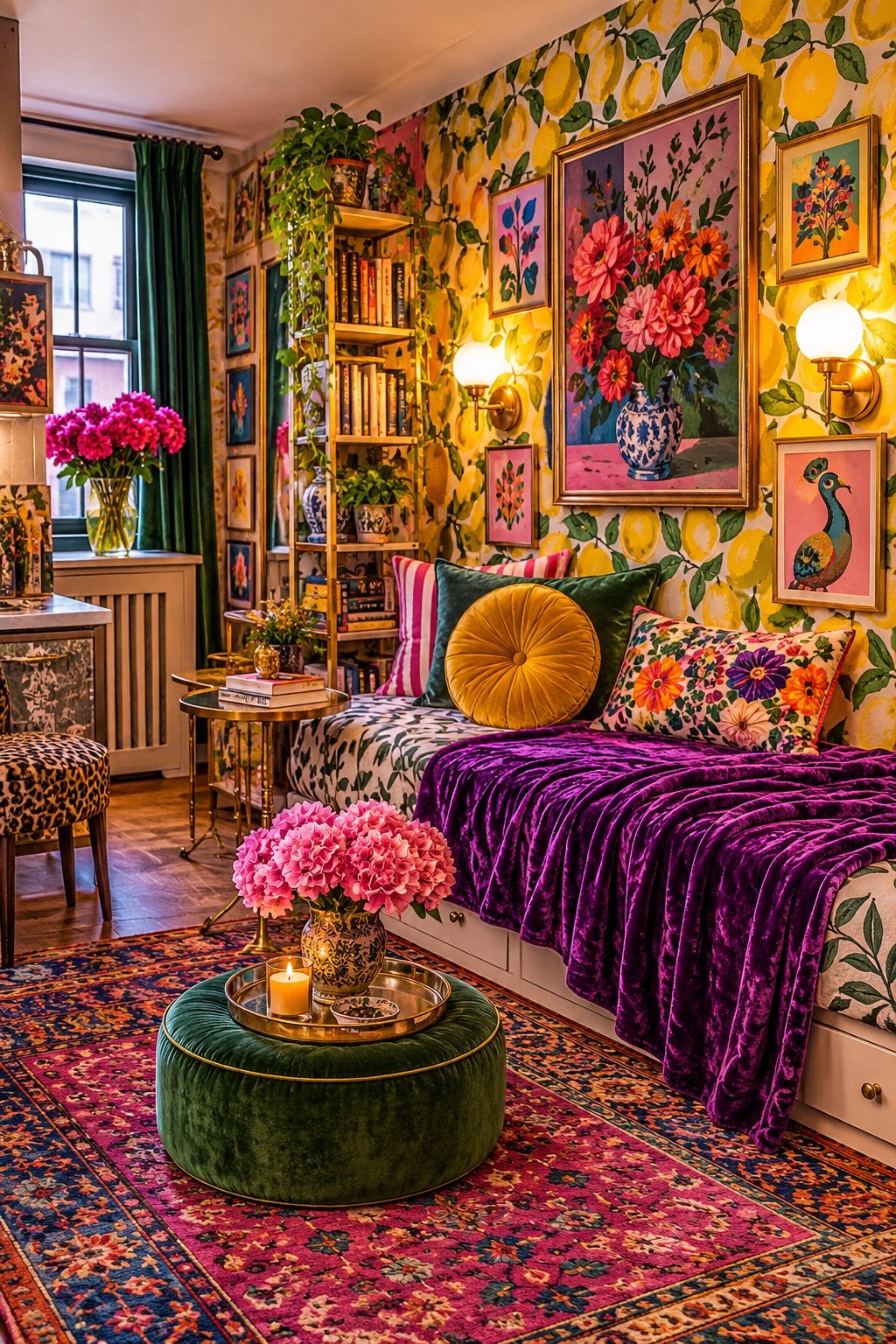
Small rooms and rentals are not a barrier to maximalism. If anything, a small space gets cozy and dramatic faster. Here’s how to start without losing your deposit.
Start with one wall or one corner
Pick a single wall and go all in: a gallery wall, a statement wallpaper, a bold painted shape. One fully realized corner shows you what you like before you commit to a whole room. An entryway is a great test space, too. These maximalist entryway ideas show how much drama fits in a hallway.
Use renter-friendly tools
- Peel-and-stick wallpaper. It’s the single best renter tool for pattern. A roll of bold floral peel-and-stick wallpaper can turn a bland wall into the star of the room, then come off when you move.
- Removable hooks and strips. Hang a full gallery wall with zero holes.
- Plug-in lighting. Rentals often have one sad ceiling light. A pair of plug-in wall sconces adds glow and style without an electrician.
- Textiles everywhere. Curtains, throws, rugs, tablecloths and fabric wall hangings bring pattern and color, and they all move with you.
Go vertical
In a small space, walls are your square footage. Hang art high, run shelves to the ceiling and stack frames above doorways. Drawing the eye up makes a small room feel bigger and gives your collections more room to breathe.
Use mirrors to bounce color around
A big mirror doubles your color and pattern instantly. Lean an oversized one against a wall, or cluster small mirrors in different shapes into a gallery. A single colorful wavy wall mirror adds playful shape and light at the same time.
Buy secondhand, slowly
Maximalism is built over years, not bought in a weekend. Thrift stores, flea markets and estate sales are where the good, weird stuff lives. Buying slowly keeps the room personal and keeps your budget intact.
Common Maximalist Decor Mistakes
Even bold rooms can go wrong. These are the mistakes that most often push maximalism into chaos.
No color thread
If every object is a different color with no repeats, the room feels random. Choose two or three colors to repeat at least three times each around the room. That repetition is what makes abundance feel planned.
All the same scale
A room full of small objects looks fussy. A room full of big ones looks like a warehouse. Mix scale: one huge statement piece, a few medium ones, and clusters of small treasures.
Ignoring negative space completely
Maximalism doesn’t mean every inch must be filled. Leave a little breathing room on a coffee table, a clear path through the room, and some wall between groupings. Those pauses make the busy parts look better.
Buying a “maximalist look” in one go
Ordering a whole room of trendy pieces at once creates a room with no history. It looks like a catalog, not a home. Mix new with secondhand, personal with practical, and give the room time to evolve.
Forgetting function
You still need somewhere to sit, somewhere to put a drink, and enough light to read by. A beautiful room that doesn’t work won’t get used. Decorate around how you actually live.
Playing it safe with the backdrop
White walls with colorful stuff can work, but it often looks unfinished. Commit to a bold backdrop and let everything else sit on top of it. The backdrop is what makes the whole room feel cohesive.
Hanging art too low or too sparse
One small print floating on a big wall looks lost. Group art tightly, hang it at eye level or above, and don’t be afraid to go floor to ceiling. A set of mixed-size gallery wall frames makes it easy to build a dense, intentional arrangement.
Maximalist Decor FAQ
What is maximalism in interior design?
Maximalism is a decorating style built on abundance and intention: bold color, layered pattern, rich texture, visible collections and lots of art. The goal is a room that feels personal, joyful and full of story.
How is maximalism different from clutter?
Maximalism is curated, with every object chosen, grouped and displayed on purpose. Clutter is accumulated without decisions. If items are grouped, surfaces still work and colors repeat, you’re looking at maximalism.
Can maximalism work in a small space?
Yes, and it often works better. Small rooms feel cozy and dramatic quickly. Go vertical with art and shelves, use mirrors to multiply color, and lean on removable wallpaper and textiles in rentals.
What colors work best for maximalist decor?
Saturated colors work best: cobalt, emerald, tomato red, hot pink, tangerine, mustard and deep purple. Pick one dominant color and two or three supporting shades, then repeat them throughout the room.
How do I start decorating in a maximalist style?
Start with one wall or corner. Pick a bold backdrop color or wallpaper, then add art, textiles and a grouped collection on top. Build slowly, buy secondhand where you can, and keep a clear point of view.
Maximalism isn’t about having the most stuff. It’s about having the most you in every room. Pick a color, clash a pattern, put your weird little collection on display and keep going until the room makes you smile every time you walk in. That’s the only rule that really matters.