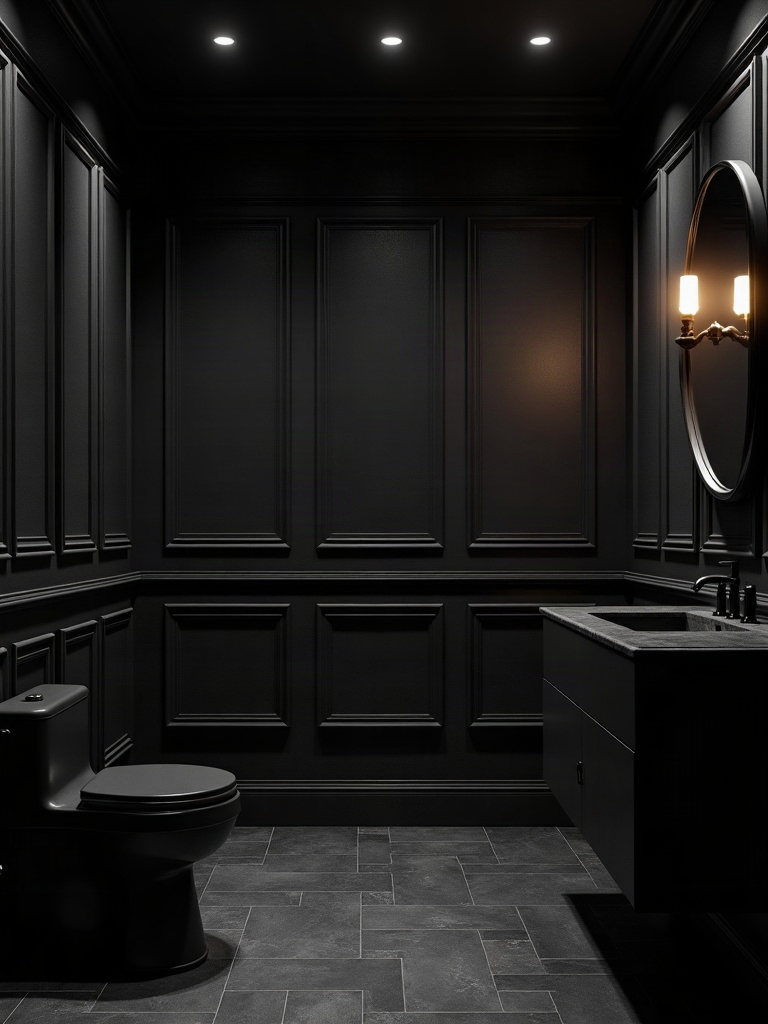
Dark Living Room Ideas: The Case Against Bright and Airy
Every design account on your feed is telling you the same lie: paint it white, add one plant, call it a day, and your living room will feel “airy.” We are here to tell you that airy is just another word for empty, and empty is not a design philosophy — it’s a missed opportunity. If you have spent even one evening searching for dark living room ideas because the beige box you’re sitting in makes you want to scream into a throw pillow, you already know the truth. Bright and airy was never the goal. It was the compromise people made when they were afraid of their own walls.
We are not afraid of our walls. Our kind paints them the color of good scotch, hangs three generations of art on them, and lights them like the inside of a jazz club at 11pm. This is not about making a room feel smaller — done right, a dark living room feels bigger, because darkness has no edges. White walls show you exactly where the room ends. Dark ones let your eye wander until it gives up trying to measure the space and just sits in it instead.
Why Dark Living Room Ideas Outperform “Bright and Airy” Every Time
Here is the case, point by point, for why every dark living room idea on this list will outlast the current obsession with pale oak and linen everything. First: contrast makes a room feel intentional. A white room with a gray sofa and a jute rug isn’t a design decision, it’s the absence of one. Second: dark walls are the single best backdrop for the objects you actually love — the gilt-framed oil painting from your grandmother, the brass floor lamp you found at an estate sale, the taxidermy piece your partner still isn’t sure about. Against white, those objects compete for attention with the walls themselves. Against a wall the color of oxblood or bottle green, they finally get to be the main event.
Third, and this is the one nobody wants to say out loud: dark rooms photograph worse in real estate listings and better in real life. You are not staging this room to sell it. You are staging it to live in it, at 9pm, with a glass of something dark, in a space that actually looks like someone with opinions lives there. That is the entire argument for dark living room ideas over the beige default — it’s a room built for how you actually use it, not how a stranger might photograph it for forty-five seconds before scrolling past.
The Home Sweet Eclectic Dark Living Room Playbook
We are not going to tell you to “add a black accent wall and call it moody.” That’s the starter pack version, and it’s why most dark living room ideas online feel like the same room wearing a slightly different coat. What follows are seven moves — real, specific, slightly confrontational — for building a living room that reads as deliberate chaos instead of a Pinterest board that got cold feet halfway through.
Commit to a Wall Color That Scares You a Little
The number one reason dark living rooms fail is that people choose a color that is “basically gray with ambitions.” That is not commitment, that is a compromise wearing a trench coat. If you are going dark, go somewhere with a name like “Bibliothèque” or “Tanager’s Nest” — a color that makes your painter ask if you’re sure, twice. Bottle green, aubergine, near-black charcoal, or a deep clay red all read as confident rather than depressing, because depressing is what happens when a dark color is chosen halfheartedly and under-lit.
Paint all four walls, including the trim, in the same family — this is called color-drenching, and it is the fastest way to make a room feel like a considered decision instead of an accent-wall apology. A single sample pot won’t tell you the truth; order the largest sample size available and look at it morning, afternoon, and at night under lamplight, because dark colors shift more dramatically across the day than pale ones do. Once you commit, you’ll notice something: the room stops looking like it’s missing furniture and starts looking finished, even half-decorated.
Layer Lighting Like a Nightclub, Not an Operating Room
The single fastest way to ruin a dark living room is to leave a flush-mount ceiling fixture as the only light source. Overhead light in a dark room reads as an interrogation. What you want instead is a minimum of four separate light sources at different heights: a floor lamp, a table lamp or two, picture lights over your art, and something low and warm like a amber glass table lamp that throws light sideways instead of down.
Put everything on dimmers, including the lamps if you can manage it with smart plugs, and aim for warm bulbs in the 2200K–2700K range — anything cooler will fight the wall color and make it look muddy instead of rich. This is the step people skip because it feels like an afterthought, but lighting is doing at least half the work in any successful dark living room. Get it wrong and the room feels like a cave. Get it right and it feels like the only room in the house anyone wants to sit in after dark.
Let Velvet and Leather Do the Heavy Lifting
Fabric texture matters more against dark walls than it ever did against white ones, because dark backgrounds catch light differently and flat, matte cottons can go visually dead against them. Velvet, on the other hand, catches lamplight in a way that reads as expensive even when it wasn’t. A deep emerald or rust velvet throw pillow set thrown across a leather or boucle sofa gives you the contrast in sheen that a dark living room needs to avoid looking flat.
Leather earns its place here too — it ages instead of wearing out, and it has a warmth that pairs naturally with brass and dark wood. If you’re working with an existing sofa in a pale fabric, don’t panic and repaint the walls around it. A slipcover or a reupholster in a saturated jewel tone will get you further than starting over, and it lets the sofa become part of the story instead of the thing you’re apologizing for.
Hang Art Salon-Style, Floor to Ceiling
Your empty wall is a missed opportunity, full stop. A single oversized canvas centered above the sofa is the safe, forgettable choice. Salon-style hanging — where frames of different sizes, eras, and subject matter climb the wall in a tight, considered cluster — is what actually reads as curated obsession rather than a showroom display. Mix real oil paintings from estate sales with prints, botanical studies, and even a small mirror or two to break up the grid.
Start on the floor before you touch a hammer: lay the arrangement out on butcher paper or directly on the rug, adjust it until the spacing feels intentional rather than accidental, then transfer it to the wall. A gallery frame set in mixed finishes gives you a fast way to start the collection if you don’t have decades of estate sale finds yet — you will, eventually, and the wall should be ready to keep growing.
Bring In Brass, Not Chrome
Metal finish is one of those details that quietly decides whether a dark living room feels like a members-only club or a hotel lobby that closed in 2004. Chrome and brushed nickel are cold finishes — they were built for bright, minimal spaces, and against a dark wall they read as sterile and slightly out of place. Brass, aged bronze, and blackened iron do the opposite: they warm up in lamplight instead of going flat.
Swap out obvious offenders first — switch plates, curtain rods, picture lights — before moving to bigger pieces like a brass and glass bar cart, which does double duty as function and focal point. You don’t need to match every piece of brass in the room to the same exact tone. A little variation in patina actually helps sell the idea that this room was assembled over years, not ordered from a single catalog page in one afternoon.
Rugs Are Not Optional, They’re Armor
A dark living room with a bare floor or a thin, pale rug will always feel unfinished, because the floor is the one surface that’s still fighting the rest of the palette. The rug needs to either match the intensity of the walls or introduce a bold, saturated pattern that can hold its own — think deep Persian or Turkish-style patterns in wine, indigo, and gold, not a solid neutral that was chosen to be inoffensive.
Go bigger than feels comfortable. The most common rug mistake in any living room, dark or not, is sizing it so small that the furniture floats off the edges like it’s stranded. All the front legs of your major furniture pieces should sit on the rug, minimum — and in a room this saturated, an oversized vintage-style Persian area rug will anchor the whole composition instead of looking like an afterthought dropped in at the last minute.
Stop Matching Your Wood Tones
This is the rule that gets broken the least and needed the most: your coffee table, your bookshelves, your side tables, and your picture frames do not need to be the same wood species stained to match. Matching wood tones is a leftover instinct from matched furniture sets, and matched sets are the opposite of what makes a room feel eclectic. A dark living room can hold a walnut coffee table, an oak bookshelf, and a mahogany side table in the same breath, as long as the undertones (warm versus cool) are roughly compatible.
What ties mismatched wood together isn’t the wood at all — it’s the wall color and the metal finishes doing the connecting work for you. Once the room is dark and the brass is consistent, wildly different furniture eras stop looking like mistakes and start looking like a collection, which is exactly the impression we’re going for. This is where “our kind” of decorating actually separates itself from a showroom: nothing was bought as a set, and nothing needs to be.
Put those seven moves together and you don’t get a dark living room that feels heavy or closed-in — you get one that feels like it has a pulse. That’s the entire point of chasing dark living room ideas over the safer, paler alternative: a beige room disappears into the background of your life. A dark one becomes the room people remember walking into.
Frequently Asked Questions
Will a dark living room make a small space feel even smaller?
Not if you layer your lighting correctly. A small room painted dark and lit with a single overhead fixture will feel cramped — but a small room painted dark and lit with four or five warm, low sources will feel enveloping instead of tight. Dark walls also remove the visual “edge” that pale walls create, which often makes a small room feel less boxed-in, not more.
What’s the best dark paint color for a north-facing living room?
Rooms with less natural light actually handle dark, saturated colors better than pale ones, because pale colors read as flat and gray without sun to activate them. Deep greens, warm charcoals, and clay-based reds tend to hold their richness in low light better than blue-based darks, which can read cold and almost bruised without direct sun.
Do I need to repaint the ceiling too?
Not always, but color-drenching the ceiling in the same tone (or a slightly lighter version of it) will make the room feel taller and more cohesive rather than boxed-in by a stark white “lid.” If you’re not ready to commit to a dark ceiling, a warm off-white will read better than a stark, cool white.
How do I keep a dark living room from feeling gloomy instead of moody?
Gloomy happens when a dark room is under-furnished, under-lit, or missing texture and metal accents. Moody happens when all three are present: warm layered lighting, mixed textures like velvet and leather, and enough brass or gold to catch and bounce the light around the room instead of letting it get absorbed.
Can I do this in a rental where I can’t paint the walls?
Yes — lean harder on the other six moves. Dark, oversized furniture pieces, a bold statement rug, salon-style gallery walls using removable hanging strips, heavy floor-length curtains in a deep tone, and warm layered lighting will get you most of the way to the same effect, even against a landlord-approved white wall.