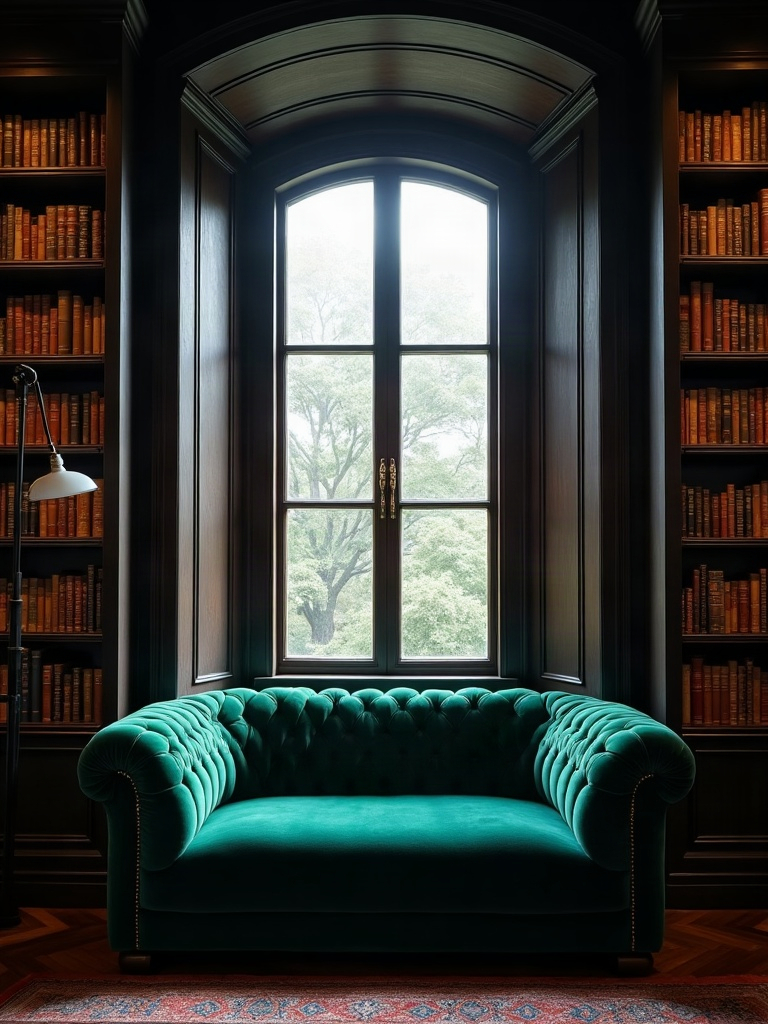
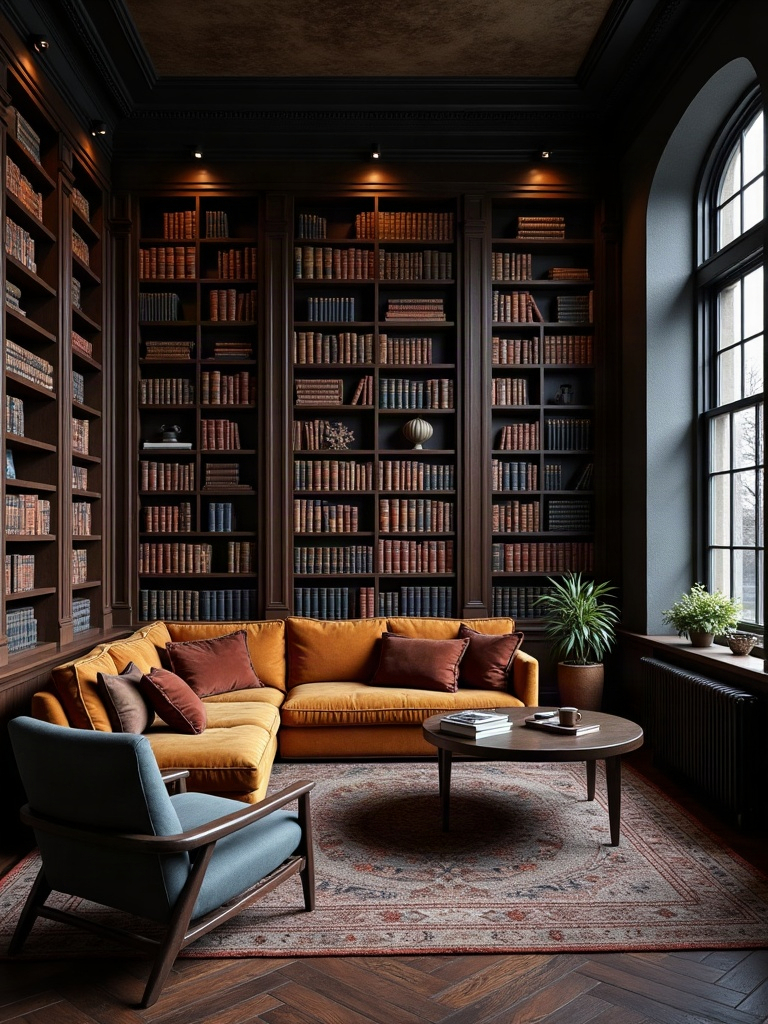
Moody Dining Room Ideas: Steal the 1970s Supper Club
There is a very specific room living rent-free in our collective memory, and it is not on Pinterest. It is a 1974 supper club off a state highway: oxblood banquettes, a ceiling low enough to hold smoke, one amber sconce doing the work of an entire lighting plan. Every moody dining room we actually want to sit in is trying, consciously or not, to be that room. Most fail because they stop at the paint.
So let’s stop pretending this is about a color. A moody dining room is not a wall in Studio Green with a boucle chair apologizing in front of it. It is a mood engineered on purpose — low light, saturated surfaces, furniture with a criminal record, and the sense that something is about to be revealed over the second course. That is a supper club, and our kind has been building one at home for years without naming the reference.
This is the naming. Below: ten moves that take a dining space from “we painted it dark and now it feels like a waiting area” to a room people linger in until 1 a.m. because leaving feels rude. More is a religion here, and the supper club was one of its earliest cathedrals.
Why the Supper Club Is the Right Reference for a Moody Dining Room
Most advice about going dark is defensive: balance the darkness, keep the white trim, let light in. That is written by people frightened of their own rooms. The supper club was never balanced. It was committed — the whole architecture of the place existed to make eight o’clock at night feel like the most important hour of your life.
It also solves the problem every dark room runs into: darkness without warmth reads as a basement. Supper clubs fixed that with three ingredients at once — deep saturated color, warm metal, and light sources below eye level. The color absorbs, the brass throws sparks back, the low light puts everyone in soft focus. Remove one and you get a cave. Keep all three and you get gravity.
The other gift is permission. Supper clubs were maximalist without knowing the word: etched mirror beside hunting prints beside a fake ficus beside a tufted booth in a red no designer would sign off on today. That is deliberate chaos with a business license, and it gives you cover to buy the strange thing.
Ten Moves to Build a Moody Dining Room With Supper Club Bones
Paint It the Color of a Whiskey Bottle at Midnight
Not black. Black flattens, shows every fingerprint, and turns a bruised gray under warm bulbs. What you want is a color with liquid in it: bottle green, oxblood, tobacco brown, ink-blue that goes almost purple by candlelight. These read nearly black at night but hold a glow when light hits them.
Take it up the walls, across the ceiling, over the trim, onto the window casings. Color-drenching is structural here, not trendy — visible white trim draws a hard line around the darkness and makes it look like a decision you regretted halfway through. Erase the line and the room loses its edges, which is the entire point.
Finish matters more than people admit: matte on the ceiling to swallow glare, eggshell on the walls so the sconces have something to bounce off. For the true lacquer-box effect, high gloss on the wall behind the buffet makes the room feel twice as deep and four times more expensive.
Kill the Overhead Light Entirely
The fastest way to ruin a moody dining room is a recessed can throwing 4000K daylight onto everyone’s forehead. No supper club in history lit a table from directly above at full brightness. Cut the ceiling lighting, or put it on a dimmer that bottoms out near candlelight and never touch the top of the dial again.
Replace it with layers at three heights: a pendant 30 inches above the table, sconces at shoulder height, a lamp on the buffet. That puts light level with faces, which flatters everyone and makes conversation conspiratorial. Warm bulbs are the cheapest upgrade here — swap in Edison-style 2200K dimmable LED bulbs across the room in an afternoon.
Then add real flame — tapers in mismatched brass holders, votives down the center of the table. Fire is the one light source no fixture imitates, and it’s why candlelit rooms photograph like paintings.
Go Round, and Go Heavy
Rectangular tables create head positions and hierarchy. Round tables create a conversation. The supper club tables people still romanticize were round, small enough that elbows touched, and heavy enough that nobody could shove one across the floor. A 48-inch pedestal round in dark wood is the best furniture investment for this room.
Weight is doing psychological work here. A spindly table on tapered legs signals temporary, rented, in-transit. A pedestal base with a thick top signals permanence, and permanence is what makes a room a destination rather than a corridor with chairs. If your budget allows one splurge, put it here.
Stuck with a rectangle? Lean into the length — run a table runner down the spine, line it with candles, and treat it like a banquet hall rather than a breakfast nook.
Upholster Something in Oxblood Velvet
The banquette is the soul of the supper club, and the reason is tactile: you slide into a booth, you don’t sit down at it. If you have a wall to spare, build one — even a plywood box with a foam cushion in deep velvet changes how the room gets used, because people commit differently to a bench than a chair.
No wall for it? Put the velvet on the chairs and refuse to buy a matching set. Two carvers in oxblood mohair at the ends, four side chairs in something else entirely. Supper clubs bought furniture as it broke, not as a collection, and that accumulated look is impossible to fake with a boxed dining set.
Fabric-wise: velvet, mohair, leather already starting to crack. Avoid anything performance-coated in a shade called Greige. For the fastest version, throw a set of deep jewel-tone velvet dining chair covers over what you own before committing to reupholstery.
Build a Bar That Looks Like It Has a Past
Every supper club had a bar you could see from the table, and the bottles were half the decor. Recreate it with a vintage credenza, a brass cart, or a corner with open shelving — the requirement is that glassware and bottles are on display, not behind cabinet doors. Amber glass, cut crystal, one bizarre decanter shaped like something it shouldn’t be.
Over-supply it. Six bottles look like a hobby; twenty look like a bar. Mix in coupe glasses, a jigger nobody uses, cocktail napkins from a hotel in another country. This corner is where curated obsession earns its keep. An antique brass two-tier bar cart gives you the frame, and then you spend two years filling it — the correct way to decorate anything.
Backlight it. A puck light aimed at the bottles turns liquor into stained glass and gives the room a second focal point. Your empty wall is a missed opportunity; your empty corner is worse.
Hang a Salon Wall That Refuses to Match
Supper clubs did not curate their art, they accumulated it — a racehorse print, a photo of the owner with a minor celebrity, an oil painting of a boat nobody had ever sailed. That accidental density is the fastest way to make a dark room feel inhabited rather than staged.
Build it floor to ceiling on the wall opposite the bar. Mix frames aggressively — gilt, black lacquer, raw wood, one objectively too ornate. Mix subjects harder: a portrait of a stranger, a botanical plate, a menu from a restaurant that closed, a mirror to break the rhythm. Hang the bottom row low enough that seated guests are eye-level with something.
The rule that makes it work against dark paint: dark mats and dark frames on at least half the pieces, so the wall reads as one mass rather than a scatter of bright rectangles. Contrast the art against itself, not against the walls.
Put Down a Rug With Opinions
Hard floors under a dining table produce restaurant acoustics, and not the good kind. Every clink amplifies, chairs shriek, and the room stays loud instead of going warm. A rug fixes the sound and gives the floor a pattern to argue with the walls.
Go antique or antique-adjacent: a worn Persian, a faded Turkish, something with a red so old it’s gone rust. Patterned wool hides the inevitable wine catastrophe far better than any solid — busy surfaces are forgiving surfaces, and that’s the practical case for maximalism nobody makes often enough.
Size it properly or don’t bother: 36 inches past the table edge on all sides, so chairs stay on it when pushed back. For the look without the auction house, a distressed vintage-style Persian area rug in oxblood and indigo does the job convincingly.
Add Brass, Mirror, and a Little Smoke
Dark rooms need something to throw light back or they go inert. Brass is the supper club default — unlacquered, so it darkens unevenly and stops looking big-box. Put it everywhere: sconces, table legs, picture lights, candlesticks, cabinet pulls, mirror frames.
Then the mirror itself, and here is the specific move — antiqued or smoked glass, not clear. Clear mirror throws the room back at full brightness and undoes your lighting plan. Foxed antique mirror returns a blurred, gold-tinted version instead — precisely the flattering haze the reference demands. A smoked-mirror panel behind the bar is the most convincing supper club detail you can install in a weekend.
Skip chrome, nickel, anything described as brushed. Cool metals in a warm dark room read as hardware, not jewelry — and this room should be wearing jewelry.
Set the Table Even When Nobody Is Coming
An empty dining table is furniture. A set one is a promise. The supper club never had a bare table — always a cloth, always a candle, always a setting waiting for someone who might walk in. That anticipatory quality is what makes the room feel alive at 3 p.m. on a Tuesday when nothing is happening.
Leave a permanent arrangement: a runner, three candlesticks at staggered heights, a bowl of something seasonal and slightly too large, napkins that don’t match. Add one object with no function — a hunk of pyrite, a small unsettling bust. The functionless object separates a dining room from a dining area.
Then use it. Wax drips, ring marks and a patinated top are not damage in this aesthetic — they’re evidence.
Give the Room a Sound and a Smell
Nobody makes this move, and it’s the one that finishes the illusion. Supper clubs had a house sound — a trio, a piano, something low that filled the gaps in conversation. Put a small speaker on the bar shelf, hide the cable, give the room a soundtrack that starts when the lights go down. Vocal jazz, dusty soul, anything recorded before 1979 with the tape hiss intact.
Smell works faster. A room that reads of tobacco flower, leather or dark amber registers as a place with history before anyone looks at your paint. Keep an amber and tobacco leaf scented candle on the buffet and light it thirty minutes before guests arrive.
Sound and scent photograph as nothing and experience as everything, which is why they get skipped by people decorating for a feed instead of for their own kind.
What to Skip in a Moody Dining Room
Three things actively fight this look, and they’re the ones most often recommended. Sheer white curtains glow at every hour and punch a hole in the mood — use heavy velvet or lined linen close to the wall color. Matched furniture suites read as a showroom floor, and showrooms have no history. And cool-white bulbs, worth repeating, because one 4000K bulb hiding in a fixture will sabotage nine other correct decisions.
Also skip the instinct to “lighten it up” in week one. Every dark room hits an adjustment period around day three where it feels like too much, and the reflex is to add pale accessories until the tension drains out. Resist for a month — night is the hour this room was built for, and night is when you judge it.
And skip the gallery-of-one: a single large canvas on a dark wall with nothing around it looks unfinished here. Supper club logic is accumulation. More is a religion, and a lone canvas is agnostic.
Frequently Asked Questions
Will a moody dining room make my small space feel smaller?
It makes it feel deeper, not smaller. Dark saturated color erases the corners where walls meet, so the eye can’t measure the boundaries — the effect is a space with no clear edges rather than a shrunken one. Small dining rooms are the best candidates for this treatment, because they were never going to feel expansive anyway.
What paint colors work best for a dark and moody dining room?
Look for colors with visible depth rather than flat darkness: bottle and forest greens, oxblood and burgundy, tobacco brown, and inky blues that shift purple under warm light. Test them at night under the bulbs you plan to use — these colors change dramatically between 3 p.m. and 8 p.m., and the evening version is the one you’ll live with.
How do I keep a dark dining room from feeling cold?
Warmth comes from three sources working together: light at 2200K to 2700K, warm metals like unlacquered brass, and textiles with pile such as velvet, mohair and wool. If a dark room feels cold, the culprit is almost always bulb temperature or an absence of soft surfaces, not the wall color.
Can I do this look if my dining room is open to the kitchen?
Yes, and the contrast works in your favor. Treat the dining zone as a separate chapter: run the dark color to a natural break like a beam, an archway or a change in ceiling plane, then anchor it with a rug and low pendant lighting so the boundary is defined by light as much as by paint. The shift from brighter kitchen to darker dining area reads as deliberate staging.
How much does it cost to get this supper club look?
The cheapest meaningful version runs under two hundred dollars — warm dimmable bulbs, two gallons of saturated paint, candles and holders, and chair covers. That alone gets you most of the atmospheric shift. Bigger investments, in order of impact: a heavy round pedestal table, a correctly sized antique-style rug, and a banquette or velvet reupholstery.
Build it slowly, buy the strange thing when you see it, and light everything from below eye level. In a year you’ll have a moody dining room nobody wants to leave — which was always the supper club’s real trick.