This post contains affiliate links. As an Amazon Associate, Home Sweet Eclectic earns from qualifying purchases. Read our affiliate disclosure.
Dark green bedrooms are having a moment that isn’t going anywhere. Not sage green. Not mint. Not the timid “nature-inspired” greens that dominated the past decade. We’re talking forest green, hunter green, bottle green — the deep, rich, almost-black green of a pine forest at dusk.
Pinterest searches for “dark green bedroom” have surged over 300% in the past year. And once you understand why, it’s impossible to unsee. Dark green is the most liveable of the dark colours — it has warmth, depth, and an organic quality that makes a bedroom feel like it grew there, rather than was decorated.
This is the definitive guide to dark green bedrooms. Thirteen ideas, from the quietly confident to the full maximalist commitment — with exactly what to buy, what to pair it with, and why it works.
1. The Classic: Forest Green Walls with Brass Hardware
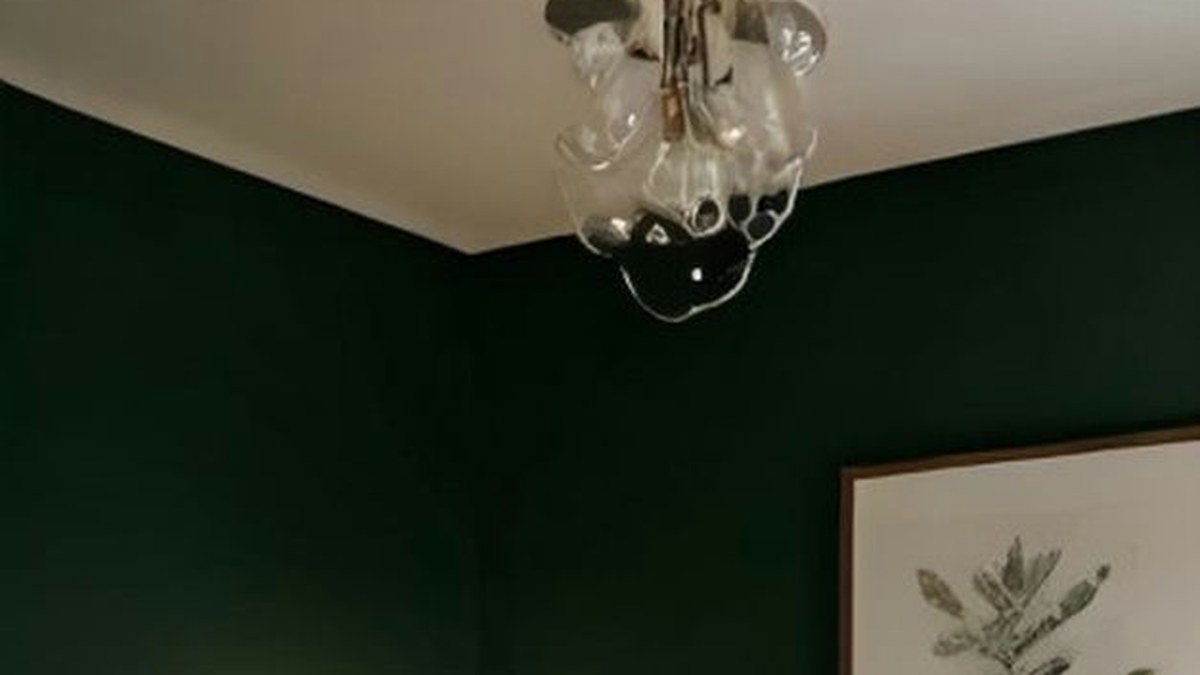
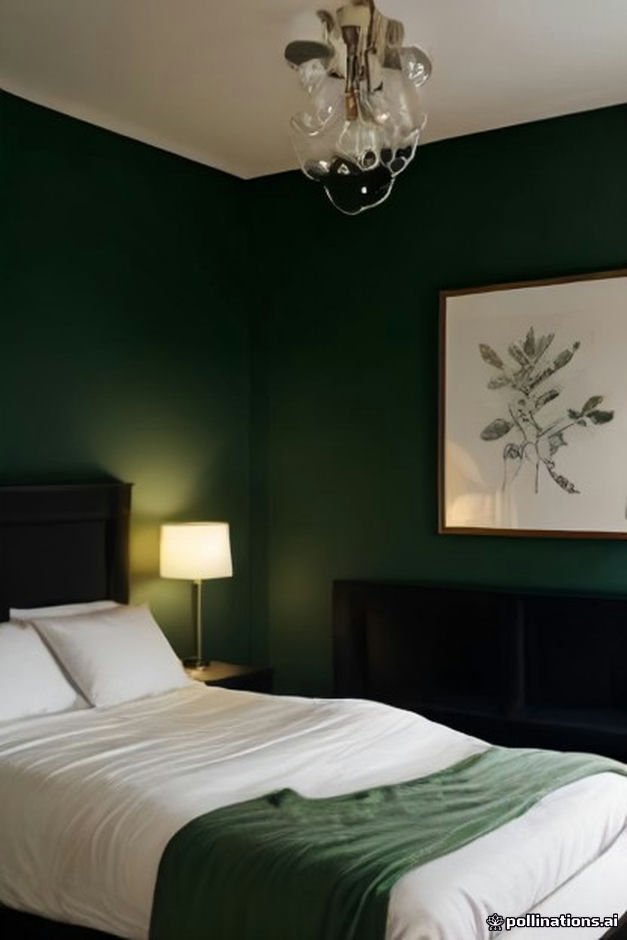
The foundation of every great dark green bedroom is the right paint. You want deep, rich forest green — think Farrow & Ball’s “Calke Green” or Sherwin-Williams’ “Hunt Club.” The kind of green that absorbs light rather than reflecting it, that makes the room feel like it has depth rather than just colour.
Against forest green walls, brass hardware is non-negotiable. A brass bedside lamp with a warm Edison bulb. Brass drawer pulls on a painted dresser. A brass-framed mirror. Brass plant pots. The warm gold of brass against deep green is one of the great colour pairings in interior design — they are complementary without being obvious, warm without being loud.
Keep the bedding simple in this combination: aged linen in warm white or pale sand, a chunky knit throw in cream or camel, and two or three scatter cushions in complementary jewel tones — sapphire, amethyst, ruby. The green does the heavy lifting. Everything else serves it.
2. Dark Green Velvet Headboard: Maximum Impact, Minimum Commitment
If you’re not ready to paint four walls, a dark green velvet headboard is the single most effective way to bring the dark green bedroom aesthetic into your space. One piece. Total transformation.
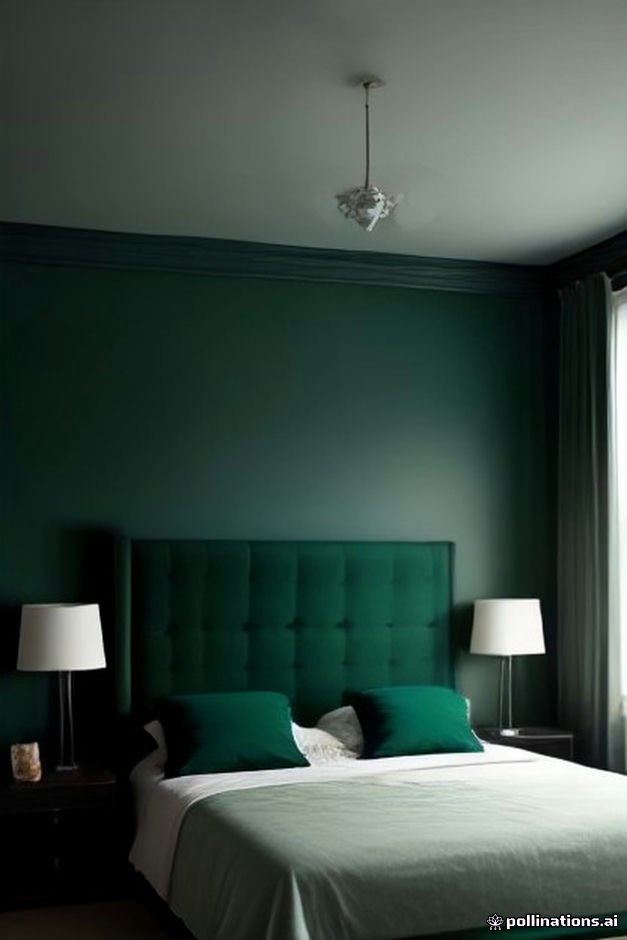
An oversized velvet headboard in deep hunter or forest green — channel-tufted or deeply button-tufted — against a neutral wall (warm white, soft grey, or even a lighter sage) creates an immediate focal point. The eye goes there the moment you walk in.
Style it with: crisp white linen that gets a little rumpled, a brass reading lamp on each side, and one large trailing plant (a pothos or a philodendron) on the bedside table. The combination of velvet, brass, and plant gives you the dark green bedroom aesthetic without committing to a full paint job.
What to look for: a headboard at least as wide as your mattress (ideally a few inches wider), in a velvet that has obvious pile direction — the way the light catches directional velvet is what gives it that rich, moody quality. Avoid velvet that looks flat or uniform.
3. Dark Green and Natural Wood: The Organic Combination
Dark green and natural wood is one of the most grounded, liveable combinations in bedroom design. The warmth of natural wood — walnut, oak, pine — against deep green creates a room that feels simultaneously rich and organic. Like sleeping in a very luxurious forest.
A walnut or oak bed frame against dark green walls is the starting point. Add a wooden nightstand, a wooden dresser or chest of drawers, and a few wooden accessories — a tray, a lamp base, a plant stand. The wood grounds the green and stops it from feeling heavy or oppressive.
This combination works across styles — it reads as Scandi in a minimal room, as maximalist in a layered one, as cottagecore with the right textiles. It is one of the most flexible aesthetic foundations in bedroom design, and dark green is what elevates it from pleasant to genuinely atmospheric.
4. Dark Green Bedding: The Easiest Dark Green Bedroom
The lowest commitment version of a dark green bedroom starts with the bedding. A deep green velvet duvet cover against light walls transforms a bedroom in one move — no paint, no commitment, just the most visible element in the room shifted to dark green.
Velvet is the best material for this approach. Cotton and linen in dark green can read as military or clinical in photographs; velvet has the depth and richness that makes the colour feel intentional. Look for a duvet cover with a good weight and obvious pile — the kind that photographs beautifully and feels even better to sleep under.
Pair it with: warm white linen pillowcases, a chunky cream knit throw folded at the foot of the bed, and two scatter cushions in a complementary jewel tone. The bed becomes the room’s statement. Everything else can stay exactly as it is.
5. Dark Green Ceiling: The Most Dramatic Move
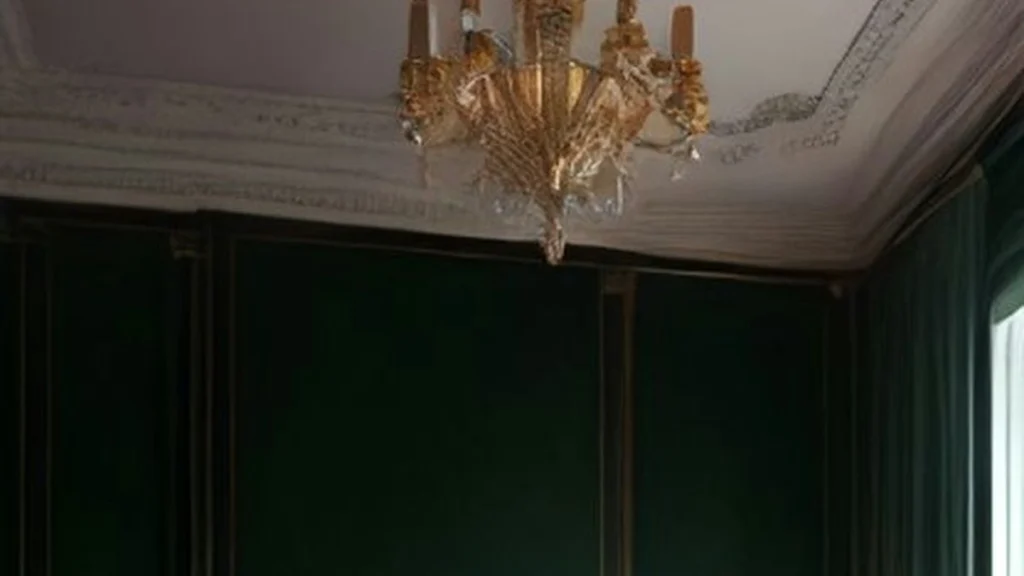
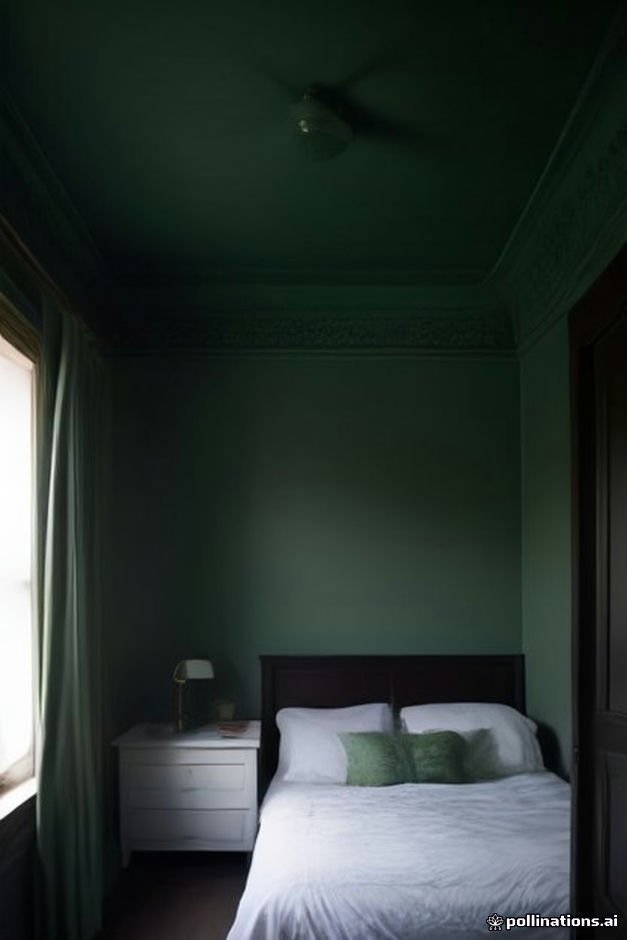
Painting the ceiling dark green — leaving the walls neutral — is the most underused technique in bedroom design. The ceiling becomes a canopy, the room feels enclosed and intimate, and you get the drama of dark green without the commitment of four walls.
This works especially well in bedrooms with higher ceilings (where the dark green ceiling brings the room down to a more intimate scale) and in rooms with light furniture (where the contrast between light walls and dark ceiling creates visual drama without feeling oppressive).
The key is to take the green slightly past the ceiling line — paint the top 6–8 inches of the wall the same dark green before transitioning to your wall colour. This “easing” of the ceiling colour makes the transition look deliberate rather than abrupt, and prevents the ceiling from looking like a lid.
6. Dark Green and Terracotta: The Unexpected Pairing
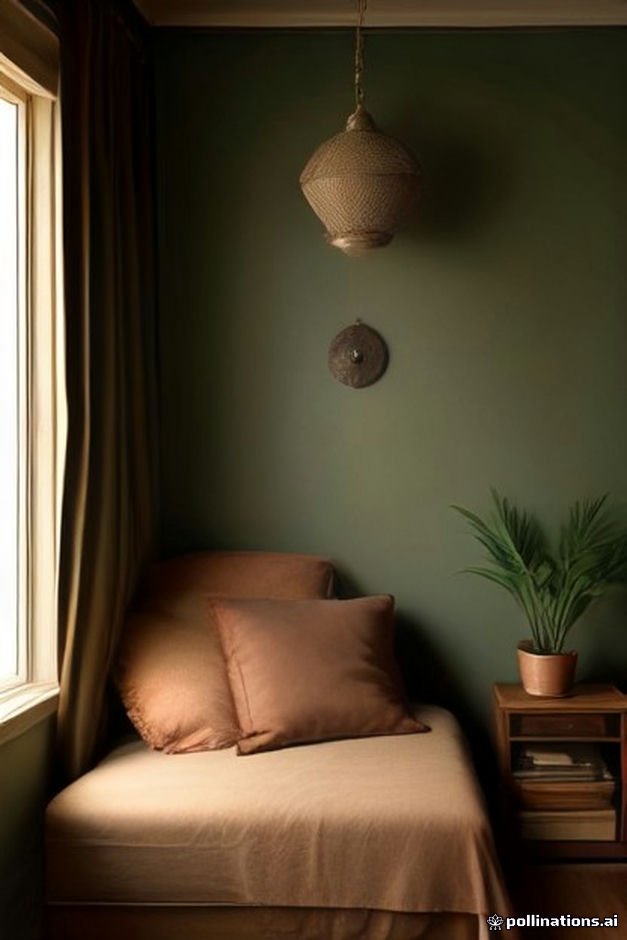
Dark green and terracotta should not work. And yet they do — spectacularly. The warm, burnt orange of terracotta against deep forest green creates a palette that feels simultaneously earthy and rich, like an Italian farmhouse crossed with a Victorian conservatory.
Bring terracotta in through the textiles: a terracotta throw cushion against dark green velvet bedding, a terracotta ceramic lamp base on a brass side table, terracotta curtains against dark green walls. The terracotta should be an accent, not a co-lead — the green is the room’s dominant colour, the terracotta its warmth and energy.
Add: natural materials throughout — jute rug, rattan lampshade, linen bedding, wooden furniture. The combination of dark green, terracotta, and natural materials creates a room that feels lived-in, warm, and deeply personal.
7. Dark Green with Deep Pink: Jewel Tone Drama
Dark green and deep pink — specifically the dusty, slightly magenta pinks that sit between rose and burgundy — is one of the great bold colour pairings. It is the colour combination of Victorian botanical illustrations, of English country houses, of maximalist rooms that have been decorated over decades rather than styled in a weekend.
Use it this way: deep forest green walls, a large deep pink velvet duvet cover, a Persian or Turkish rug with both colours in the pattern, and botanical print gallery wall featuring green and pink plants. The result is a bedroom that looks like it took years to assemble — even if it took an afternoon.
8. Dark Green Curtains: When the Window Becomes a Statement
Floor-to-ceiling dark green velvet curtains that pool on the floor change the scale and atmosphere of a bedroom more dramatically than almost any other single element. They make the ceiling feel higher, the room feel more luxurious, and the window feel like an architectural feature rather than a hole in the wall.
The rule for dark green curtains: they must touch the floor. Curtains that stop at the sill or hover above it undercut the whole effect. They must drape, and ideally they must pool — a few inches of fabric on the floor creates the theatrical, deliberate quality that makes a room feel finished rather than functional.
Use them in one of two ways: as the room’s only dark green element (against light walls, with neutral bedding), or as the final layer of a fully committed dark green bedroom (against green walls, complementing green bedding). Both approaches work. What doesn’t work is green curtains as an afterthought — they need to be the reason the room works, not an addition to it.
9. Dark Green Maximalist Bedroom: The Full Commitment
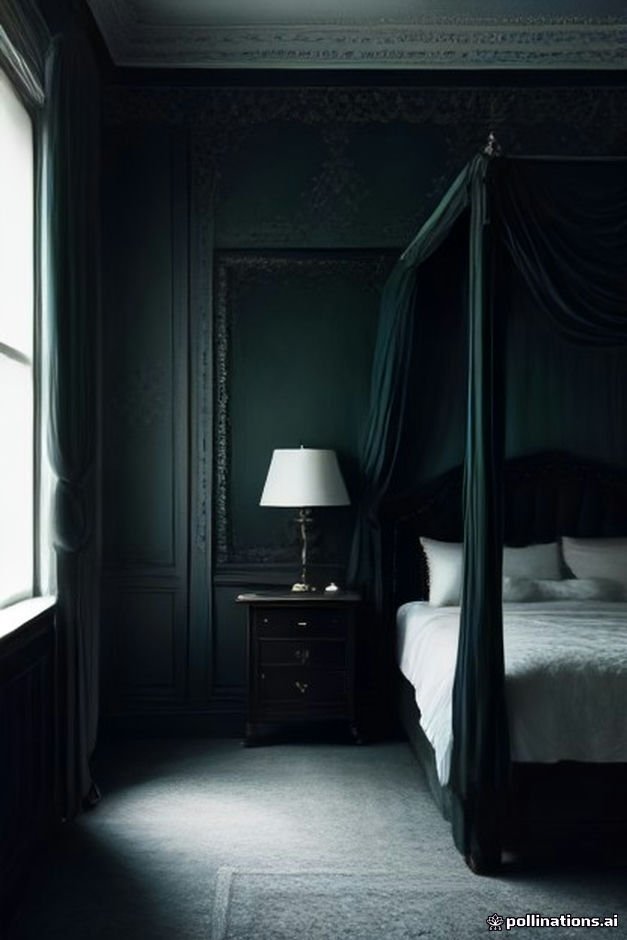
The maximalist dark green bedroom is the room you’ve been building toward on Pinterest without quite knowing it. Dark green on all four walls (and perhaps the ceiling). A velvet headboard in a complementary jewel tone — deep sapphire, emerald, amethyst. Layered textiles: velvet, linen, knit, silk. A large Persian rug. Plants everywhere. Brass, brass, and more brass.
The key to making maximalism work in a dark green bedroom is restraint within abundance. Everything should belong to the same colour family (deep, saturated, jewel-toned) even as the textures and patterns multiply. A dark green room works because green is in every piece — in the walls, in the rug pattern, in the plants, in the cushion trim. The room has a unifying principle even when it looks effortlessly layered.
What to add for the full maximalist effect: a large ornate brass or gold mirror above the dresser, a gallery wall of botanical and antique prints in mismatched gilded frames, floor lamp in aged brass with a warm-toned shade, a large trailing fiddle leaf fig or monstera in a brass planter.
10. Dark Green and Black: Moody to the Maximum
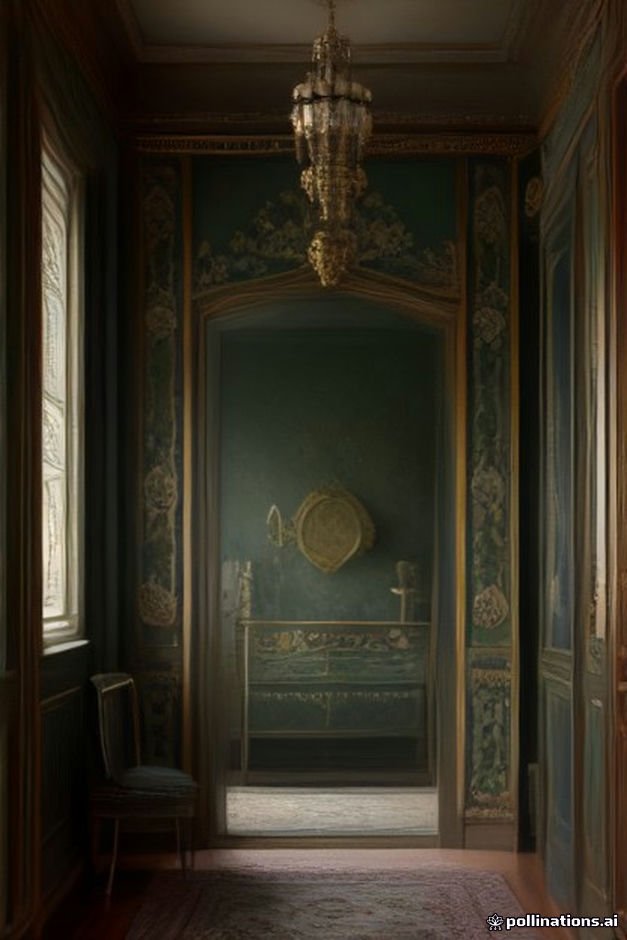
Dark green and black is the most dramatic version of the dark green bedroom — a room that feels like nighttime even in the afternoon. It is not for the timid, but for those who have committed fully to moody, atmospheric interiors, it is unmatched.
Use black in the furniture: a black metal bed frame, black lampshades, black-framed art. Keep the green on the walls and in the soft furnishings — velvet duvet in deep forest green, green velvet throw cushions. The black provides the structure and graphic quality; the green provides the warmth and richness that stops the room from feeling cold or industrial.
Balance it with: warm lighting only (Edison bulbs, never cool white), natural materials (a jute rug, linen bedding, wooden elements), and plants in abundance. The plants are crucial in a black and green room — they add life and prevent the room from feeling like a hotel corridor.
11. Dark Green in a Small Bedroom: Cocooning, Not Cramping
The common anxiety about dark green in a small bedroom: won’t it feel even smaller? No. Dark colours in small rooms make them feel enclosed rather than small — and enclosed is not cramped. It is intimate. Cocooning. The kind of small that feels deliberate.
In a small dark green bedroom, go all in: colour on all four walls, dark green bedding, a rug that covers most of the floor. The room will feel like a jewellery box — small, yes, but precious and carefully composed.
What to avoid: pale woodwork (it creates contrast that fragments the space), bare floors (the rug is essential for making a small room feel complete), and mixed metallics (pick one — brass — and commit to it everywhere). Keep storage minimal and hidden — the small dark green bedroom works because it looks curated, not cluttered.
12. Dark Green Cottagecore Bedroom: Forest Floor Meets Feather Bed
Dark green is the natural home of the cottagecore bedroom. Where the lighter, more meadow-inspired version of cottagecore favours sage and mint and blush, the dark cottagecore bedroom goes deeper — into the forest, the hedgerow, the moonlit garden. This is where dried botanicals meet velvet, where brass candlesticks meet pressed flowers, where the aesthetic is simultaneously wild and luxurious.
Build it with: dark green walls or bedding as the foundation, dried botanical wreaths and bundles on the walls, a gallery of pressed botanical prints in mismatched wooden frames, linen and cotton bedding with subtle floral embroidery, a jute or wool rug with natural tones, candles and candlesticks everywhere.
The dark cottagecore bedroom is the aesthetic that connects most naturally with our other articles. For the kitchen equivalent, see our guide to dark cottagecore kitchen ideas.
13. The Dark Green Bedroom as a Reading Room
The best dark green bedrooms double as reading rooms — spaces where the atmosphere is so deliberately created for quiet and concentration that you don’t just sleep there, you think there. Dark green walls naturally lower the visual temperature of a room and create the kind of focused, contained atmosphere that is perfect for reading.
Add reading infrastructure: a proper bedside lamp with a focused beam (not just an ambient lamp), a small bookshelf within reach of the bed, a substantial reading pillow or wedge for sitting up in bed comfortably, and a small side table large enough for a cup of tea and a book.
If you’re building an actual reading corner within your dark green bedroom — an armchair, a floor lamp, a small bookcase — see our full guide to dark reading nook ideas for everything you need to know about creating that space.
Frequently Asked Questions About Dark Green Bedrooms
What shade of green is best for a dark green bedroom?
For a truly dark green bedroom, you want forest green, hunter green, or bottle green — shades that have significant depth and read as almost-dark rather than simply saturated. Farrow & Ball’s Calke Green, Studio Green, or Invisible Green are frequently cited. For a more accessible option, look for greens described as “hunter,” “forest,” “pine,” or “deep” rather than “sage,” “olive,” or “moss” — those read as lighter and warmer, which is a different aesthetic entirely.
Does dark green make a bedroom feel smaller?
No — and this is one of the most persistent myths in interior design. Dark colours in a bedroom make it feel enclosed rather than smaller, and enclosed reads as intimate and cocooning rather than cramped. The key is to commit fully: if you go dark green on one wall and leave the others light, the contrast will emphasise the room’s size. If you go dark green everywhere, the room becomes an atmosphere rather than a box.
What colours go with dark green in a bedroom?
Dark green pairs beautifully with brass and gold (the most important pairing), natural wood tones, cream and aged white, terracotta and rust, deep pink and blush, sapphire blue, amethyst purple, and black. It does not pair well with cool greys (too clinical), silver (too cold), or bright whites (too much contrast). The rule is: dark green likes warmth. Anything warm works; anything cold clashes.
What bedding works best in a dark green bedroom?
The best bedding for a dark green bedroom is either very light (aged linen in warm white or pale sand, which creates contrast and lets the walls be the drama) or very dark and rich (deep green velvet, sapphire velvet, or amethyst velvet, which creates a tonal effect that photographs beautifully). What doesn’t work is mid-tone, heavily patterned, or brightly coloured bedding — it competes with the walls without winning. Keep it simple and let the green do the work.