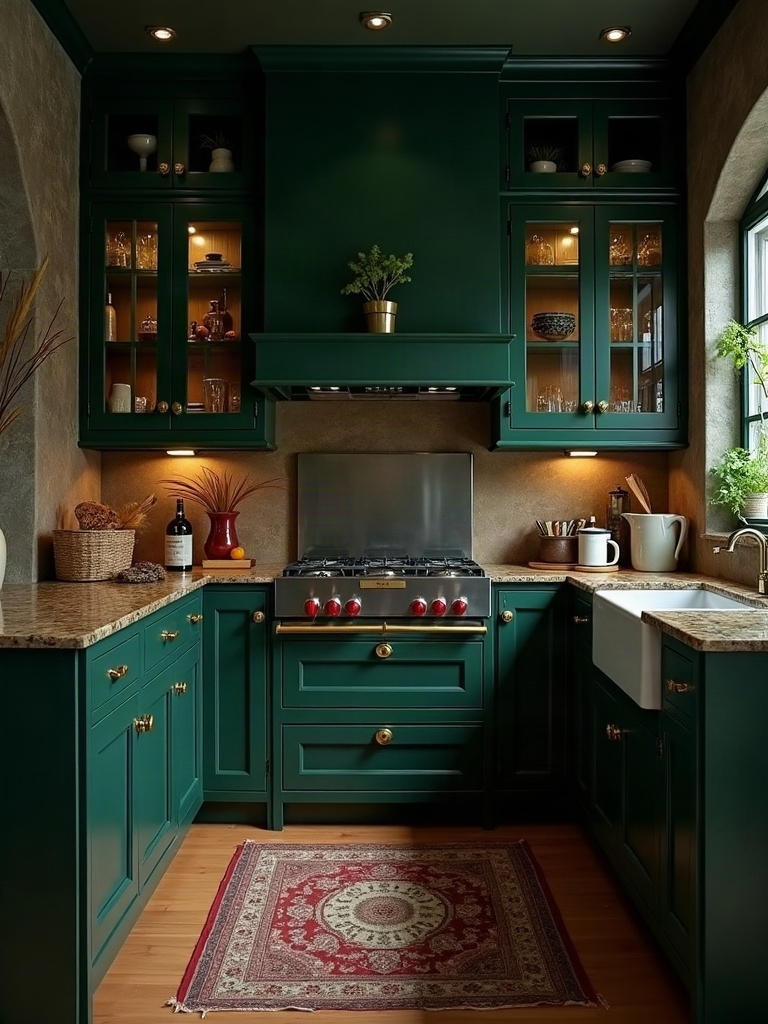
15 Moody Home Bar Ideas That Ruin Real Bars
There is a particular species of home bar that haunts Pinterest: white subway tile, a wine fridge, three bottles of something beige, and a chalkboard sign that says “But First, Rosé.” We are not doing that. We are doing the other thing — the moody home bar ideas that make a guest lower their voice when they walk in, the way people do in churches and good hotels. More is a religion, and nowhere does that gospel land harder than a room built entirely around the ritual of pouring one drink well.
Here’s the thing about a bar: it is the one corner of your house that is allowed to be theatrical. Nobody has ever walked into a speakeasy and thought “this is a bit much.” Restraint is not a virtue here. It’s a failure of nerve. Fifteen ideas below, and every one of them assumes you’re the kind of person who’d rather be memorable than agreeable.
15 Moody Home Bar Ideas Worth the Square Footage
1. Lacquer the Walls Oxblood and Stop Apologizing
Flat paint is for hallways. A bar wants lacquer — six coats of oxblood, aubergine, or a brown so deep it reads black until candlelight hits it. High-gloss finish does something matte physically cannot: it turns your walls into a low-key mirror, doubling every bottle, every flame, every brass edge in the room. The space feels larger and darker at the same time, which is a trick almost nothing else pulls off.
Yes, gloss shows every flaw in your drywall. Skim-coat first or accept the texture as character. Our kind tends to prefer the second option. And if full lacquer feels like a commitment you’re not ready to make on a Tuesday, high-gloss enamel on the ceiling alone gets you sixty percent of the effect for a fraction of the labor.
2. Build the Back Bar From Antiqued Mirror
Antiqued mirror — the kind with the silvering deliberately foxed and clouded — is the single highest-leverage material in any bar. It reflects candlelight without reflecting you, which matters more than you’d think. A crisp modern mirror behind your bottles makes the room feel like a bathroom. A speckled, mottled, slightly decayed one makes it feel like 1931.
Run it floor to ceiling behind the shelving. The bottles float in front of a surface that’s simultaneously bright and murky, and the whole arrangement gains about three inches of imaginary depth. If a full wall is out of budget, mirrored panels behind two shelves will still carry the effect.
3. Commit to Brass, Then Refuse to Polish It
Unlacquered brass is the correct metal for a bar and it’s not close. Chrome is cold. Matte black went from edgy to builder-grade in about four years. Brass, left alone, develops a patina that maps every hand that touched it — darker at the tap handle, warmer at the foot rail, blotchy in the ways that make a thing look inhabited rather than installed.
Buy unlacquered, not “antique brass finish,” which is a coating that will chip and expose bright yellow underneath. Real brass oxidizes honestly. A good unlacquered brass bar tool set will look considerably better in three years than the day you unboxed it, which is a sentence you can say about almost nothing else you own.
4. Treat the Bottles Like a Collection, Not Inventory
Most people arrange bottles by how often they use them. Wrong instinct. Arrange them by color and height, like you’re hanging a gallery wall that happens to be flammable. Amber in one cluster, green glass in another, the clear stuff pushed to the back where it can’t dilute the palette. Chartreuse, Fernet, Amaro Nonino, anything Italian and bitter — these bottles were designed by people who understood that the label is part of the drink.
Then decant the offenders. Anything in a plastic-capped bottle with a screaming label goes into glass. Two or three cut-crystal decanters break up the vertical rhythm and give the eye somewhere to land. This is deliberate chaos, not actual chaos — the difference is that you chose every element in the pile.
5. Cognac Leather Stools With Visible Nailheads
Seating is where most moody home bar ideas quietly collapse. People spend six months choosing a wall color and then order stools that look like they came from a conference center. The stool is what your guest physically touches for two hours. It should feel expensive and slightly worn, like a saddle or a good jacket.
Cognac or oxblood leather, brass nailhead trim, and a swivel if the footprint allows it. Backless stools tuck away and keep sightlines open in a small room; low-back stools are more comfortable and make people stay longer, which is presumably the entire point. Avoid anything upholstered in a light fabric unless you enjoy explaining the Negroni incident to everyone who visits.
6. Do Something Insane to the Ceiling
Your empty wall is a missed opportunity. Your empty ceiling is a crime. A bar is usually a small room, which means the ceiling is proportionally enormous and everyone is going to be looking up at it while they wait for their drink. Pressed tin in aged bronze. Dark wood slats. A wallpaper you’d never dare on a wall — oxblood damask, a moody botanical, something gilded and Victorian and faintly ridiculous.
The fifth-wall move works especially well in a bar because dim lighting keeps it from becoming overwhelming. In a bright room, a patterned ceiling shouts. In a bar at 8pm with two sconces on, it just glows faintly and makes people feel like they’re somewhere.
7. Steal the Space Under the Stairs
The under-stair cavity is the best real estate in most houses and it is almost universally wasted on a vacuum cleaner. The sloped ceiling that makes it useless for everything else makes it perfect for a bar: it’s already enclosed, already intimate, and already reads as a discovered space rather than a designed one.
Paint the interior a shade darker than the surrounding room so it recedes into shadow when unlit. Add a marble or soapstone counter, two shallow shelves, a single sconce, and you have a functioning speakeasy in about eleven square feet. Search interest in tucked-away home bars has climbed hard over the last two years, and the under-stair version is why — it delivers maximum atmosphere per square foot.
8. Three Layers of Light, All of Them on Dimmers
One overhead fixture will destroy everything else on this list. Bars need three layers, minimum: something overhead for presence (a small chandelier or an ornate brass pendant), sconces flanking the back bar for vertical glow, and a low source at counter level — a picture light over the bottles, or LED tape hidden under the top shelf washing down through the glass.
Every one of them on a dimmer. Warm bulbs only, 2200K to 2700K, nothing above. A pair of antique brass wall sconces flanking the mirror will do more for the room than any piece of furniture in it. And light the bottles from behind or below if you possibly can — backlit glass is the closest thing interior design has to a cheat code.
9. Hang Velvet and Let It Eat the Echo
Hard rooms sound bad. Tile, mirror, stone, glass — a bar is made almost entirely of reflective surfaces, and the acoustic result is that four people talking sounds like fourteen. Floor-to-ceiling velvet in burgundy, forest, or a deep teal fixes the sound and the sightline simultaneously.
Even if there’s no window. Especially if there’s no window. A velvet panel on a blank wall reads as a curtained doorway to somewhere, and the ambiguity is the whole point. Hang it high and let it puddle slightly at the floor. Curtains that stop an inch short look like a rental; curtains that pool look like a decision.
10. A Glassware Wall That Betrays an Obsession
Nothing signals a serious bar faster than glassware that is specific to a fault. Coupes for anything stirred and up. Nick and Noras for when you want the coupe energy without the spillage. Highballs, rocks glasses, a set of tiny cordial glasses nobody has used since 1974. Display them upside down on open brass shelving where the light catches every rim.
Etched or cut crystal beats plain, because the facets do something under warm light that flat glass can’t. Vintage is better still — mismatched coupes from three different estate sales look like an inheritance rather than a purchase. If you’re starting fresh, a set of vintage-style etched coupe glasses is the fastest way to make a new bar look like it has a history.
11. Salon-Hang Art That’s a Little Bit Wrong
Curated obsession means the art can’t be pleasant. A bar wall is the correct home for the oil portrait of a stranger you bought for eleven dollars, the anatomical engraving, the taxidermied beetle in a shadow box, the framed vintage absinthe advertisement, the small painting of a horse that seems to be judging you. Hang them edge to edge in a salon arrangement until the wall is more frame than paint.
Mix the frame finishes deliberately — gilt, ebonized wood, tarnished silver — because matching frames make a salon wall look like a hotel corridor. And hang at least one piece low, near counter height, where someone sitting at the bar will be eye-level with it. That’s the one they’ll ask about.
12. Take Ice Seriously, Visibly
This is the detail that separates the moody home bar ideas that photograph well from the ones that actually function. Clear directional-freeze ice in a large cube or sphere doesn’t just look better in a glass — it melts slower, which means the drink you built stays the drink you built. It is the single cheapest upgrade to a home bar’s credibility.
Then make it part of the display. A heavy hammered brass ice bucket with proper tongs sitting on the counter says more about the room than another bottle would. The ritual of retrieving one enormous cube with tongs, in front of a guest, is theater — and theater is the product here.
13. Physical Media or It Didn’t Happen
A bluetooth speaker hidden in a cabinet is fine. A turntable and forty records on a shelf is a personality. The point isn’t audio fidelity — it’s that choosing a record is a gesture, and gestures are what a bar runs on. Nobody has ever felt anything watching someone scroll a playlist.
Put the turntable where it’s part of the composition, not tucked away: dark wood plinth, records stored spine-out so the covers become part of the art. Vintage receivers in brushed aluminum or walnut veneer are cheap, they still work, and they look considerably more at home in a dark lacquered room than anything currently sold in a white box.
14. Stone With Veining That Has Opinions
The counter is small — usually under twelve square feet — which means you can afford stone that would be financially deranged in a kitchen. This is where to spend. Nero Marquina with white lightning through it. Soapstone that darkens with oil into near-black. Verde Alpi, green as a wine bottle and veined like a road map.
Skip anything with subtle, uniform veining. In a room this dark and this small, subtle just reads as brown. You want stone that makes an argument. Honed finish rather than polished, generally — polished stone under directional light produces glare exactly where someone is trying to look at their drink, and honed absorbs the light instead of throwing it back at your guests.
15. Make the Entrance Do Something
The best bars are found, not entered. A bookcase door, a curtained archway, a jib door papered to vanish into the wall, a bar concealed behind cabinet fronts that swing open to reveal a fully mirrored interior. The concealment is not about actual secrecy — everyone in your house knows the bar is there. It’s about the two-second reveal, which is the most reliable moment of delight in residential design.
Even a modest version works. Sliding barn-style panels in dark wood. An armoire retrofitted with brass shelving and interior lighting, so opening the doors floods the room with amber glow. The whole idea rests on a single principle our kind understands instinctively: a thing you have to open is always better than a thing that’s just sitting there.
Making Moody Home Bar Ideas Work in a Small Space
Almost none of this requires a dedicated room. The most effective versions of these moody home bar ideas live in a closet, a hallway alcove, a dining room corner, or the eleven square feet under a staircase. Darkness is actually an advantage in small spaces — a black-lacquered nook has no visible corners, so the eye can’t measure it and the brain doesn’t register how tight it is.
The mistake to avoid is scaling everything down proportionally. A tiny bar with tiny fixtures reads as a dollhouse. Keep the drama full-size — one large mirror, one full-height curtain, one fixture slightly too big for the space — then edit on quantity, not scale.
Frequently Asked Questions
What paint color is best for a moody home bar?
Deep oxblood, aubergine, near-black brown, and inky teal all work, but the finish matters more than the hue. Choose a high-gloss lacquer or enamel over flat paint — the reflectivity multiplies your candlelight and bottle glass, which is what actually creates the atmosphere. If you’re only willing to commit to one surface, do the ceiling.
How much space do I actually need for a home bar?
About eleven to fifteen square feet is enough for a fully functional bar with counter, shelving, and one stool. Under-stair cavities, closets, and dining room corners are all viable. The constraint that matters isn’t floor area — it’s having roughly 24 inches of usable counter depth for building drinks.
What’s the difference between a dry bar and a wet bar?
A wet bar includes plumbing — a sink and usually a drain — while a dry bar has none. Dry bars are dramatically cheaper and can go anywhere, which is why most home bars in existing houses are dry. You lose the ability to rinse glassware in place, which matters less than people expect if the kitchen is within thirty steps.
What lighting temperature should I use in a home bar?
Stay between 2200K and 2700K. Anything cooler turns brass green, makes leather look plastic, and drains warmth out of dark paint. Put every fixture on a dimmer, and add a backlight behind the bottle shelf — light passing through amber and green glass is the most flattering source in the room.
How do I make a new home bar look like it has history?
Three moves do most of the work: unlacquered brass that’s allowed to patina, antiqued or foxed mirror rather than new glass, and mismatched vintage glassware sourced from estate sales instead of a matching set. Add salon-hung secondhand art with mixed frame finishes and the room stops reading as new within about a week of use.
Build it dark, build it dense, and build it so that walking in feels like stepping out of your own house. That’s the entire brief.