This post contains affiliate links. As an Amazon Associate, Home Sweet Eclectic earns from qualifying purchases. Read our affiliate disclosure.
Jewel tone bedrooms are having a moment — and not a subtle one. Sapphire. Emerald. Ruby. Amethyst. These are colours that commit. Colours that walk into a room and announce themselves without apology. Colours that make every other bedroom look like it gave up halfway through.
Pinterest searches for “jewel tone bedroom” have surged over 400% in the past year. And it’s not hard to understand why. After a decade of greige and “barely there” palettes, people are done being cautious. They want bedrooms that feel like something — that feel rich, atmospheric, deliberate.
This is that guide. Thirteen jewel tone bedroom ideas, from the quietly confident to the full maximalist commitment. With exactly what to buy, what to pair it with, and why it works.
1. The Emerald Velvet Headboard Bedroom
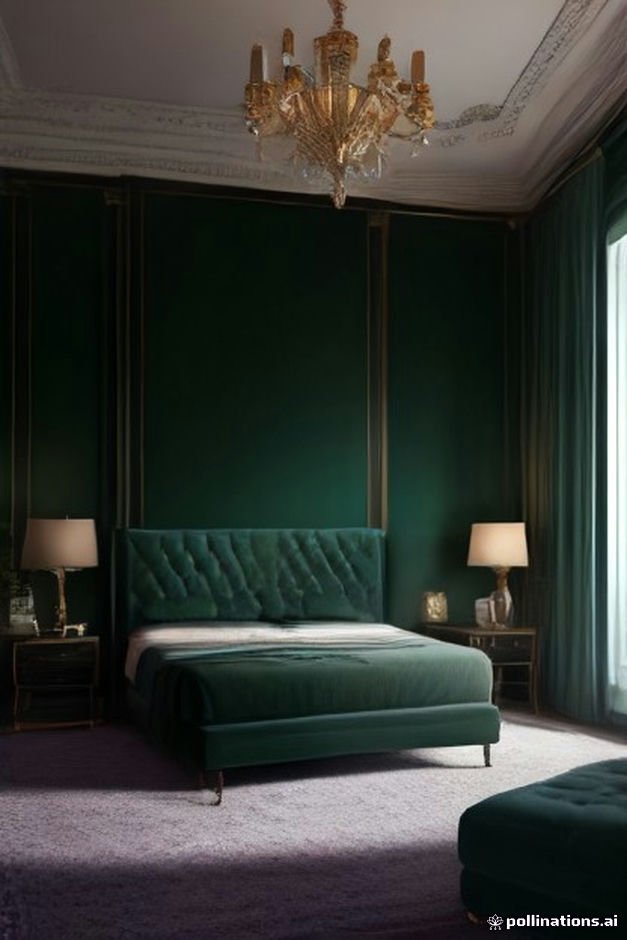
Emerald is the most forgiving of the jewel tones — rich enough to be dramatic, green enough to feel grounded. A large emerald velvet headboard is the single fastest way to transform a bedroom without touching the walls.
Keep the walls dark — charcoal, forest green, or deep navy — and let the headboard be the jewel. Dress the bed in layered textures: a linen duvet in warm white or aged ivory, a velvet throw in deep teal, and two or three velvet scatter cushions in complementary jewel tones — sapphire, amethyst, gold.
The hardware matters: brass side tables, a brass-framed mirror, brass lamp bases. Brass is the metal of jewel tone bedrooms. It warms everything it touches and makes the colours feel intentional rather than accidental.
What to buy: An oversized emerald velvet headboard (look for channel-tufted or deeply tufted styles), brass bedside tables, a layered rug in deep Persian patterns.
2. Sapphire Blue Bedroom: The Classic Jewel Tone Done Right
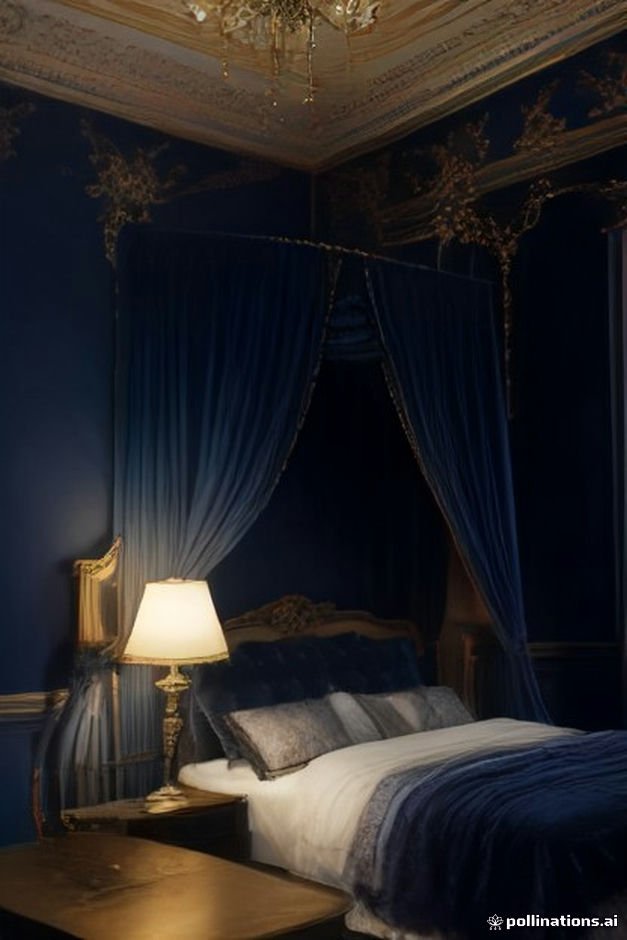
Sapphire is the jewel tone that most people imagine when they think of this category — and it’s the one most likely to work in a room that isn’t sure of itself yet. It reads as sophisticated rather than eccentric, dramatic rather than chaotic.
The key is depth. Not cornflower, not powder blue, not denim — but the deep, rich blue of a sapphire stone. This is the colour you want on your duvet cover, your curtains, or your statement wall.
Pair it with: warm white woodwork, natural linen bedding in pale sand, brass hardware throughout, and a large vintage-style rug with jewel tones in the pattern. A single sapphire wall behind the bed, with the other three walls in a warm white or soft grey, is the least committed version. For maximum impact, go wall-to-wall sapphire and let the bedding be your breath of lighter air.
The room reads rich, calm, and deeply considered — the kind of bedroom that makes you feel like you’ve arrived somewhere.
3. Ruby Red for the Brave: When Your Bedroom Refuses to Be Background
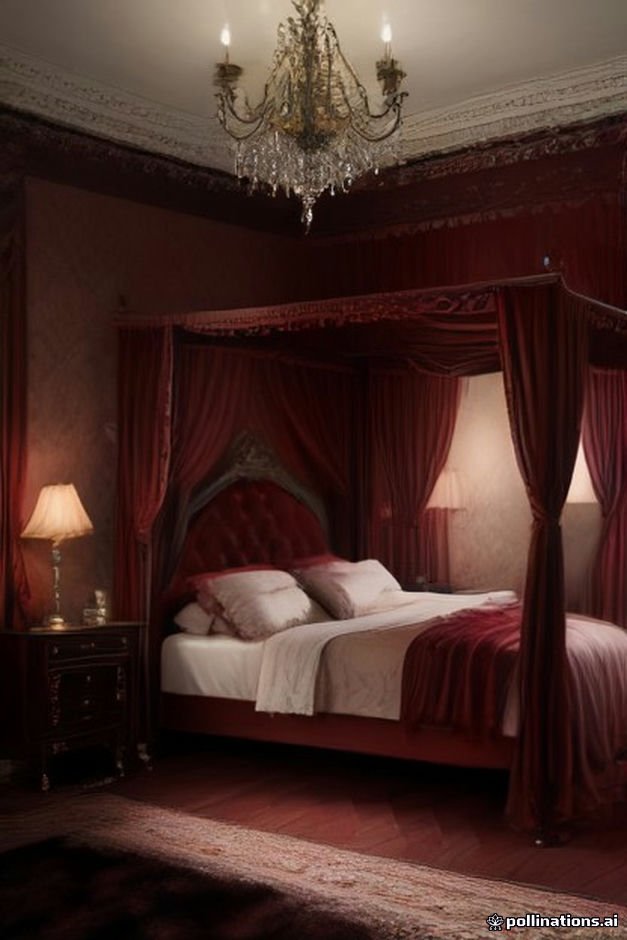
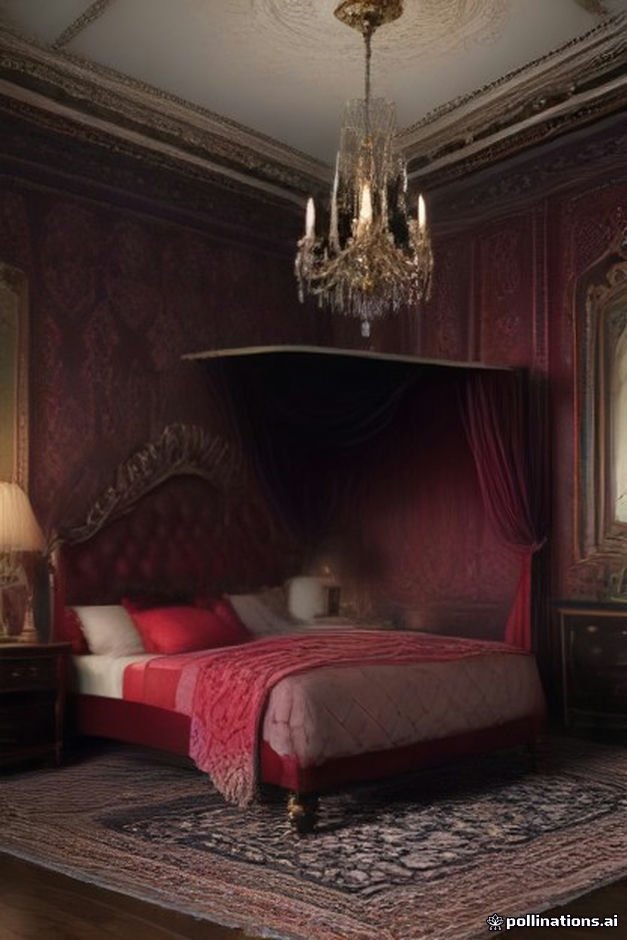
Ruby red is the most dramatic of the jewel tones — and the most polarising. It is not a colour that participates quietly. A ruby red bedroom is a decision. A statement. A commitment to making the most atmospheric room in the house.
The secret to making ruby work without it feeling overwhelming is to anchor it in depth rather than brightness. You’re looking for the deep, almost-black red of a garnet or a ruby, not a fire engine. Deep red velvet curtains that pool on the floor, a tufted headboard in the same family of colour, and walls in a warm charcoal or plum that lets the red breathe.
Balance it with: dark wood furniture (mahogany, ebonised oak, walnut), brass and gold accessories, and a Persian or Turkish rug with red in the pattern. The room should feel like the inside of a jewellery box — luxurious, enclosed, atmospheric.
4. Amethyst Purple: Between Aubergine and Violet
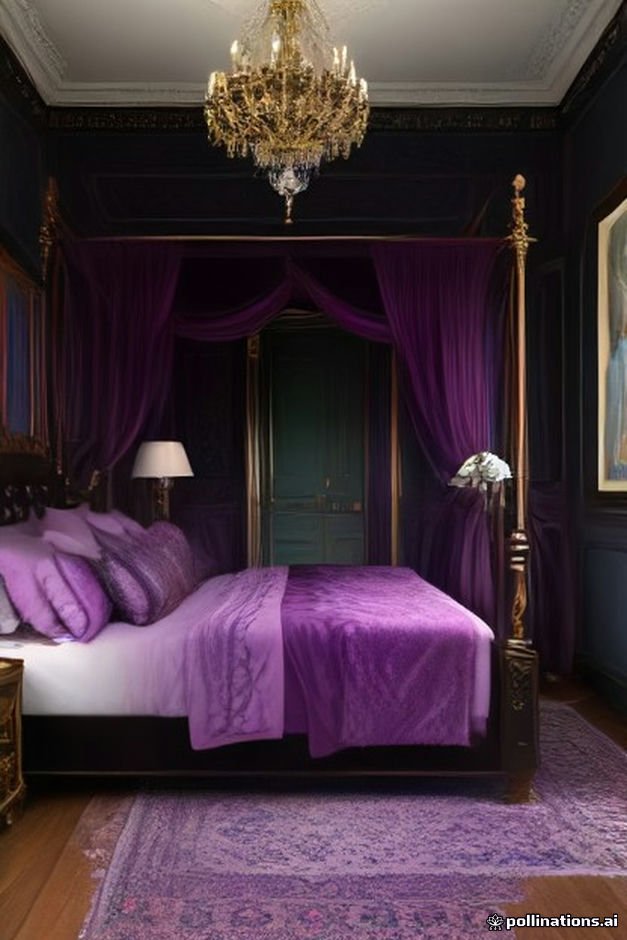
Amethyst lives in the space between purple and plum — warmer than violet, lighter than aubergine, and more complex than either. It is the jewel tone that works best when you want something unmistakably purple without the sweetness of lavender or the heaviness of deep plum.
An amethyst bedroom works beautifully with dark walls — forest green, midnight navy, or deep charcoal — where the purple reads as rich rather than pink. Use it in your velvet bedding, in curtains that pool on a dark wood floor, and in one or two statement scatter cushions.
The combination of amethyst and emerald is one of the great jewel tone pairings — they are complementary colours with enough warmth to feel lush rather than contrived. Add brass accents, a large mirror in an ornate frame, and a Persian rug with both colours in the pattern.
If aubergine is the grown-up version of purple, amethyst is its lighter, more romantic sibling. See our full guide to aubergine room ideas for the deeper end of this palette.
5. Teal Bedroom: Where Jewel Tone Meets Eclectic Energy
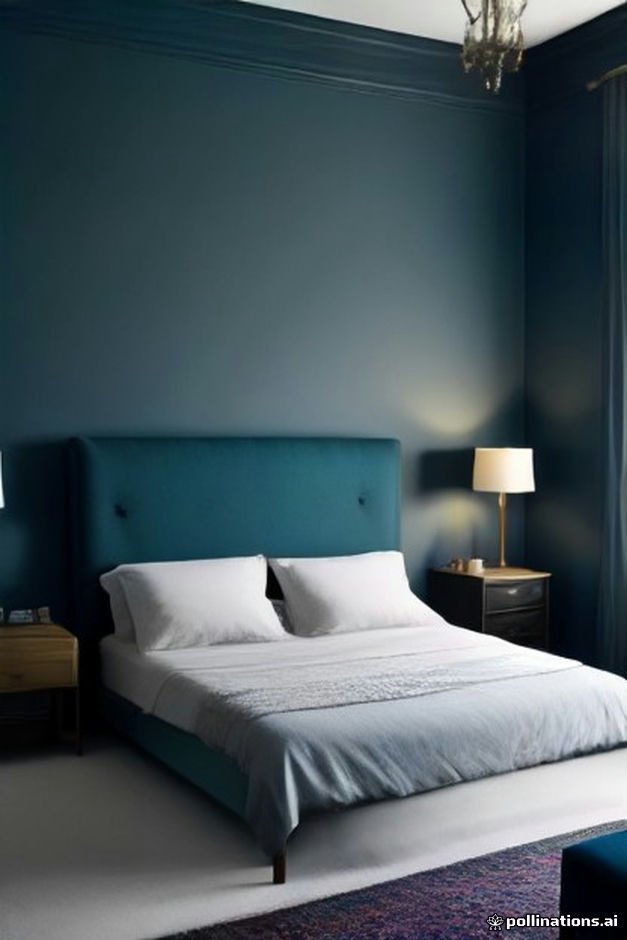
Teal is the most versatile jewel tone — it reads as blue or green depending on the light, pairs with almost everything, and brings an energy to a bedroom that’s closer to vital than to dramatic.
A teal velvet headboard against dark charcoal or slate grey walls is the foundation. Build the room in layers: a duvet in warm sand or aged linen, a large teal and amber throw, velvet cushions in complementary jewel tones (amethyst, sapphire), and a jute or Persian rug that anchors the whole thing.
Teal works with both brass and black metalwork — a rare flexibility in the jewel tone family. Black iron bedside lamps against teal walls feel graphic and modern; brass feels warm and maximalist. Choose based on how eclectic you want the final room to feel.
6. Layering Multiple Jewel Tones: The Maximalist Approach
The more adventurous approach — and the one that produces the most distinctive bedrooms — is to work with multiple jewel tones in the same space. This is not about matching. This is about curating colours that belong in the same family.
Start with a base colour on the walls (deep teal, forest green, or midnight navy). Then introduce your jewel tones through the textiles: an emerald velvet duvet, sapphire cushions, an amethyst throw, a Persian rug with all three colours woven through the pattern. The key is that all of your chosen colours share the same saturation level — the same depth, the same richness. If they all have that quality, they will harmonise.
Add gold and brass throughout to unify everything: brass lamp bases, gold picture frames, a brass-framed mirror. And plants — always plants in a maximalist jewel tone bedroom. A large trailing pothos on the nightstand, a fiddle leaf fig in the corner, dried botanicals in tall brass vases.
This approach is the bedrooms you see in Architectural Digest, in the hotels you photograph and think “why doesn’t my bedroom feel like this?” — and it is entirely achievable at home.
7. Jewel Tone Bedding on Dark Walls: The Most Dramatic Combination
The combination that stops people on Pinterest: deep jewel tone bedding against very dark walls. Sapphire velvet duvet against almost-black navy walls. Emerald bedding against deep forest green. Ruby throw against charcoal — the colour barely distinguishable from the dark wall behind it, until the light catches it and suddenly it glows.
This tonal approach — dark walls plus slightly-darker-or-different-toned bedding — is the most atmospheric version of a jewel tone bedroom. It is a room that changes with the light. In daylight it’s rich and cosy; at night, with a brass lamp glowing, it’s something else entirely.
What you need: A high-quality velvet duvet cover set (velvet is essential — cotton or linen doesn’t have the same depth in this combination), very dark wall paint in the same colour family, and brass lighting that creates pools of warm light rather than even illumination.
8. The Jewel Tone Rug as Your Starting Point
If you’re not ready to commit walls or large upholstered pieces to jewel tones, start with a rug. A large jewel tone Persian or Turkish rug can carry an entire bedroom’s colour story on its own — the colours that appear in the rug become your palette, and everything else follows from there.
A good rug in deep ruby, emerald and navy over a dark wood or stone floor changes the room completely. The floor becomes the painting. The walls — in a warm neutral or rich dark colour — become the frame. The furniture and bedding become the objects within that frame.
The rug-first approach is also the most historically grounded — the great Victorian and Edwardian interiors that inspire this aesthetic were always anchored in the floor covering. The rug wasn’t a finishing touch; it was the starting point from which everything else grew.
9. Jewel Tone Curtains: When the Window Becomes the Statement
Jewel tone curtains are one of the most underused tools in bedroom decorating — and one of the most effective. A pair of floor-to-ceiling velvet curtains in deep emerald, sapphire or ruby, hanging from ceiling to floor and puddling slightly on the floor, transforms the entire scale and atmosphere of a room.
The rule for jewel tone curtains: they must touch the floor. No curtains that stop at the sill or hover above it. They must drape, and ideally they must pool — this is what creates the luxurious, theatrical quality that makes a room feel intentional rather than improvised.
Keep the curtain colour your most saturated jewel tone, and let it be a contrast to the walls. Sapphire curtains against cream walls. Emerald curtains against navy walls. Ruby curtains against charcoal. The window becomes the room’s statement — the first thing the eye goes to when you walk in.
10. Brass and Jewel Tones: The Classic Pairing
Every jewel tone bedroom needs brass. This is not a suggestion. Brass is to jewel tones what a frame is to a painting — it defines the edges, adds warmth, and makes the whole thing feel considered rather than accidental.
The key pieces: brass bedside lamps with warm-toned bulbs (Edison bulbs or warm white LEDs, never cool white — cool white kills jewel tones). A brass-framed mirror above the dresser, or leaning against the wall. Brass drawer pulls on any painted furniture. A brass planter for the plants that every good jewel tone bedroom needs.
Aged or unlacquered brass is preferable to shiny new brass — it has depth and warmth that polished brass lacks, and it harmonises with antique and vintage pieces rather than clashing with them. If you can only find polished brass, leave it — it will age.
11. Jewel Tone Bedroom in a Small Space
The common anxiety about jewel tones in a small bedroom: won’t it feel even smaller? The answer, counterintuitively, is no. Dark, rich colours in a small room make it feel enclosed rather than small — and enclosed is not the same thing as cramped. It’s intimate. Cocooning. The kind of small that feels deliberate.
In a small jewel tone bedroom, go all in: colour on all four walls, colour on the ceiling if you’re brave, rich textures in the bedding, a rug that covers most of the floor. The room will feel like a jewellery box — small, yes, but precious.
What to avoid in a small jewel tone bedroom: pale woodwork (it creates contrast that fragments the space), bare floors (the rug is essential for making a small room feel complete), and mixed metallics (pick one — brass — and commit to it everywhere).
For more on making small rooms feel atmospheric rather than cramped, see our guide to dark reading nook ideas — many of the same principles apply.
12. The Dark Academia Jewel Tone Bedroom
Dark academia and jewel tones are natural partners — both are rooted in the same aesthetic of richness, depth, and deliberate atmosphere. A dark academia jewel tone bedroom layers the two vocabularies: the aged wood, pressed botanicals, leather-bound books and globe of the academic aesthetic with the velvet, brass and deep colour of the jewel tone approach.
The result is a bedroom that feels like the private chamber of a Victorian naturalist or a 19th century scholar — full of objects, full of colour, full of intention. A dark wood bed frame in walnut or ebonised oak, emerald or sapphire bedding, a gallery wall of botanical prints and antique maps, a floor lamp in aged brass, and bookshelves that go as high as the room allows.
This is one of the most Pinterest-loved bedroom aesthetics of 2026 — and one of the easiest to achieve with thrift stores, Amazon, and a few tins of dark paint.
13. The Capsule Jewel Tone Bedroom: One Color, Fully Committed
The most radical version of a jewel tone bedroom is the monochromatic approach — one colour, every surface, total commitment. Emerald walls, emerald velvet headboard, emerald curtains, emerald scatter cushions, plants that add a different green. Or sapphire walls, sapphire bedding, sapphire drapes, with only the brass accents and pale natural linen as relief.
This approach works because jewel tones have enough internal variation — the wall paint in matte finish reads differently from the velvet headboard, which reads differently again from the velvet curtains in the same colour family — that the room has depth and texture even without introducing a second colour.
It is the most confident version of a jewel tone bedroom. The kind of room that someone walks into and immediately understands: this person knows exactly what they want. They didn’t hedge. They committed. And the result is a bedroom that doesn’t look like anyone else’s.
Whatever jewel tone you choose — start there. Build everything from that choice. And don’t apologise for the colour. Rooms that apologise for themselves never feel complete.
Frequently Asked Questions About Jewel Tone Bedrooms
What colors are jewel tones?
Jewel tones are the deeply saturated, rich colours inspired by precious and semi-precious stones: emerald (from emeralds), sapphire blue (sapphires), ruby red (rubies), amethyst purple (amethysts), teal (from aquamarines and tourmalines), and deep gold or citrine yellow. What unites them is their depth — these are colours with intensity, not pastels or muted versions of the same hues.
Do jewel tones work in a bedroom?
Jewel tones are exceptionally well-suited to bedrooms. Because bedrooms are spaces designed to feel intimate, cocooning and atmospheric — rather than open, airy and social — the richness and depth of jewel tones works with the purpose of the room rather than against it. A jewel tone bedroom in the evening, lit with warm lamp light, is one of the most satisfying room experiences possible.
How do I choose which jewel tone to use in my bedroom?
Start with what you’re drawn to — the colour that you keep saving on Pinterest, the colour you wear when you want to feel most like yourself. Then consider the room’s light: north-facing rooms with cool light suit warmer jewel tones (ruby, amethyst, gold); south-facing rooms with warm light handle cooler tones (sapphire, emerald, teal) without them feeling chilly.
What furniture works best with a jewel tone bedroom?
Dark wood furniture (walnut, mahogany, ebonised oak) is the natural partner for jewel tones — it grounds the colour without competing with it. Brass and gold metalwork adds warmth and richness. Avoid light wood furniture (it creates contrast that fragments the colour story) and chrome or silver (too cool for the jewel tone palette — always brass).